Quick Answer: Terpene infused pre-rolls represent one of the fastest-growing cannabis categories, achieving 39% year-over-year growth in the US market. This technical guide addresses critical manufacturing considerations for cannabis processors: selecting terpene sources (cannabis-derived, hemp-derived, or botanical) based on product positioning and regulatory requirements, determining optimal concentration ratios (typically 0.25-0.75% by weight), and implementing scalable infusion protocols from R&D testing through commercial production.
Manufacturers can monetize aged flower inventory, achieve batch-to-batch consistency across variable cultivation sources, and create signature terpene profiles for brand differentiation, all at minimal input costs ($0.005-0.15 per unit) while commanding 20-40% retail price premiums over standard pre-rolls.
Download the Terpene Belt Farms documentation on formulating terpene infused pre-rolls to learn more about manufacturing these products and ironing out production issues right from the start.
Key Takeaways
- Terpene infused pre-rolls are among the fastest-growing cannabis categories, with 39% year-over-year sales growth driven by consumer demand for aroma, flavor, and functional effects beyond THC percentage.
- Infusion restores sensory quality to aged flower, standardizes batch consistency across variable sources, and enables 20–40% retail premiums with minimal input cost per unit.
- Cannabis-derived terpenes deliver premium authenticity, hemp-derived versions balance cost and compliance, and botanical terpenes provide economical enhancement for high-volume production.
- R&D batches under one pound benefit from sealed tumbling or NEU Bag systems, while production-scale operations require HVLP spray systems for even terpene distribution.
- Optimal infusion concentration ranges between 0.25% and 0.75%, depending on flower freshness and terpene intensity; excessive levels can cause harsh combustion or uneven burns.
- Proper packaging and cool, dark storage preserve infused pre-roll terpene potency for up to six months, preventing aromatic loss and ensuring consistent consumer experience.
Pre-roll manufacturers face mounting pressure from multiple directions. Aging flower inventory loses terpene content and aromatic appeal with each passing week. Inconsistent flower sourcing, especially for multi-state operators, creates batch variation that frustrates consumers expecting reliable experiences. Meanwhile, retail shelves overflow with undifferentiated products competing primarily on THC percentage and price.
This guide discusses the technical considerations for implementing terpene infusion in pre-roll manufacturing, from learning about terpene sources that align with specific product strategies to establishing repeatable production protocols that scale from R&D testing through commercial production. We’ll cover concentration determination, infusion methodology, quality control measures, and partnership criteria that separate successful infused pre-roll programs from costly trial-and-error approaches.
Market Drivers Behind Infused Pre-Roll Growth
Infused pre-rolls have moved from specialty products to a mainstream product, driven by measurable shifts in consumer behavior and retail economics. If you’re still on the ropes about adding pre-rolls to your SKUs, here’s more about why consumers are looking for this niche of products.
Consumer Demand Shifts Beyond THC Percentage
Cannabis consumers in mature markets now recognize that THC percentage alone doesn’t predict experience quality. A 15% THC flower with terpene content often delivers more satisfying effects than a 25% THC product with minimal aromatic complexity. Educated consumers are specifically asking about myrcene for relaxation, limonene for mood elevation, or pinene for focus. Pre-rolls infused with precisely measured terpene additions guarantee the aromatic and functional characteristics these consumers prioritize.
Revenue Opportunity for Manufacturers
Production costs for terpene infusion remain remarkably low. Botanical terpenes add as little as $0.005 per unit, while hemp-derived options cost approximately $0.05 per unit. These minimal input costs enable 20-40% retail price premiums over standard pre-rolls.
More significantly, terpene infusion monetizes aged flower inventory that would otherwise require discount pricing or processing into lower-margin concentrates. For operations managing substantial flower inventories, this represents meaningful revenue recovery from depreciating assets.
Product Differentiation in Saturated Markets
Established markets feature dozens of competing pre-roll options on limited shelf space. Traditional differentiation strategies, strain names, THC percentages, packaging, offer marginal distinction as competitors quickly replicate successful approaches.
Terpene infusion creates differentiation through sensory experience itself. Manufacturers can develop signature terpene profiles that become identifiable brand characteristics, building consumer loyalty to specific formulations rather than generic product categories.
For multi-state operators who cannot transport flower between markets, proprietary terpene formulations applied to locally-sourced flower deliver consistent brand experiences despite varying cultivation sources.

Core Benefits of Terpene Infusion for Pre-Roll Production
Beyond market opportunity, terpene infusion solves specific technical and operational challenges that manufacturers encounter in pre-roll production. Here’s why introducing terpenes to your pre-rolls is a great idea.
Restoring Quality to Aged Flower Inventory
Cannabis flower begins losing terpene content immediately after harvest, with degradation accelerating under suboptimal storage conditions. Even properly cured and stored flower experience terpene loss over time as volatile compounds evaporate or oxidize.
This degradation manifests as diminished aroma, harsh smoke characteristics, and muted effects, all factors that result in product markdowns or inventory write-offs.
Terpene infusion directly addresses this degradation by reintroducing aromatic compounds at controlled concentrations. Flower that has aged six months beyond optimal freshness can be revitalized to deliver sensory experiences comparable to or exceeding fresh product. This process doesn’t simply mask deficiencies; it restores the functional terpene content that drives consumer satisfaction.
The economic impact proves substantial for manufacturers managing significant flower inventories. Rather than processing aged flower into distillate at wholesale concentrates pricing, that same material can be infused and sold at premium pre-roll pricing. For a manufacturer holding 500 pounds of aging flower inventory, the revenue difference between distillate processing and infused pre-roll production can exceed $200,000.
Achieving Batch-to-Batch Consistency
Multi-state operators and manufacturers sourcing flower from multiple cultivation partners face persistent consistency challenges. The same strain grown in different facilities, or even in different rooms within the same facility, produces variable terpene profiles due to differences in genetics, growing conditions, harvest timing, and curing protocols. This variation creates product inconsistency that frustrates consumers expecting reliable experiences from branded products.
Terpene infusion enables manufacturers to standardize product characteristics regardless of source flower variation. By analyzing incoming flower terpene content and supplementing with precisely measured terpene additions, manufacturers can hit consistent target profiles batch after batch. This approach transforms variable inputs into standardized outputs, protecting brand reputation and consumer loyalty.
Building Product Portfolio Consistency
Manufacturers producing both pre-rolls and vape cartridges can create portfolio cohesion by matching terpene profiles across product formats. A consumer who appreciates a brand’s “Sunset Blend” vape cartridge will recognize and trust an identically formulated “Sunset Blend” pre-roll, creating cross-category brand reinforcement and encouraging product trial across formats.
This strategic approach extends beyond simple brand recognition to address practical consumer needs. Medical cannabis patients seeking consistent symptom management throughout the day benefit from being able to access the same terpene formulation in a discreet vape format for workplace use and a pre-roll format for home consumption. By maintaining terpene consistency across formats, manufacturers support therapeutic consistency for this consumer segment.
The operational efficiency gains also merit consideration. Manufacturers who develop expertise in terpene formulation for one product category can use that knowledge across multiple formats, amortizing R&D investment across a broader product portfolio. Supplier relationships with terpene producers like Terpene Belt Farms become more valuable as order volumes increase across product categories, potentially enabling better pricing and technical support.
Ready to implement professional terpene infusion protocols in your facility? Download our Technical Guide to Terpene Infused Pre-Rolls for detailed standard operating procedures, equipment specifications, concentration calculators, and troubleshooting flowcharts used by leading pre-roll manufacturers. Get the Complete PDF Guide
Selecting the Right Terpene Type for Your Pre-Roll Line
Terpene selection impacts product positioning, cost structure, and market reception. The three primary categories, cannabis-derived, botanical, and hemp-derived, each serve distinct strategic purposes in pre-roll formulation.
Cannabis-Derived Terpenes: Premium Authenticity
Cannabis-derived terpenes, extracted directly from cannabis plant material, capture complete aromatic complexity including minor and trace compounds that define authentic strain experiences.
Products formulated with cannabis-derived terpenes command premium positioning and appeal to connoisseur consumers who prioritize authenticity. These terpenes prove optimal for flagship products, limited editions, and markets with educated consumer bases like California, Colorado, Oregon, and Washington. Input costs run 10-15x botanical alternatives but become negligible when amortized across premium retail pricing.
However, manufacturers should note that cannabis-derived terpenes (extracted from marijuana with >0.3% THC) face regulatory restrictions in some jurisdictions. Some states and countries outside of the US as well may classify these as marijuana-derived ingredients requiring additional documentation, testing, or licensing beyond standard manufacturing permits.
Botanical Terpenes: Cost-Effective Enhancement
Botanical terpenes sourced from citrus, pine, and lavender contain some of the same major terpene molecules found in cannabis but extracted from economically cultivated plant sources. While a limonene molecule from orange peel is chemically identical to cannabis-derived limonene, botanical profiles typically include only 8-12 major compounds. This molecular complexity gap becomes significant when compared to authentic cannabis-derived terpenes, which contain 150+ compounds including minor terpenes, sesquiterpenes, and flavonoids that contribute to genuine cannabis sensory and functional experiences.
Hemp-Derived Terpenes: Mid-Tier Positioning
Hemp-derived terpenes—extracted from Cannabis Sativa L plants meeting federal hemp standards (less than 0.3% THC), deliver authentic cannabis aromatic profiles at mid-tier pricing, typically $0.05 per pre-roll unit. These terpenes provide meaningful differentiation from botanical formulations without premium cannabis-derived costs. The regulatory positioning benefits manufacturers operating in restricted markets or pursuing hemp-based product categories where marijuana-derived ingredients face prohibitive regulations.
Pre-Roll Infusion Methods: R&D vs Production Scale
Successful terpene infusion requires distinctly different protocols depending on batch size. The techniques that work effectively for 6-gram test batches fail completely at production scale, while production equipment proves unnecessary and inefficient for product development work.
Small-Batch Testing Protocol (Under 1 lb)
Product development and formulation testing demand flexibility, rapid iteration, and precise control, requirements best met through small-batch infusion protocols designed for quantities under one pound. This scale allows R&D teams to test multiple concentration levels, evaluate different terpene profiles, and refine formulations before committing to larger production runs.
The glass jar tumbling method proves ideal for these applications. Ground flower (normally 6-50 grams) is placed in an appropriately sized glass canning jar, and calculated terpene amounts are dripped along the interior jar wall using a glass Pasteur pipette. The jar is then sealed and tumbled by hand for 60 seconds, with periodic rotation to ensure complete flower coating.
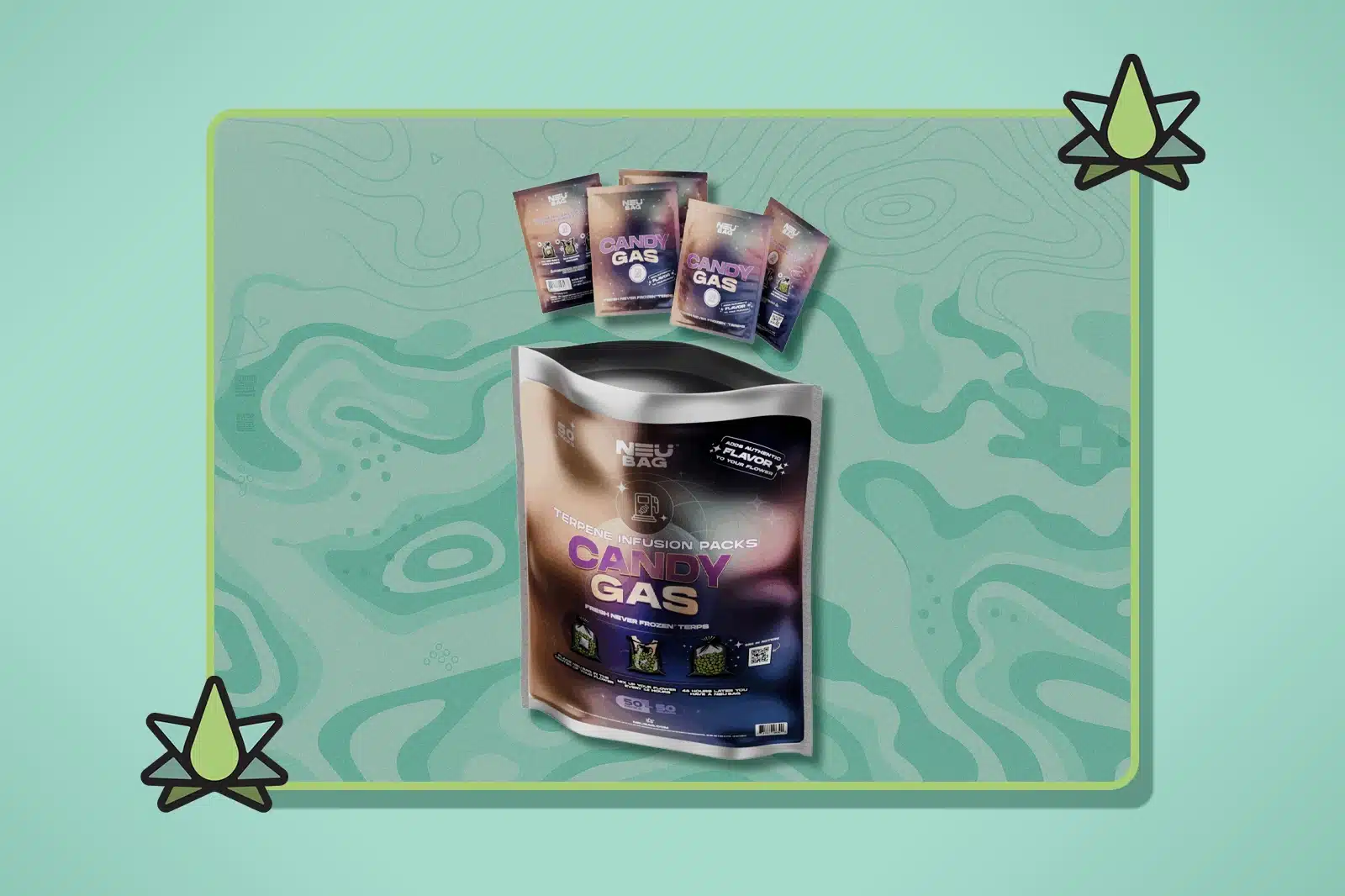
For manufacturers seeking more convenient R&D-scale infusion, Terpene Belt Farms’ NEU Bag system offers a cleaner, more efficient alternative to jar tumbling. NEU Bags are pre-measured, single-use infusion packs that eliminate the need for pipettes, measurements, and jar cleaning between batches.
The sealed bag design prevents terpene evaporation during mixing and eliminates workspace contamination common with open jar methods. Operators simply add ground flower to the NEU Bag, seal it, tumble for the specified duration, and proceed directly to cone filling, reducing both mess and cross-contamination risk when testing multiple formulations.
Production-Scale Infusion Process (Over 1 lb)
Commercial production requires equipment and protocols that maintain quality standards while delivering the throughput necessary for viable manufacturing economics. Manual methods become impractical beyond one-pound batches, and larger quantities demand spray application systems that can uniformly coat substantial flower volumes.
HVLP (High Volume Low Pressure) spray systems, such as the Fuji Spray Q4 Platinum, are industry-standard equipment for production-scale terpene application. These systems atomize terpenes into a fine mist that distributes evenly across flower surfaces when applied systematically. The process begins with loosening homogenized flower in large plastic bags to reduce packed density and maximize surface exposure for terpene contact.
Operators spray measured terpene amounts across flower surfaces while manually shifting flower position to expose uncoated material. This requires a systematic technique, spraying a section, bringing the coated flower forward, and exposing fresh flower for coating, repeated until the full calculated terpene quantity has been applied. The bag is then sealed to complete distribution before a rest period that allows full terpene absorption.
Production protocols must address several variables that don’t factor into small-batch work: spray gun pressure settings (medium-low for optimal atomization without waste), air respirator requirements for operator safety during extended spray sessions, and batch size optimization that balances efficiency against practical bag handling limits. Most manufacturers find 1,500-gram batches provide good efficiency while remaining manageable for single-operator protocols.
Equipment Requirements and Safety Considerations
Both R&D and production protocols require specific equipment selections and safety measures to guarantee consistent results and operator protection. Terpenes in concentrated form present flammability risks and can cause skin or eye irritation, necessitating appropriate personal protective equipment, including gloves, safety glasses, and respirators for production-scale work.
Material selection matters significantly for terpene contact surfaces. Glass and stainless steel prove ideal as they don’t interact with terpenes or leach compounds that could compromise product quality. Plastic materials should be evaluated carefully, as certain polymers can absorb terpenes or contribute off-flavors. The Fuji system’s stainless steel reservoir exemplifies appropriate material selection for production equipment.
Accurate measurement tools are necessary at both scales. Digital scales with 0.01-gram precision enable accurate terpene quantity calculation, while calibrated pipettes or graduated cylinders make sure measured amounts match calculations. Production facilities should maintain equipment calibration schedules and document measurement verification to support batch record requirements and quality assurance protocols.
Need detailed standard operating procedures with step-by-step protocols, equipment specifications, and safety checklists? Our downloadable Technical Guide includes complete SOPs for both R&D and production-scale infusion, plus equipment recommendations, supplier specifications, and safety documentation templates.
Determining Optimal Terpene Concentration Ratios
Concentration decisions impact product quality, cost structure, and consumer experience. Too little terpene produces minimal enhancement, while excessive concentration creates harsh smoke and chemical flavors. The trick here is to figure out the right balance that your consumers will appreciate.
Factors Affecting Concentration Decisions
Fresh, properly cured flower contains 1-2% terpenes by weight, while aged flower may drop below 0.5%. Flower with existing terpene content (1.5%+) requires modest supplementation, somewhere around 0.25-0.5% added terpenes, to achieve enhancement without overwhelming natural profiles.
Aged flower with minimal remaining terpenes can accommodate higher addition rates (0.5-0.75%) as you’re rebuilding rather than supplementing aromatic foundations. Manufacturers should obtain certificates of analysis (COAs) documenting terpene content in incoming flower lots to enable informed formulation decisions.
Terpene profiles exhibit different potency at equivalent concentrations. Limonene-dominant citrus profiles deliver pronounced aroma at 0.3% concentration, while myrcene-heavy profiles might require 0.7% to achieve comparable intensity. Profiles featuring intense terpenes like pinene or terpinolene require conservative approaches. What proves pleasant at 0.25% can become harsh at 0.5%. R&D testing should evaluate each profile at 0.25%, 0.5%, and 0.75% concentrations to identify optimal balance points.
Concentration Range Guidelines by Terpene Category
Cannabis-derived and hemp-derived terpene formulations target 0.5-0.75% concentration, with most premium products at 0.75% to maximize aromatic impact. Botanical terpene formulations show wider variance from 0.25-0.75% based on product strategy. Value products use 0.25-0.5% for cost-effective enhancement, while premium botanical formulations reach 0.75% for maximum sensory impact. Flavor-focused profiles often perform optimally at 0.5% where flavor becomes prominent without overwhelming natural cannabis characteristics.

Common Pre-Roll Infusion Challenges and Solutions
Even with proper protocols, manufacturers encounter predictable challenges during infusion implementation. Learning more about these issues and their solutions accelerates successful program launches while avoiding costly mistakes.
Uneven Terpene Distribution
Visual inspection occasionally reveals terpene concentration in certain areas of infused flower, while other sections appear untreated. This uneven distribution produces inconsistent consumer experiences where some pre-rolls deliver strong aromatic impact while others from the same batch seem minimally enhanced.
This issue stems from inadequate mixing during infusion or introducing terpenes too rapidly for flower mass to absorb. The solution requires both technique refinement and potentially process modification. At R&D scale, extending tumbling duration from 60 to 90 seconds and incorporating multiple directional changes (horizontal rolling, vertical tumbling, end-over-end rotation) improves distribution. The five-minute rest period proves critical and attempting to fill cones immediately after infusion doesn’t allow terpene absorption into flower structure.
Production-scale solutions focus on spray technique and batch handling. Operators should apply terpenes in multiple passes rather than attempting complete application in a single spray session. After applying one-third of the calculated terpene amount, close the bag and tumble before applying the next third. This staged approach gives terpenes time to absorb between applications, preventing pooling that leads to distribution problems.
Over-Saturation and Burning Issues
Over-saturation ends up as a sticky, difficult-to-handle flower that gums up filling equipment and produces pre-rolls that burn unevenly or go out during consumption. This issue is an indicator of excessive terpene concentration or application to flower with insufficient surface area to absorb the terpene volume.
Prevention requires respecting maximum concentration limits even when trying to maximize aromatic impact. While higher concentrations might seem to promise better results, terpenes beyond flower absorption capacity sit on surfaces rather than integrating into structure. These excess terpenes create the tacky texture that causes production headaches and combustion issues.
Flower preparation also factors significantly. Compressed or densely packed flower before infusion lack the surface area needed for proper terpene absorption. The “loosening” step in production protocols addresses this specifically. Before spraying terpenes, operators should fluff flower in bags to reduce density and maximize surface exposure. This creates the physical space terpenes need to distribute throughout the flower matrix rather than pooling on exterior surfaces.
Terpene Degradation During Storage
Products that smell exceptional immediately after production but lose aromatic intensity during storage indicate terpene degradation or evaporation issues. This not only diminishes consumer experience but wastes the investment in terpene enhancement.
Packaging selection can have a major impact on terpene retention. Pre-rolls require packaging that creates moisture and oxygen barriers while preventing terpene evaporation. Glass tubes with proper seals outperform basic plastic tubes, while nitrogen-flushed packaging provides additional protection for premium products where maximum shelf-life matters.
Storage conditions between production and retail sale also influence outcomes. Infused pre-rolls should be stored in cool, dark conditions that slow terpene degradation. Facilities should avoid storing finished goods in areas with temperature fluctuations or light exposure that accelerates terpene breakdown. Climate-controlled storage at 60-65°F in dark conditions optimizes shelf-life for infused products.
Facing specific production issues? Our Technical Guide walks you through production troubleshooting protocols addressing the most common infusion challenges manufacturers encounter. Download the full PDF today.
Building Your Infused Pre-Roll Strategy with Terpene Belt Farms
Capturing the infused pre-roll market opportunity requires formulations that deliver consistent quality, production protocols that scale efficiently, and supplier partnerships that support growth objectives.
Terpene Belt Farms provides California-grown cannabis-derived terpenes that capture complete terpene spectrums for authentic strain experiences in premium products. Our enhanced natural and botanical collections enable cost-effective enhancement for value-tier offerings and high-volume production strategies. Our technical team supports formulation development with concentration recommendations, application protocol guidance, and troubleshooting assistance for operations ranging from startup brands to multi-state operators.
For brands seeking proprietary differentiation, our custom formulation development creates exclusive terpene profiles that deliver specific sensory targets or effect profiles—intellectual property that distinguishes products beyond commodity blends. Supply chain reliability ensures consistent inventory availability as successful products scale from pilot production through commercial launch.
The infused pre-roll category rewards manufacturers who establish quality reputations early. With proper formulation strategy and reliable supplier partnerships, brands can capture meaningful market share in this expanding segment.
Ready to launch or optimize your infused pre-roll production? Contact Terpene Belt Farms to discuss formulation strategy, request samples of our terpene profiles, or schedule a technical consultation with our applications team.
Frequently Asked Questions about Terpene-Infused Pre-Rolls
What Percentage of Terpenes Should I Add to Pre-Rolls?
Optimal terpene concentration ranges from 0.25% to 0.75% by weight, depending on terpene profile intensity, base flower characteristics, and product positioning. Cannabis-derived and hemp-derived terpenes typically perform best at 0.5-0.75% concentration, while botanical terpenes range from 0.25-0.75%. Start testing at 0.5% and adjust based on sensory evaluation.
How Much Does Terpene Infusion Cost Per Pre-Roll Unit?
Botanical terpenes cost approximately $0.005-0.01 per pre-roll at 0.25-0.5% concentration. Hemp-derived terpenes cost approximately $0.05 per unit at 0.5-0.75% concentration. Cannabis-derived terpenes cost $0.10-0.15 per unit at 0.75% concentration. These costs should be evaluated against the 20-40% retail price premiums infused pre-rolls typically command.
How Long Do Infused Pre-Rolls Maintain Their Terpene Potency?
Properly formulated and packaged infused pre-rolls maintain aromatic intensity for 3-6 months under appropriate storage conditions. Terpene retention depends on packaging quality (glass or nitrogen-flushed containers outperform plastic), storage conditions (cool, dark environments around 60-65°F), and initial concentration.
What’s the Difference Between Spraying Terpenes on Cones Versus Infusing Into Flower?
Infusing terpenes directly into flower produces superior consumer experiences compared to applying terpenes to paper or cones. Flower infusion allows consumers to experience the full aromatic profile during consumption as airflow pulls vapor through terpene-enhanced flower. Terpenes on papers burn off rather than contributing to inhaled smoke, creating aroma without flavor delivery.
Do I Need Special Licenses or Permits to Add Terpenes to Cannabis Products?
Terpene addition requirements vary by state. Most states treat terpenes as ingredients requiring standard manufacturing licenses but not special additional permits. However, some jurisdictions classify terpene addition as “infusion” requiring licenses beyond basic flower handling. California permits terpene addition under Type 6 (Manufacturer) or Type N (Infusion) licenses. Consult state regulations or compliance counsel.
Can Terpene Infusion Help Mask Poor-Quality Flower?
Terpene infusion effectively restores aromatic appeal to aged flower that lost terpene content over time but cannot remediate fundamental quality defects like mold, contamination, or poorly cultivated flower. Infusion supplements depleted terpene content, it cannot mask harsh smoke, eliminate contamination, or correct structural problems. According to FDA cannabis testing requirements, all products must meet contaminant standards.