Quick Answer: The most effective terpenes for relaxation-focused cannabis formulations are linalool, myrcene, beta-caryophyllene, terpinolene, and nerolidol. Each compound offers distinct calming mechanisms, from linalool’s GABA receptor modulation to beta-caryophyllene’s CB2 receptor interaction, enabling formulators to create targeted relaxation profiles for vapes, topicals, beverages, and wellness products.
Key Takeaways
- Relaxation-focused cannabis products depend heavily on terpene selection, with inconsistent terpene sourcing and degradation being a primary cause of batch-to-batch performance issues.
- Linalool and myrcene provide the strongest sedative effects, acting through GABAergic and serotonergic pathways that support stress reduction, muscle relaxation, and sleep-oriented formulations.
- Beta-caryophyllene delivers non-sedating relaxation through CB2 receptor activation, making it ideal for daytime stress, inflammation, and pain-focused products.
- Terpinolene and nerolidol offer complementary calming effects at moderate concentrations, enabling formulators to differentiate aroma profiles while maintaining functional relaxation benefits.
- Effective formulations prioritize 2–4 core terpenes with delivery-specific concentration ranges, rather than attempting to recreate full-spectrum profiles that are difficult to stabilize at scale.
- To build reliable, high-performing relaxation products with authentic cannabis-derived terpene profiles, partner with Terpene Belt Farms for wholesale and source inputs engineered for consistency, stability, and measurable calming effects.
Relaxation products dominate cannabis sales, yet many brands struggle to deliver consistent calming effects across production batches.
The terpene profile is mostly the problem here, which determines whether a product actually helps consumers unwind or falls flat. Cannabis formulators know this instinctively.
When a vape cartridge gets flagged for “not hitting as it used to” or an edible line sees declining repeat purchases, the culprit is usually terpene degradation or inconsistent sourcing. Brands relying on botanical reconstructions face an even steeper challenge: no matter how precisely you match primary terpene percentages, you can’t replicate the 150+ synergistic compounds in authentic cannabis profiles.
This guide breaks down five terpenes with validated relaxation properties: linalool, myrcene, beta-caryophyllene, terpinolene, and nerolidol. You’ll get specific concentration ranges for different delivery methods, formulation strategies that preserve terpene integrity through production, and sourcing considerations that determine whether your relaxation products perform consistently or disappoint customers batch after batch.
Top Terpenes for Calming and Sedative Effects
The following terpenes demonstrate consistent relaxation properties across multiple research studies and commercial applications. Each offers distinct mechanisms of action and formulation considerations for product developers targeting specific consumer needs.
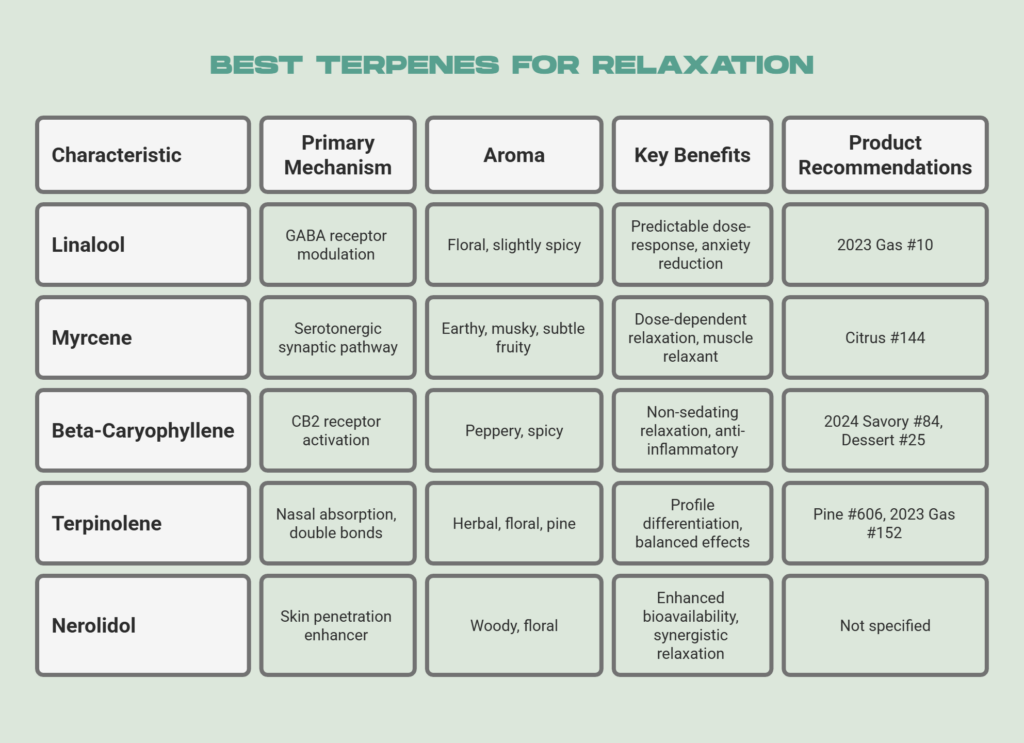
1. Linalool
Linalool delivers pronounced calming effects through GABA receptor modulation, making it one of the most researched sedative terpenes in cannabis and botanical medicine. This monoterpene alcohol occurs naturally in lavender, cannabis, and over 200 aromatic plant species, contributing floral, slightly spicy aromatic notes to product profiles.

Effects of Linalool
Research published in Phytomedicine demonstrates that linalool administration prolonged barbiturate-induced sleeping time in mice by 2.6 times, while reducing body temperature and spontaneous movement, clear indicators of sedative activity. The compound achieves these effects primarily through GABA-A receptor enhancement, the same mechanism targeted by benzodiazepine pharmaceuticals but without dependency risks.
Studies in Frontiers in Chemistry reveal that linalool metabolites continue modulating GABAergic currents even after initial breakdown, suggesting sustained calming effects beyond immediate administration. This extended activity window makes linalool particularly valuable for products designed to support sleep duration rather than just onset.
Benefits of Using Linalool in Formulations
- Predictable Dose-Response Curves: Clinical data show consistent sedative effects at concentrations of 0.3-1.5%, enabling precise formulation targeting
- Anxiety Reduction without Sedation: Lower concentrations (0.3-0.5%) provide stress relief suitable for daytime products
- Enhanced Cannabinoid Synergy: Research indicates linalool potentiates CBD’s anxiolytic effects through complementary receptor pathways
- Aromatic Acceptance: The familiar lavender association creates positive consumer expectations for relaxation products
- Formulation Stability: Linalool maintains integrity in properly stored concentrate formulations longer than more volatile monoterpenes
- Regulatory Clarity: GRAS (Generally Recognized As Safe) status simplifies compliance documentation for CPG applications
Product Recommendations for Linalool
For authentic relaxation formulations requiring measurable linalool content, 2023 Gas #10 delivers cannabis-derived linalool within a full-spectrum terpene profile. While linalool appears in lower concentrations than dominant terpenes, its presence contributes meaningful anxiolytic effects when combined with complementary compounds in the complete cannabis terpene matrix.
2. Myrcene
Myrcene stands as the most abundant terpene in cannabis, frequently comprising 20-65% of total terpene profiles in relaxation-focused strains. This monoterpene produces distinctive earthy, musky aromatic characteristics with subtle fruity undertones that consumers associate with potent indica experiences.

Effects of Myrcene
Published research in Pharmaceuticals demonstrates that beta-myrcene operates through the serotonergic synaptic pathway to produce sedative-hypnotic effects in insomnia models. Mice treated with myrcene showed increased sleep rates, shortened sleep latency, and extended sleep duration compared to control groups. These effects were mediated through elevated GABA, 5-HT, and glutamate levels in the hypothalamus.
A review in Frontiers in Nutrition reveals that myrcene inhalation improved autonomic nervous system activity in human subjects, with participants reporting increased relaxation, elevated mood, and enhanced calmness within five minutes. EEG measurements confirmed increased theta and alpha brain wave activity characteristic of meditative states, providing objective validation of subjective relaxation reports.
Benefits of Using Myrcene in Formulations
- Dose-Dependent Relaxation Control: Concentrations above 0.5% typically induce noticeable relaxation, while levels exceeding 0.8% produce more pronounced sedative effects
- Muscle Relaxant Properties: Effective at 0.2-0.5% for topical formulations targeting physical tension without overwhelming sensory profiles
- Extended Duration Effects: Myrcene’s metabolic pathway produces sustained calming rather than short-duration spikes
- Broad Cannabis Strain Availability: High natural occurrence simplifies sourcing for brands requiring consistent volume supply
- Consumer Recognition: The distinctive musky-earth aroma signals relaxation effects to experienced cannabis users
- Formulation Versatility: Performs reliably across vape, edible, topical, and beverage applications
Product Recommendations for Myrcene
For formulations requiring high myrcene concentrations, Citrus #144 delivers 11.73% myrcene within a balanced citrus-forward profile. This hemp-derived blend combines myrcene’s grounding sweetness with 18.77% limonene for bright tropical energy and 11.37% beta-caryophyllene for peppery warmth, creating a unique relaxation profile that maintains uplifting characteristics alongside calming effects.
3. Beta-Caryophyllene
Beta-caryophyllene represents a unique compound in cannabis chemistry. It functions simultaneously as both a terpene and a cannabinoid through selective activation of the CB2 receptor. This sesquiterpene produces peppery, spicy aromatic notes that add complexity to relaxation formulations while delivering distinct calming mechanisms unavailable from other terpenes.

Effects of Beta-Caryophyllene
Research published in Behavioral Brain Research demonstrates that beta-caryophyllene exhibited antidepressant-like effects in chronically stressed mice through CB2 receptor agonism with minimal psychoactive impact. The compound reduced stress-induced behavioral changes while maintaining normal motor function and cognitive performance—a profile distinct from traditional sedatives or high-THC formulations.
Studies in SAGE Journals reveal that beta-caryophyllene showed concentration-dependent free radical scavenging capacity and protective effects against oxidative stress in neural cells. These antioxidant properties complement its anxiolytic effects by addressing the cellular damage associated with chronic stress conditions.
Benefits of Using Beta-Caryophyllene in Formulations
- Non-Sedating Relaxation: Produces calm without drowsiness, suitable for products marketed for daily stress management
- Anti-Inflammatory Effects: CB2 activation addresses both emotional stress and physical tension simultaneously
- Pain Modulation Support: Particularly valuable for formulations targeting stress-related muscle tension and discomfort
- No Psychoactive Effects: Enables higher concentrations without intoxication concerns in hemp-derived or CBD products
- Regulatory Advantages: CB2-selective activity provides therapeutic positioning without controlled substance restrictions
- Formulation Stability: Sesquiterpene structure offers superior shelf stability compared to lighter monoterpenes
Product Recommendations for Beta-Caryophyllene
The β-Caryophyllene-rich 2024 Savory #84 from Terpene Belt Farms showcases a high 17.74% β-Caryophyllene content, giving it a bold, peppery, and spicy character, integrated with citrus and earthy depth, which is ideal for savory-forward formulations that demand complexity and depth in vape or concentrate products.
Transitioning from savory to dessert profiles, the β-Caryophyllene-rich Dessert #25 offers about 17.05% β-Caryophyllene, balancing peppery nuance with bright limonene and floral undertones. This gives dessert-forward formulations a layered complexity beyond simple sweetness, perfect for products seeking both aromatic richness and spicy depth.
4. Terpinolene
Terpinolene presents an interesting paradox in relaxation formulations. Despite its reputation as an energizing terpene, research demonstrates clear sedative properties when properly concentrated. This cyclic monoterpene contributes complex aromatic notes blending herbal, floral, and pine characteristics that differentiate formulations from myrcene-dominant products.

Effects of Terpinolene
Research in the Journal of Natural Medicine demonstrates that inhaled terpinolene produced dose-dependent sedative effects in mice through nasal absorption, with structural analysis revealing that double bonds in the side-chain and pi bonds in the six-membered ring play essential roles in sedative activity.
Importantly, these effects occurred even in olfactory-impaired subjects, confirming systemic rather than purely aromatherapeutic mechanisms.
Studies published in the European Journal of Integrative Medicine found that terpinolene inhalation reduced tension while increasing relaxation and stabilization of brain function based on electroencephalographic measurements. This dual action, simultaneously decreasing agitation and promoting calm, makes terpinolene valuable for formulations targeting stress-induced anxiety.
Benefits of Using Terpinolene in Formulations
- Profile Differentiation: The fresh, complex aroma distinguishes products from standard myrcene-heavy relaxation offerings
- Balanced Effects: Provides calming without heavy sedation when formulated at 0.3-0.8% concentrations
- Anti-Anxiety Support: Research indicates stress reduction through serotonin receptor pathway activation
- Formulation Flexibility: Performs well in combinations with both sedating and uplifting terpene profiles
- Antioxidant Properties: Provides additional functional benefits beyond primary relaxation effects
- Consumer Novelty: Less common terpinolene-forward products create memorable brand positioning
Product Recommendations for Terpinolene
Pine #606 is strongly driven by terpinolene, which defines its bright pine, herbal, and slightly citrusy character. The high terpinolene content gives this profile an airy, fresh quality with sharp top notes, making it feel crisp and energetic while still maintaining enough depth to avoid coming across as thin or one-dimensional.
Transitioning into a more fuel-forward direction, 2023 Gas #152 also leans heavily on terpinolene, but uses it differently. Here, terpinolene amplifies the sharp, gassy, and floral notes, adding volatility and lift to the profile while blending with sweeter and earthy undertones for a more aggressive, modern gas expression.
5. Nerolidol
Nerolidol functions as a sesquiterpene alcohol with distinctive woody, floral aromatic characteristics and documented sedative properties. While classified as a minor terpene in most cannabis profiles, nerolidol contributes meaningful relaxation effects and offers unique formulation advantages as a skin penetration enhancer for topical applications.

Effects of Nerolidol
Research in the Indian Journal of Pharmacology reveals that nerolidol produced anti-anxiety effects in mice without impairing motor coordination, a critical distinction from pharmaceutical anxiolytics that often cause sedation-related performance deficits. The compound achieved these effects through mechanisms distinct from benzodiazepine pathways, suggesting complementary rather than redundant action when combined with other calming agents.
Benefits of Using Nerolidol in Formulations
- Enhanced Bioavailability: Functions as skin penetration enhancer, improving transdermal absorption in topical formulations
- Synergistic Relaxation: Works complementarily with myrcene and linalool to deepen overall calming effects
- Non-Intoxicating Calm: Produces relaxation without psychoactive effects, suitable for CBD and hemp applications
- Antimicrobial Properties: Adds functional preservation benefits in topical and beverage formulations
- Premium Positioning: Lower natural occurrence creates exclusivity perception for high-end product lines
- Formulation Versatility: Performs across multiple delivery methods from inhalation to topical to oral
Formulation Best Practices for Relaxation Products
Creating relaxation formulations that actually work comes down to three things: choosing the right terpene combinations, getting concentrations dialed in for your delivery method, and sourcing quality inputs that stay consistent batch after batch.
Here’s what we’ve learned from years of working with product developers on commercial-scale relaxation products.

Building Effective Terpene Blends
Most successful relaxation formulations focus on 2-4 core terpenes rather than trying to recreate every compound in a full-spectrum profile. This streamlined approach gives you the consistency brands need for commercial production while preserving the synergistic effects that make terpene blends work.
In our experience formulating with partners, the best relaxation profiles start with a dominant sedative terpene, usually myrcene or linalool at 1-2%, then layer in complementary compounds at lower concentrations. Think of it like building flavor in cooking: one main ingredient supported by accents that round out the experience.
Optimizing for Different Delivery Methods
Terpene concentrations that work perfectly in a vape will fall flat in an edible. Vape formulations hit their sweet spot at 2-4% total terpene content, delivering noticeable relaxation without harsh throat hits. Edibles and beverages need higher concentrations, typically 5-8%, to compensate for the reduced bioavailability that comes with oral consumption and first-pass metabolism.
Topical applications targeting muscle relaxation perform best at 3-6% terpene concentrations. We’ve seen particularly strong results with beta-caryophyllene and myrcene in this format, especially when combined with other penetration enhancers that help get those compounds where they need to go.
Protecting Terpenes During Production
When you add terpenes matters as much as what you add. Introducing terpenes during final formulation stages, rather than early in processing, minimizes degradation from heat and oxidation exposure. Temperature-sensitive compounds like linalool and myrcene benefit most from cold-fill processes or post-production infusion methods that preserve their volatile properties.
We recommend keeping temperatures below 140°F whenever possible. Higher temps don’t just degrade terpenes. They can shift ratios by volatilizing lighter compounds faster than heavier sesquiterpenes, changing your intended profile.
Stability Testing That Actually Matters
Premium relaxation products should maintain at least 80% of their initial terpene content through their expiration date. Getting there requires nitrogen flushing, amber containers, controlled storage temps, and formulation techniques that protect volatiles from oxidation.
Run accelerated aging studies before you go to market. Store samples at elevated temperatures (40°C for 2-4 weeks) and test terpene retention to predict real-world shelf life. These studies catch stability problems before your customers do, saving you from reformulation headaches down the road.
Why Terpene Belt Farms Should Be Your Terpene Supplier
Terpene Belt Farms operates at the intersection of California cannabis cultivation and precision extraction science, providing product developers with consistently superior terpene inputs for commercial formulation. Our vertical integration from genetics through extraction ensures the batch-to-batch reliability that premium brands require for maintaining consumer trust.
California-grown cannabis produces measurably more complex terpene profiles than genetics cultivated in suboptimal environments. We use ideal terroir conditions, precise temperature ranges, optimal humidity, and nutrient-rich soil to maximize terpene expression before extraction begins. This agricultural foundation creates the molecular complexity that botanical alternatives cannot achieve, regardless of extraction technology.
Our extraction methodologies preserve the delicate aromatic and functional compounds that define authentic relaxation experiences. Low-temperature processes maintain natural terpene ratios found in source plants rather than altering profiles through heat stress. Fresh-never-frozen handling protocols capture volatile compounds that traditional processing methods lose during standard harvest and curing procedures.
Ready to boost your relaxation product line with authentic cannabis-derived terpenes? Shop our sample kits for your R&D and see how we can help.
Frequently Asked Questions About Relaxation Terpenes
What Concentration of Relaxation Terpenes Should I Use in Vape Formulations?
Effective vape formulations typically contain 2-4% total terpene content, with dominant relaxation terpenes like myrcene or linalool comprising 1-2% and supporting compounds at 0.3-0.8% each. Higher concentrations may produce harsh throat hits or overwhelming flavor profiles.
Can I Combine Multiple Sedative Terpenes without Creating Excessive Drowsiness?
Strategic combinations at appropriate concentrations produce balanced relaxation without heavy sedation. Pairing myrcene (1-1.5%) with beta-caryophyllene (0.5-0.8%) and linalool (0.3-0.5%) creates calm without impairment. Testing with target consumers validates effects before commercial production.
What Shelf Life Should I Expect for Terpene-Rich Relaxation Formulations?
Properly stored formulations in nitrogen-flushed, amber containers maintain 80%+ terpene content for 12-18 months. Temperature control below 70°F and minimal air exposure preserve volatile compounds. Accelerated aging studies predict real-world stability across distribution channels.
Do Relaxation Terpenes Work without Cannabinoids Present?
Yes. Research shows linalool, myrcene, and other terpenes produce measurable sedative effects independent of cannabinoid content. However, cannabinoid-terpene combinations typically improve overall relaxation through synergistic mechanisms.
Which Relaxation Terpene Works Best for Daytime Stress Management?
Beta-caryophyllene offers non-sedating stress relief through CB2 receptor activation at 0.5-1% concentrations. This allows formulation of daytime products that reduce anxiety without drowsiness or cognitive impairment common to myrcene-dominant profiles.
Sources Used for This Article
- ScienceDirect: “β-Caryophyllene, a CB2 receptor agonist, produces anxiolytic-like effect in mice” – sciencedirect.com/science/article/pii/S0944711308001529
- Frontiers: “Metabolic Products of Linalool and Modulation of GABAA Receptors” – frontiersin.org/journals/chemistry/articles/10.3389/fchem.2017.00046/full
- MDPI: “Beta-Myrcene as a Sedative–Hypnotic Component from Lavender Essential Oil in DL-4-Chlorophenylalanine-Induced-Insomnia Mice” – mdpi.com/1424-8247/17/9/1161
- PubMed Central: “Myrcene—What Are the Potential Health Benefits of This Flavouring and Aroma Agent?” – pmc.ncbi.nlm.nih.gov/articles/PMC8326332/
- PubMed: “Antidepressant-like effects of β-caryophyllene on restraint plus stress-induced depression” – pubmed.ncbi.nlm.nih.gov/31862467/
- SAGE Journals: “Anxiety Therapeutic Interventions of β-Caryophyllene: A Laboratory-Based Study” – journals.sagepub.com/doi/full/10.1177/1934578X20962229
- PubMed: “The sedative effect of inhaled terpinolene in mice and its structure-activity relationships” – pubmed.ncbi.nlm.nih.gov/23339024/
- PubMed: “Antioxidant effects of nerolidol in mice hippocampus after open field test” – pubmed.ncbi.nlm.nih.gov/23765368/