Quick Answer: No, terpenes alone cannot get you high. These aromatic compounds lack psychoactive properties and don’t bind to CB1 receptors responsible for cannabis intoxication. However, terpenes can modulate cannabinoid effects through the entourage effect, influencing product performance without causing intoxication themselves. For formulators, this distinction is critical for regulatory compliance and product positioning.
Key Takeaways
- Terpenes cannot get you high because they lack the molecular structure required to bind to CB1 receptors, which are responsible for cannabis intoxication.
- Research confirms that terpenes exhibit only 10–50% of THC’s CB1 receptor activity, producing no psychoactive effects regardless of source, purity, or concentration.
- While non-intoxicating, terpenes influence cannabinoid behavior through the entourage effect, modulating absorption, bioavailability, and perceived effects without impairing cognitive function.
- Myrcene, limonene, pinene, β-caryophyllene, and linalool each affect neurotransmitter systems differently, enabling targeted formulations for relaxation, focus, mood support, or pain relief.
- Hemp-derived terpenes ensure federal compliance under the 2018 Farm Bill by containing no THC, while offering authentic cannabis aromas and therapeutic potential for wellness products.
- Terpene Belt Farms offers Fresh Never Frozen terpene oils and NEU Bags to create compliant, non-psychoactive, and high-performance formulations. Buy our sample kits to try them out for R&D and product testing.
The question of whether terpenes produce psychoactive effects continues to generate debate among formulators, extractors, and product developers. While cannabinoids like THC and CBD dominate discussions around bioactivity, terpenes occupy a more complex position in the entourage effect, one that’s frequently misunderstood or oversimplified in marketing claims.
Research suggests these aromatic compounds interact with endocannabinoid and other receptor systems in more ways than mere flavor and aroma profiles. However, distinguishing between subjective experiential effects and measurable psychoactivity requires careful analysis of available data.
For B2B buyers making formulation decisions, figuring out terpenes’ actual mechanisms and limitations is important. This article talks about the current scientific evidence, regulatory considerations, and practical implications for product development. Our goal here will be to separate substantiated claims from speculation, helping you make informed sourcing and formulation choices for the betterment of your products and brand.
What Makes Cannabis Compounds Psychoactive?
The distinction between psychoactive and non-psychoactive cannabis compounds lies in their molecular interaction with the human endocannabinoid system, particularly the CB1 receptors concentrated in the brain and central nervous system.
THC (tetrahydrocannabinol) produces intoxication because its molecular structure allows it to bind directly to these CB1 receptors, mimicking the action of naturally occurring endocannabinoids and triggering the cascade of effects associated with cannabis intoxication. This binding affinity requires a specific molecular configuration, a phenolic hydroxyl group, and a pentyl side chain, which lets THC to fit into the CB1 receptor like a key in a lock.
Terpenes fundamentally lack this molecular architecture. As hydrocarbon compounds built from isoprene units (C5H8), terpenes don’t possess the structural elements necessary for CB1 receptor binding.
Research published in Scientific Reports demonstrates that terpenes activate CB1 receptors at only 10-50% of THC’s activity, without producing intoxication. Even beta-caryophyllene, which uniquely binds to CB2 receptors in the peripheral nervous system, cannot interact with CB1 receptors to produce psychoactive effects. This structural impossibility means that, regardless of concentration or source, terpenes cannot directly trigger intoxication through the same mechanism as THC.
Table: Terpene Types and Their Psychoactive Properties
| Terpene Source | Psychoactive? | Legal Status | Common Applications | Typical Concentration |
| Cannabis-Derived (CDT) | No | Federally legal if <0.3% THC | Premium vapes, concentrates | 5-15% in formulations |
| Hemp-Derived (HDT) | No | Federally compliant | Tinctures, topicals | 2-10% in products |
| Botanical | No | Fully legal | Beverages, edibles | 0.1-5% depending on format |
| Synthetic | No | Legal (varies by state) | Mass-market products | 0.5-8% typical |
| Enhanced Natural | No | Legal | Wellness products | 1-12% in applications |
For formulators, this non-psychoactive status creates distinct advantages. Products featuring our premium terpene oils can be marketed in jurisdictions where THC remains restricted, while still delivering authentic cannabis aromatics and potential therapeutic benefits. The molecular impossibility of terpene intoxication provides a scientific foundation for regulatory arguments and product positioning strategies.
How Terpenes Affect Your Cannabis Experience
While terpenes cannot cause intoxication independently, they profoundly influence the cannabis experience through complex pharmacological interactions now recognized as the entourage effect.
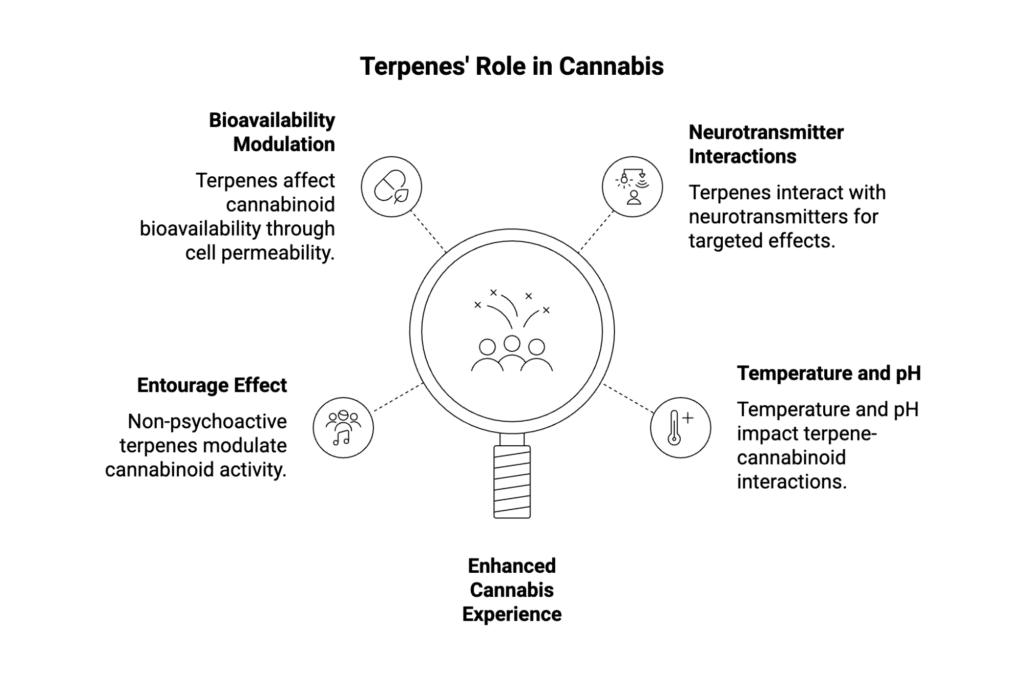
First described by Mechoulam and Ben-Shabat in their groundbreaking 1998 research, this phenomenon demonstrates how non-psychoactive compounds modulate the activity of primary cannabinoids without themselves producing intoxication. For formulators, this creates opportunities to fine-tune product effects through precise terpene selection and rationing.
The modulation takes place through multiple mechanisms that product developers can strategically deploy. Research from the University of Arizona confirms that in terpene-infused cannabis formulations, the terpenes increase cannabinoid bioavailability by affecting cell membrane permeability and transport proteins.
Studies show myrcene enhances THC penetration across the blood-brain barrier without itself crossing in significant quantities. This explains why myrcene-rich profiles often produce more sedating effects when combined with THC, despite myrcene alone showing no psychoactive properties at typical consumption levels.
Specific terpene-neurotransmitter interactions enable targeted formulation strategies:
- Limonene: Demonstrates anxiolytic effects through serotonin receptor modulation at 10mg/kg doses
- Linalool: Exhibits GABAergic activity comparable to conventional anxiolytics
- Pinene: Shows acetylcholinesterase inhibition that may offset THC-related memory effects
- Beta-caryophyllene: Activates CB2 receptors without psychoactivity
- Alpha-humulene: Produces anti-inflammatory effects through non-cannabinoid pathways
Temperature and pH significantly impact these relationships during manufacturing. Our formulation data indicates that maintaining extraction temperatures below 120°F preserves the full spectrum of terpene-cannabinoid interactions, while higher temperatures can denature proteins that facilitate these molecular relationships. When developing products with our premium terpene oils, R&D teams consistently report more pronounced entourage effects when processing parameters respect these thermal boundaries.
Do Hemp Terpenes Get You High?
Cannabis-derived terpenes come in three primary forms: synthetic, natural hemp-derived, and natural marijuana-derived.
Synthetic terpenes are created in laboratories to mimic natural compounds. Natural terpenes can be extracted from either industrial hemp or marijuana plants, both members of the Cannabis sativa species. While marijuana-derived terpenes may capture the full aromatic complexity of high-THC cultivars, they exist within regulatory grey areas and risk THC contamination during extraction.
At Terpene Belt Farms, we exclusively work with natural hemp-derived terpenes because they preserve complete aromatic and therapeutic profiles while ensuring zero THC content and full federal compliance. Despite the quality differences between synthetic, hemp-derived, and marijuana-derived sources, all three share one critical characteristic when it comes to psychoactivity: there is none.
Hemp terpenes are non-psychoactive compounds. Period. Whether extracted from industrial hemp, marijuana plants, or synthesized in a lab, terpenes themselves do not produce intoxicating effects. This isn’t due to the low THC content in hemp; it’s because, as we’ve established earlier, terpene molecules fundamentally lack psychoactive properties.
For formulators, hemp-derived terpenes offer a distinct regulatory advantage over marijuana-derived alternatives. Extracted from industrial hemp containing less than 0.3% Delta-9 THC, these terpenes maintain federal compliance under the 2018 Farm Bill while delivering authentic cannabis characteristics.
Our hemp-sourced profiles undergo rigorous testing to verify THC absence and confirm complete terpene expression, providing the documentation brands need for non-psychoactive claims in wellness and supplement categories without the compliance risks associated with marijuana-derived terpenes.
Terpene-Cannabinoid Interactions in Formulations
Specific terpene profiles interact with cannabinoids in completely different ways. Formulators need to design products with predictable characteristics and targeted applications for their consumers. While the mechanisms remain under investigation, empirical formulation data and consumer feedback have established reliable patterns for product development.
Myrcene-Dominant Profiles: Evening and Sedative Formulations
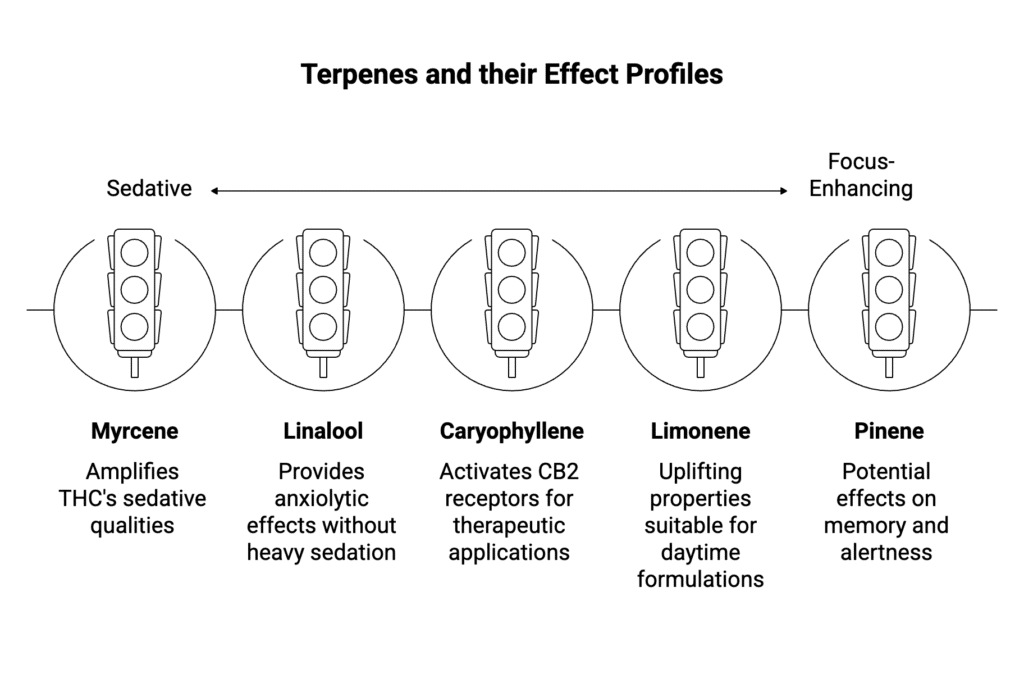
Myrcene amplifies THC’s sedative qualities, making it ideal for nighttime products. Research shows myrcene activates TRPV1 channels, potentially contributing to its relaxing effects.
Formulators normally incorporate 2-5% myrcene in vape formulations, where rapid onset complements its calming characteristics. This profile works particularly well in sleep-targeted tinctures and edibles designed for evening consumption.
If formulations are something your brand typically struggles with, our R&D Vape Formulation guide can help!
Limonene-Forward Blends: Mood Enhancement and Daytime Use
Limonene’s uplifting properties make it suitable for daytime formulations, especially when paired with CBD for mood support. Terpenes like limonene can influence mood-related pathways.
Optimal concentrations range from 3-8% in tincture formulations, where the citrus notes improve palatability while potentially reducing anxiety responses. This profile is frequently found in successful wellness products designed for stress management without sedation.
Pinene-Rich Formulations: Mental Clarity and Focus
Pinene has been studied for its potential effects on memory and alertness, making it valuable for focus-oriented formulations. Formulators incorporate 1-4% pinene in edible applications, particularly in microdose products marketed for daytime focus.
The sharp, forest-like aroma pairs well with herbal flavor profiles in functional beverages and supplements.
Caryophyllene-Heavy Products: Therapeutic Applications
Beta-caryophyllene directly activates CB2 receptors, making it uniquely valuable in therapeutic formulations. Concentrations of 2-6% work effectively in topical applications, where its anti-inflammatory properties complement both THC and CBD for localized pain relief. This profile dominates sports recovery and chronic pain management products.
Linalool-Based Blends: Relaxation Without Heavy Sedation
Linalool interacts with adenosine receptors to provide anxiolytic effects without the heavy sedation of myrcene. At 1-3% concentrations in beverage formulations, it creates calming products suitable for social settings. The floral notes integrate seamlessly into botanical drink profiles, making it popular in cannabis-infused wellness beverages.
Stability and Storage Considerations
Product developers working with hemp terpenes should prioritize stability testing under various storage conditions. Hemp-derived terpenes maintain their non-psychoactive status indefinitely when properly stored, but oxidation from heat and light exposure can develop off-notes that compromise product quality.
Implementing nitrogen blanketing during bottling and recommending refrigerated storage extends shelf life while preserving intended aromatic and functional profiles. Dark glass packaging and oxygen scavengers provide additional protection for terpene-rich formulations with extended distribution timelines.
Closing Thoughts — Building Your Product Strategy Around Non-Psychoactive Terpenes
The non-psychoactive nature of terpenes doesn’t diminish their importance in cannabis product formulation. These aromatic compounds deliver authentic cannabis characteristics, influence bioavailability, and create differentiated sensory experiences without contributing to intoxication. For B2B buyers, this distinction enables precise formulation control and broader market positioning.
Quality matters significantly in terpene sourcing. Inferior extracts introduce contaminants, inconsistent ratios, and off-notes that compromise final products. Formulators building brands around terpene-forward products need suppliers who understand these technical nuances and maintain rigorous quality standards. This is where Terpene Belt Farms comes in.
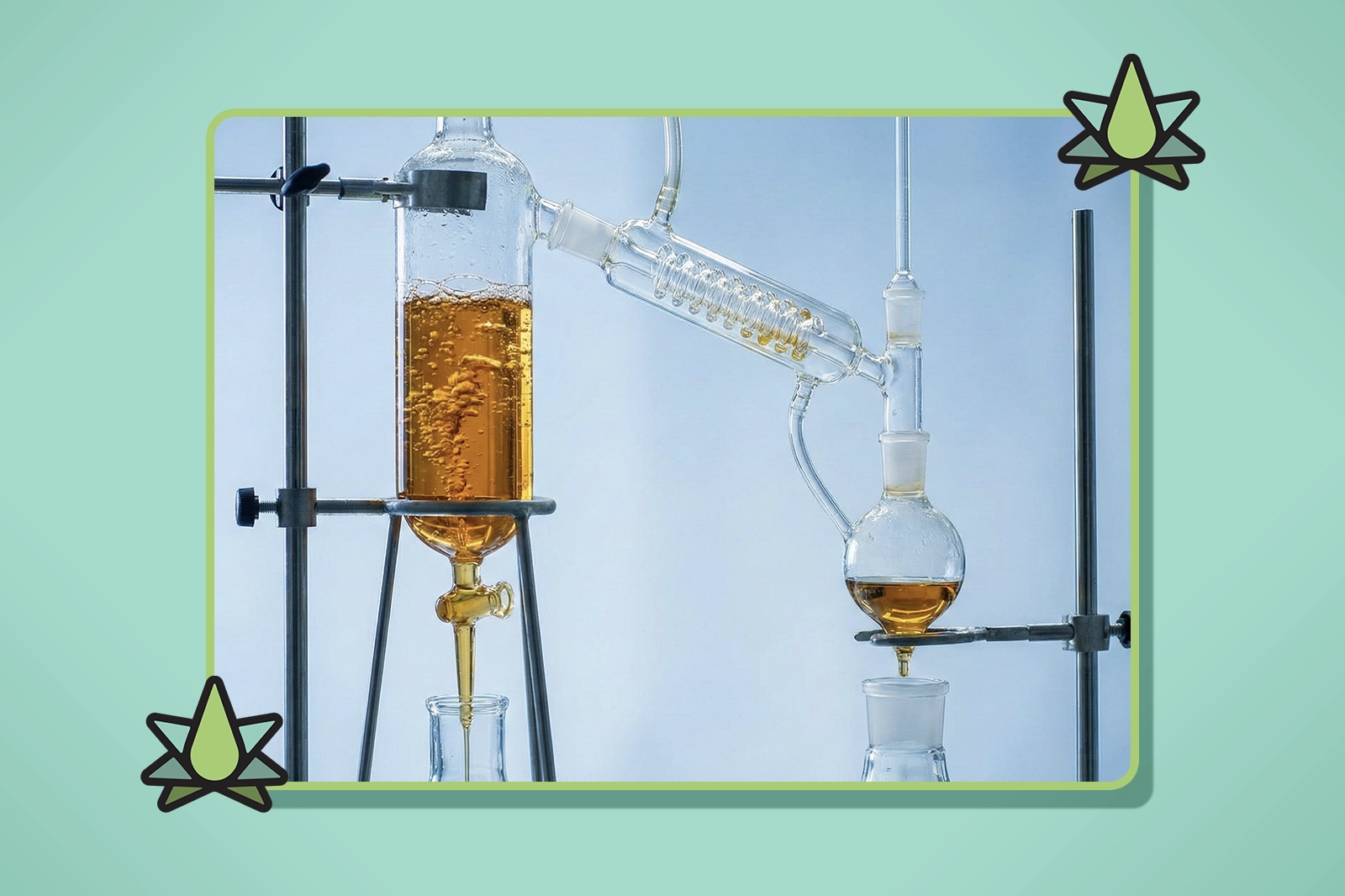
Terpene Belt Farms is the leading producer of hemp essential oil in North America, operating vertically integrated farms in California’s Terpene Belt. Our Fresh Never Frozen® (FNF) processing technology sets the industry standard. We harvest flowers at peak ripeness and convert them into oil within 90 minutes, preserving the complete terpene profile, including volatile monoterpenes and delicate sesquiterpenes that degrade in conventional freeze-dry methods.
Every batch undergoes thorough third-party testing for purity, potency, and the absence of THC, residual solvents, and pesticides. Our oils are steam-distilled and cannabinoid-free, making them federally compliant under the 2018 Farm Bill while delivering authentic cannabis characteristics.
Fresh Never Frozen® Terpene Oils are our flagship liquid terpene products, available in both vintage (single-variety, single-harvest) and blended formulations.
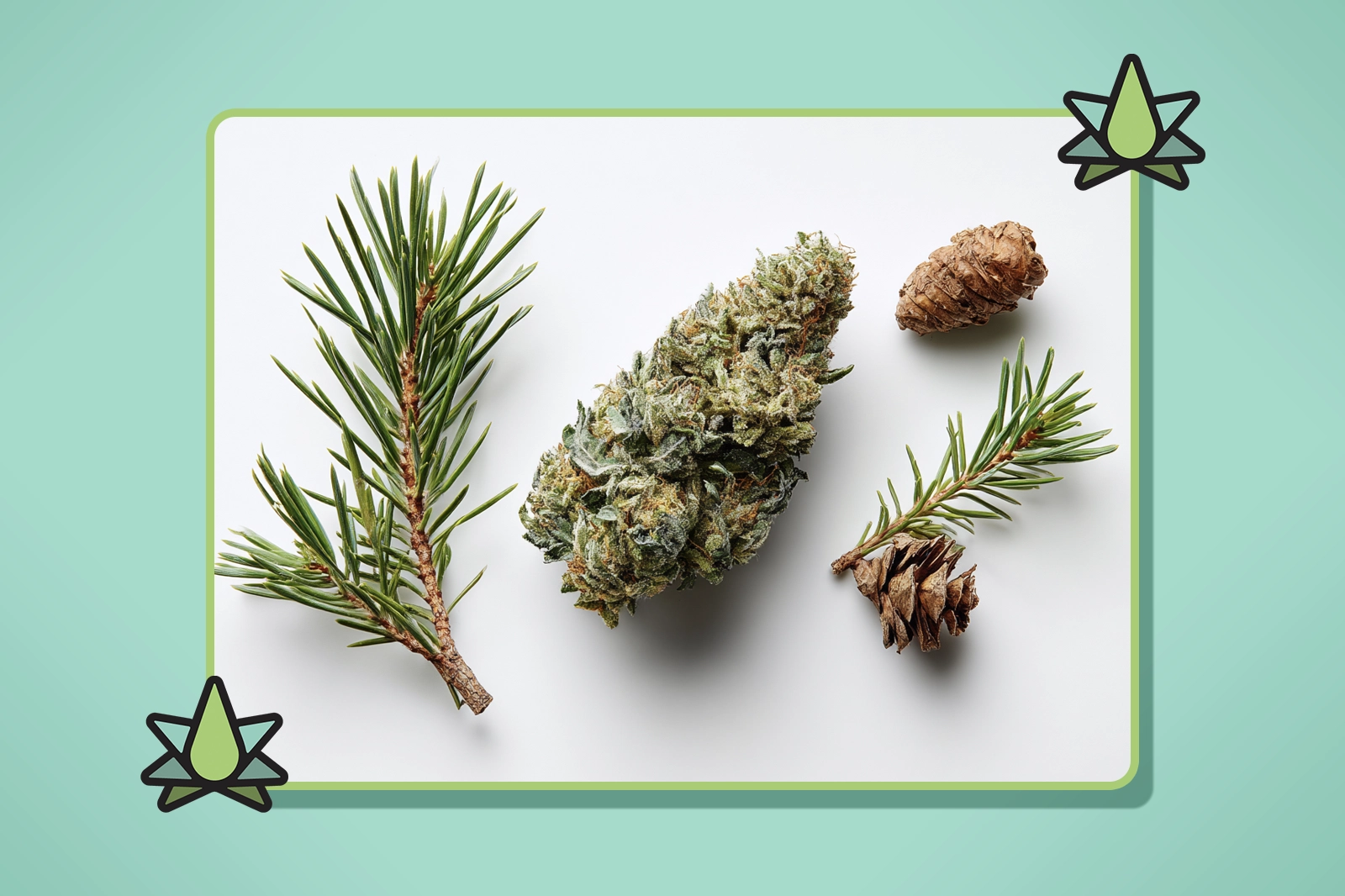
We offer ten distinct flavor profiles, Fruit, Gas, Pine, Savory, Sweet, Citrus, Dessert, Purple, Sour, and Exotic, across Standard, Premium, and Exclusive tiers. Each variety is assigned a number rather than strain names, reflecting our commitment to terroir-driven agriculture and batch traceability. FNF oils are ideal for vapes, tinctures, edibles, beverages, and any application requiring precise liquid dosing.
Want to add our terpenes to your flowers evenly? NEU Bags are our innovative terpene infusion packs designed specifically for flower enhancement that offer consistency unheard of in traditional methods like terpene sprays.
These mesh sachets saturated with FNF terpenes use natural diffusion to increase terpene content in cured flower by up to 5% in just 48 hours with no equipment required.
Available in six profiles (Gas, Dessert, Purple, Sour, Candy Gas, and others), NEU Bags solve the “spray and pray” problems of traditional terpene application by delivering uniform distribution throughout the flower structure.
Ready to formulate with confidence? Buy our starter kits and learn what California’s finest hemp-derived terpenes can add to your product line.
Frequently Asked Questions About Terpene Psychoactivity
Can Terpenes Show Up on a Drug Test?
No, standard drug tests screen for THC metabolites and other cannabinoids, not terpenes. Since terpenes are non-psychoactive aromatic compounds found in many plants beyond cannabis, they don’t trigger positive results on employment or legal drug screenings. However, make sure your terpene products are truly THC-free through proper third-party testing and COA verification.
What’s the Difference Between Terpene Effects and Being High?
Terpene effects operate through non-intoxicating mechanisms like aromatherapy, mood modulation, and anti-inflammatory pathways. While terpenes can influence relaxation, focus, or energy levels, these effects don’t impair cognitive function or motor skills like THC intoxication. Think of it as the difference between drinking coffee for alertness versus taking stimulant medications. Both affect your state, but only one is psychoactive.
Can Pure Terpenes Be Dangerous if Not Diluted Properly?
Yes, concentrated terpenes are classified as skin and respiratory irritants requiring proper dilution before use. Pure terpenes should never be consumed undiluted or applied directly to skin. Our terpene mixing calculator helps determine safe dilution ratios, typically 1-10% for most applications, ensuring both safety and efficacy in finished products.
Do Terpenes Enhance CBD Products the Same Way They Enhance THC?
Research indicates terpenes can modulate both THC and CBD effects, though through different mechanisms. While terpenes may improve THC’s psychoactive effects through the entourage effect, they complement CBD’s non-psychoactive benefits by improving absorption and adding their own therapeutic properties. For CBD formulations, consider our hemp-derived terpene profiles that are created particularly for wellness applications.
How Do I Verify My Terpenes Are Truly Non-Psychoactive?
Request detailed Certificates of Analysis (COAs) from ISO 17025-accredited laboratories showing both terpene composition and cannabinoid screening results. Look for THC levels below 0.01% detection limits and verify the testing lab’s credentials. Reputable suppliers like Terpene Belt Farms provide this documentation standard with all wholesale orders.
What Concentration of Terpenes Is Needed for the Entourage Effect?
Research suggests terpene concentrations between 2-8% optimize entourage effects without overwhelming primary compounds. Lower concentrations (1-3%) may provide subtle modulation, while higher levels (>10%) can actually reduce effectiveness through competitive inhibition. Product-specific recommendations vary—consult our formulation guides for category-specific guidance.
Are Hemp-Derived Terpenes Different From Marijuana-Derived Terpenes?
Chemically, terpenes from hemp and marijuana are identical since both come from Cannabis sativa L. The distinction lies in regulatory compliance. Hemp must contain less than 0.3% THC, making hemp-derived terpenes federally compliant for interstate commerce. Both provide authentic cannabis terpene profiles without psychoactive effects, as detailed in our hemp terpene selection guide.
Sources Used for This Article
-
- PubMed Central: “Terpenes and Lipids of the Endocannabinoid and Transient-Receptor-Potential-Channel Biosignaling Systems” – pmc.ncbi.nlm.nih.gov/articles/PMC4948289
- Nature: “Cannabis sativa terpenes are cannabimimetic and selectively enhance cannabinoid activity” – nature.com/articles/s41598-021-87740-8
- PubMed: “An entourage effect: inactive endogenous fatty acid glycerol esters enhance 2-arachidonoyl-glycerol cannabinoid activity” – pubmed.ncbi.nlm.nih.gov/9721036
- University of Arizona Health Sciences: “Study Shows Cannabis Terpenes Provide Pain Relief, Contribute to Entourage Effect” – healthsciences.arizona.edu/news/releases/study-shows-cannabis-terpenes-provide-pain-relief-contribute-entourage-effect
- PubMed Central: “Myrcene—What Are the Potential Health Benefits of This Flavouring and Aroma Agent?” – pmc.ncbi.nlm.nih.gov/articles/PMC8326332
- PubMed: “Limonene has anti-anxiety activity via adenosine A2A receptor-mediated regulation of dopaminergic and GABAergic neuronal function in the striatum” – pubmed.ncbi.nlm.nih.gov/33548867
- PubMed Central: “Preventive and therapeutic anti-inflammatory properties of the sesquiterpene α-humulene in experimental airways allergic inflammation” – pmc.ncbi.nlm.nih.gov/articles/PMC2785529
- Taylor & Francis: “Myrcene and terpene regulation of TRPV1” – tandfonline.com/doi/full/10.1080/19336950.2019.1654347
- PubMed Central: “Alpha-pinene moderates memory impairment induced by kainic acid via improving the BDNF/TrkB/CREB signaling pathway in rat hippocampus” – pmc.ncbi.nlm.nih.gov/articles/PMC10347414
- PubMed Central: “β-Caryophyllene, a CB2-Receptor-Selective Phytocannabinoid, Suppresses Mechanical Allodynia in a Mouse Model of Antiretroviral-Induced Neuropathic Pain” – pmc.ncbi.nlm.nih.gov/articles/PMC6983198
- PubMed Central: “Linalool as a Therapeutic and Medicinal Tool in Depression Treatment: A Review”- pmc.ncbi.nlm.nih.gov/articles/PMC9886818