Quick Answer: Cannabis edibles taste better when manufacturers use concentrated cannabinoid extracts (800mg+ THC/gram) requiring minimal volume per dose, integrate cannabis-derived terpenes at 2-4% of cannabinoid weight to mask chlorophyll bitterness, and control decarboxylation temperature at 240-250°F to preserve volatile compounds. Filtering infusions through activated carbon removes plant lipids that contribute to grassy flavors.
Terpene Belt Farms provides California-grown cannabis-derived terpene profiles that enable formulators to achieve consistent flavor across production batches while maintaining authentic cannabis character. Strategic terpene integration transforms bitter edibles into premium products by adding aromatic complexity rather than simply masking unwanted flavors.
Key Takeaways
- Bitter edible flavors come primarily from chlorophyll, plant lipids, and degraded terpenes introduced during infusion and heat processing.
- Using high-purity extracts reduces the total cannabis material per dose, cutting chlorophyll and unwanted compounds that contribute to grassy aftertastes.
- Adding cannabis-derived terpenes at controlled concentrations improves flavor by providing aromatic complexity that shifts perception away from bitterness.
- Precise decarboxylation at 240-250°F preserves terpene content and prevents harsh flavors caused by overheating or chlorophyll pyrolysis.
- Filtration methods such as activated carbon or fine-mesh filtering remove pigments and lipids to improve color, clarity, and taste.
- Terpene Belt Farms offers strain-specific cannabis-derived terpenes that help formulators develop reliably better-tasting edibles through controlled aromatic integration. Request our sample kits for your R&D today.
Cannabis edibles have a reputation problem. That distinctive, bitter, grassy taste, the one that makes consumers reach for water after the first bite, comes from chlorophyll and plant compounds that get extracted alongside cannabinoids during infusion. When cannabis flower undergoes heat processing, chlorophyll breaks down into bitter compounds that activate taste receptors on the tongue, creating medicinal, vegetal notes that even chocolate or fruit flavoring struggles to mask.
This flavor issue matters beyond personal preference. Consumers who dislike the taste won’t finish products, won’t repurchase, and often share negative reviews that impact brand reputation. For manufacturers, flavor problems translate directly to reduced sales, increased returns, and lost market share in an increasingly competitive industry where product quality determines success.
The solution isn’t about drowning cannabis flavor in sugar or artificial flavoring. Professional formulators solve the taste challenge by minimizing the plant material that causes bitterness in the first place, then adding back the aromatic compounds, terpenes, that create the cannabis character consumers expect without the harsh chlorophyll notes they reject.
Here’s everything you need to know about the bitter edible flavor consumers are all too familiar with and how to get rid of it.
Why Cannabis Edibles Develop Bitter, Grassy Flavor
Chlorophyll concentration drives cannabis edible bitterness. When plant material undergoes heat processing, chlorophyll degrades into pheophytin and pheophorbide, compounds that activate bitter taste receptors on the tongue, contributing to grassy, medicinal notes.
Cannabis flower normally contains 0.5-1.5% chlorophyll by dry weight. A cannabutter made with 1oz flower (28g) infused into 1lb of butter (454g) introduces 140-420mg of chlorophyll into the final product.
Plant lipids and waxes extracted alongside cannabinoids create waxy, vegetal aftertastes. Crude or unrefined cannabis extracts can contain substantial amounts of non-cannabinoid material, including waxes, lipids, and pigments. These compounds offer no therapeutic value but leave a persistent, grassy note on the palate.
Cannabis terpenes like beta-caryophyllene and humulene contribute spicy, woody, and sometimes bitter-adjacent sensory characteristics. When combined with chlorophyll bitterness, these compounds create a layered bitter perception that simple sweetness cannot overcome. So, this bitter taste is a little more complicated to solve.
How to Make Your Edibles Taste Better
Commercial and home producers can improve edible flavor through these proven techniques:
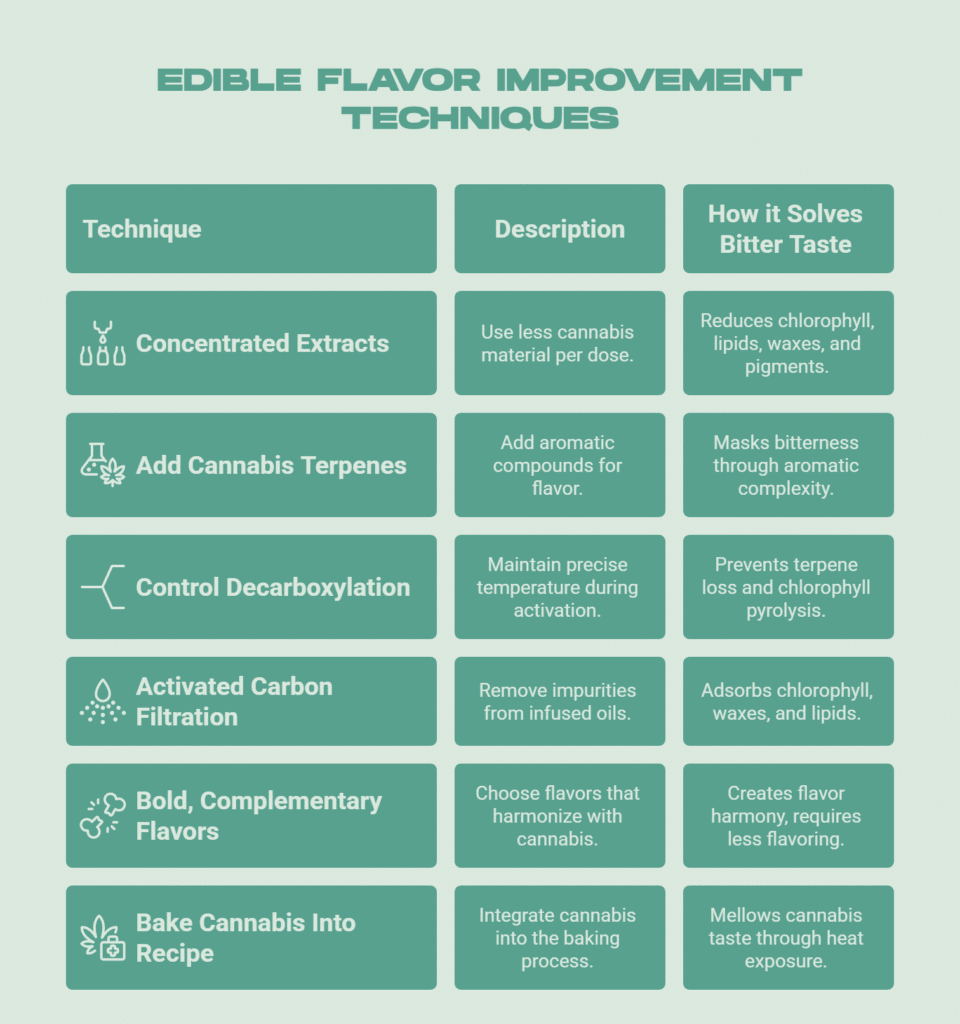
1. Use Highly Concentrated Cannabis Extracts
The most effective strategy for reducing cannabis bitterness involves using less total cannabis material per dose. Distillates and concentrates contain 70-95% cannabinoids compared to 15-25% in flower, meaning you need dramatically smaller volumes to achieve target potency.
This change gets rid of most of the chlorophyll before it enters your product.
How Concentrated Extracts Solve the Bitter Edible Taste
A 10mg THC dose illustrates the volume difference clearly. Flower-based cannabutter at 50mg THC/gram requires 0.2g per serving, introducing approximately 0.028mg chlorophyll from plant material. An 800mg/gram THC distillate needs only 0.0125g for identical potency. That’s 94% less material carrying chlorophyll into your final product.
The math becomes even more favorable at commercial concentrations where manufacturers routinely work with 85-95% purity extracts. Beyond chlorophyll reduction, concentrated sources eliminate plant lipids, waxes, and pigments that create waxy mouthfeel and the persistent vegetal aftertaste.
Distillates provide near-flavorless cannabinoid delivery, creating a clean base that formulators can improve with intentional terpene additions rather than fighting against uncontrolled plant compounds.
2. Add Cannabis-Derived Terpenes
Cannabis-derived terpenes represent the aromatic compounds naturally present in cannabis flower. These are the molecules responsible for strain-specific scent and flavor characteristics. When manufacturers use refined extracts that strip away most terpenes during processing, adding them back at controlled concentrations allows precise flavor design.
Dosing at 2-4% of cannabinoid weight provides sufficient aromatic complexity to change the taste perception.
How Terpenes Solve the Bitter Edible Taste
Terpene infusion doesn’t eliminate bitterness through chemical neutralization. They mask it through aromatic complexity that redirects sensory perception. When limonene-rich terpene profiles interact with taste receptors, the brain registers bright citrus notes that dominate attention over the background bitterness of chlorophyll.
Similarly, Ocimene contributes floral sweetness that creates perceived sweetness without added sugar. Beta-caryophyllene adds spicy, peppery character that integrates with residual cannabis notes rather than competing against them.
At proper concentrations, these aromatics create flavor layers that make any remaining cannabis taste read as intentional strain character rather than a formulation defect.
This approach is particularly effective in gummies and beverages where minimal ingredient lists leave little room for heavy flavor masking through chocolate or coffee additions.
The key lies in matching terpene profiles to product applications: limonene-dominant blends for fruit products, myrcene-rich profiles for earthy applications, balanced terpene combinations for premium full-spectrum experiences.
How Terpene Belt Farms Can Help
Terpene Belt Farms provides cannabis-derived terpenes extracted from premium California-grown cannabis, offering formulators access to authentic strain profiles that deliver consistent results across production batches.
Our catalog includes strain-specific terpene blends like 2023 Fruit #130 and 2023 Dessert #111, each backed by detailed COAs showing exact terpene percentages.
For beverage applications, our water-soluble terpenes integrate seamlessly into liquid matrices, eliminating the need for specialized homogenization equipment or separation issues. We offer sample kits that let you do the basic R&D at various concentrations before committing to production-scale purchases.
Whether you’re formulating gummies, beverages, baked goods, or chocolate products, Terpene Belt Farms delivers the aromatic complexity needed to transform bitter edibles into premium products consumers actually enjoy.
Want to make sure your consumers leave with their taste buds tingling? Buy our sample kits for R&D and add flavor to your products the right way.
3. Control Decarboxylation Temperature Precisely
Decarboxylation activates THCa into psychoactive THC through controlled heating, but temperature precision determines whether you preserve or destroy desirable terpenes during the process. Most terpenes begin to volatilize between 300-350°F, well below their listed boiling points.
Maintaining 240-250°F during decarboxylation maximizes cannabinoid activation while minimizing terpene loss, preventing the burnt, acrid flavors that plague carelessly processed cannabis.
How Precise Decarboxylation Solves the Bitter Edible Taste
Temperature control during decarboxylation prevents two major flavor problems: terpene volatilization and chlorophyll pyrolysis. When processing temperatures exceed 260°F, delicate terpenes like myrcene and pinene break down into aldehydes and ketones. These are compounds that create harsh, solvent-like notes and acrid bitterness that no amount of flavoring can mask effectively.
Simultaneously, excessive heat causes chlorophyll to undergo pyrolysis, forming exceptionally bitter phenolic compounds that permanently damage flavor profiles.
Maintaining 240-250°F for 30-45 minutes can approach 90-95% THCa conversion under controlled conditions while preserving substantially more terpene content than higher-temperature methods.
Using an accurate oven thermometer can be extremely effective since many consumer ovens run 15-25°F off their display temperature. This precision becomes even more critical in commercial operations where batch consistency requirements demand reproducible results across production runs.
4. Filter Infusions Through Activated Carbon
Activated carbon filtration removes dissolved impurities from infused oils through adsorption, the process where molecules bind to the carbon’s highly porous surface structure. Food-grade activated carbon targets chlorophyll, plant waxes, and lipids that contribute green color, bitter taste, and waxy mouthfeel.
This post-infusion treatment refines flavor without requiring specialized extraction equipment or substantial process changes.
How Activated Carbon Filtration Solves the Bitter Edible Taste
Activated carbon works through surface binding rather than chemical reaction. Chlorophyll molecules, plant waxes, and certain undesirable compounds adhere to the carbon’s microporous structure during contact time, physically removing them from the infused oil.
Mix 1-3% food-grade activated carbon into cooled infused oil (room temperature or below to prevent cannabinoid degradation), agitate gently for 15-30 minutes, then filter through fine mesh or coffee filters.
This results in a noticeably lighter color, reduced viscosity, and cleaner flavor profile compared to untreated infusions.
5. Choose Bold, Complementary Flavors
Recipe formulation strategy determines whether cannabis flavor reads as a defect or a feature. Bold flavors that naturally contain bitter compounds create flavor harmony rather than contrast, while complementary pairings match terpene characteristics in cannabis to similar compounds in conventional ingredients.
This approach works with cannabis character instead of fighting against it, requiring less total flavoring to achieve acceptable taste.
How Strategic Flavor Selection Solves the Bitter Edible Taste
Chocolate, coffee, and dark cocoa naturally contain bitter alkaloids that align with cannabis bitterness, creating unified flavor profiles where multiple bitter sources read as sophisticated complexity rather than off-notes. Peanut butter’s high fat content and intense flavor provide both physical coating and taste dominance that suppresses cannabis detection.
Consider pairing:
- Limonene-dominant cannabis with citrus recipes (lemon, orange, grapefruit)
- Myrcene-rich cannabis with mango, lemongrass, hoppy flavors
- Pinene-forward cannabis with rosemary, sage, pine nut, dill
- Caryophyllene-heavy cannabis with black pepper, clove, cinnamon
- Linalool-rich cannabis with lavender, mint, floral desserts
This complementary pairing approach enables premium positioning in craft markets where consumers appreciate authentic cannabis character, while masking strategies using chocolate or coffee serve mass-market products prioritizing broad appeal over strain-specific nuance.
6. Bake Cannabis Into the Recipe, Not the Topping
Heat exposure during baking causes chemical changes in cannabis infusions that can improve or degrade flavor depending on application strategy. Components that undergo baking integrate into the overall flavor matrix and undergo mellowing through Maillard reactions and interactions with aromatic compounds.
Components applied post-bake retain more raw cannabis character but lack the flavor integration that thermal processing provides.
How Strategic Heat Application Solves the Bitter Edible Taste
Adding cannabutter to cake batter, brownie mix, or cookie dough before baking subjects the infusion to 300-350°F temperatures for 20-40 minutes, depending on the recipe.
This controlled heat exposure drives off some volatile compounds responsible for harsh grassy notes while allowing remaining cannabis flavors to integrate with flour, sugar, and fat through complex chemical interactions during the baking process. Doing this gets you a mellowed cannabis taste that reads as a background note rather than the dominant flavor.
If you compare this with cannabis-infused frosting, glazes, or toppings that never undergo heat treatment, the difference is significant.
These applications preserve more raw plant character, including chlorophyll bitterness and vegetal notes. For recipes requiring post-bake application, add cannabis-derived terpenes to frostings and glazes instead of whole-plant infusions, or use highly refined distillates that provide potency without flavor.
Other Improvements for Better-Tasting Edibles
The suggestions above are practical tips that have a real effect on the taste of your edibles. But there’s more to know if you want to make sure your products are a delicacy for consumers.
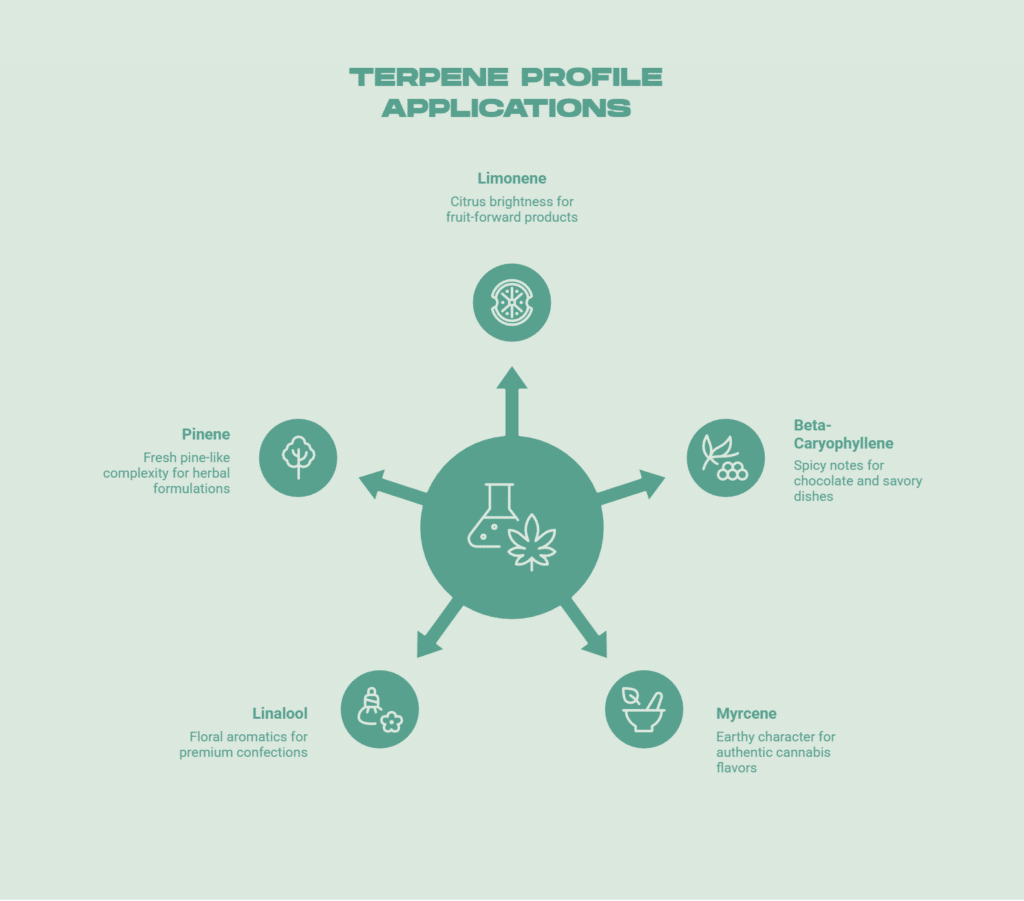
Recommended Terpene Profiles
Cannabis-derived terpenes mask chlorophyll bitterness by adding aromatic complexity and shifting overall flavor perception away from raw bitterness. Unlike botanical terpenes from citrus or pine, cannabis-derived profiles maintain authentic strain characteristics that informed consumers recognize as unique to each terpene classification.
- Limonene: Provides citrus brightness and perceived sweetness that lifts heavy vegetal notes. Works well in fruit-forward products and beverages. Desert #25 is a great recommendation here with 24.71% limonene and a healthy amount of caryophyllene at 16%.
- Beta-Caryophyllene: Adds spicy, peppery notes with a woody character. Complements chocolate products and savory applications. If these spicy notes are what your formulations need, Pine #37, with its 17% of caryophyllene and limonene each, can be a great addition to your edibles.
- Myrcene: Contributes an earthy, herbal character that integrates with the cannabis base rather than masking it. Ideal for authentic cannabis flavor profiles. If you’re looking for a sweet, apricot flavor profile, our Purple #100 is exactly the right pick. With 18% myrcene and 17% terpinolene, it’s perfect for formulations focusing on relaxation blends.
- Linalool: Delivers floral, lavender-like aromatics with subtle sweetness. Softens harsh notes in premium confections and desserts. To keep that flavor subtle, our Fruit #6 terpene comes in at 4.4% linalool for that sweet, lavender, raspberry touch.
- Pinene: Creates a fresh, pine-like character that provides aromatic complexity. Pairs well with herbal and earthy product formulations. Our Pine #126 is the number one terpene on our site for that earthy aftertaste. With 23% pinene, you’re getting the traditional pine-like flavor that this terpene is known for.
Want to know what our terpenes can add to your product line? Partner with Terpene Belt Farms for our wholesale services and see what our bulk terpenes can do for your brand.
Concentration Math: How Cannabis Material Per Dose Influences Taste
Concentration strategy applies at the recipe level just as it does at the extraction level. Creating higher-potency cannabis oils means using smaller volumes per serving, which directly reduces total cannabis flavor in finished products.
This approach maintains target dosing while minimizing taste impact, and works with any infusion method from flower-based butter to commercial distillates.
Why Reduced Cannabis Material Is Effective
A brownie recipe calling for 1/2 cup oil presents clear volume opportunities. Instead of making 1/2 cup of moderately-strong cannabis oil where every brownie receives substantial cannabis flavor, create 1/4 cup of double-strength cannabis oil and combine it with 1/4 cup regular oil. Each serving receives identical THC content but half the cannabis-derived flavor compounds.
This ratio adjustment works at any scale. If a recipe needs 1 cup oil total, use 1/4 cup of quad-strength cannabis oil plus 3/4 cup regular oil for 75% flavor reduction with zero potency change. The math requires attention to cannabinoid content and desired per-serving dose, but the principle remains consistent: stronger cannabis oil enables smaller volumes, which translates directly to less taste impact.
Decarboxylation Temperature Control for Terpene Preservation
Terpenes begin to volatilize and degrade at temperatures significantly below their boiling points. Processing above 260°F can lead to substantial terpene losses compared to controlled 240-250°F protocols.
Degradation can turn:
- Myrcene/pinene into aldehydes and ketones, which give off a burnt, acrid, solvent-like notes
- Chlorophyll pyrolysis into bitter phenolic compounds, which is exceptionally difficult to mask
- Cannabis color to dark brown/black, that shows thermal damage with a permanent flavor impact
Here are some approximate terpene boiling points for you to keep in mind:
- Limonene: ~349°F
- Myrcene: ~334°F
- Pinene: ~311°F
- Beta-Caryophyllene: ~320°F
- Linalool: ~388°F
Advanced Filtration for Commercial Flavor Clarity
Professional manufacturers remove particulate matter and residual chlorophyll through multi-stage filtration before formulation. This is usually a three step process that includes:
- Stage 1 – Coarse Filtration: Cheesecloth or stainless mesh (500-1000 micron) removes large plant particles post-infusion.
- Stage 2 – Medium Filtration: Coffee filters or purpose-built filter bags (25-50 micron) remove suspended plant matter contributing cloudiness.
- Stage 3 – Fine Filtration: Buchner funnels under vacuum pressure or 0.45 micron membrane filters achieve pharmaceutical clarity.
If you’re looking for a more advanced filtration process, winterization involves chilling infused oils to 0-20°F, causing plant waxes and lipids to precipitate from solution. Filter the cold oil through fine media to remove these solidified compounds, resulting in lighter color, reduced viscosity, and cleaner flavor.
This technique works particularly well with ethanol-based extractions and provides noticeable refinement compared to non-winterized material.
At scale, centrifugation uses centrifugal force to rapidly separate plant particulates and suspended solids from infused oils, delivering faster and more consistent results than gravity filtration across large batches.
Equipment investment is significant here, from $5,000 to $50,000, depending on capacity requirements.
Closing Thoughts — Why Terpene Integration Is the Superior Masking Strategy
Terpene integration represents the most sophisticated approach to edible flavor improvement because it works with cannabis chemistry rather than against it.
Unlike masking strategies that simply overpower bitterness with chocolate or sugar, cannabis-derived terpenes add aromatic complexity, turning residual plant flavors into intentional strain character. This approach delivers multiple advantages: minimal cost per serving (typically under $0.03 per unit), authentic cannabis profiles that informed consumers recognize and appreciate, and precise flavor control that enables consistent product experiences across batches.
Terpene Belt Farms provides the cannabis-derived terpene profiles commercial formulators need to execute this strategy successfully.
Our California-grown terpenes deliver batch-to-batch consistency backed by comprehensive Certificates of Analysis, eliminating the variability that plagues flower-based flavor approaches.
We offer strain-specific profiles for targeted applications, water-soluble formulations for beverage integration, sample kits for formulation testing, and wholesale pricing for volume producers.
Whether you’re refining existing products or developing new formulations, our terpene catalog provides the aromatic tools to transform bitter edibles into premium products that consumers actually finish.
Ready to make your edibles taste better? Shop our terpenes and see what authentic cannabis aromatics can do for your product line.
Frequently Asked Questions About Improving Edible Flavor
Why Do Dispensary Edibles Taste Better Than Homemade Products?
Commercial edibles use refined distillates with minimal plant material, while home recipes typically rely on flower-based infusions containing higher chlorophyll levels. Dispensaries also employ cannabis-derived terpenes and professional flavor systems. Home producers can achieve similar results using concentrated infusions, activated carbon filtration, and quality terpenes from Terpene Belt Farms.
Can You Remove Cannabis Taste Completely From Edibles?
THC isolate or heavily refined distillates can reduce cannabis taste to negligible levels, but this eliminates entourage effect benefits. A balanced approach uses 85-95% distillate combined with cannabis-derived terpenes, maintaining authentic cannabis character without harsh chlorophyll notes while preserving the beneficial compound profile consumers seek.
How Do Terpenes Mask Bad Cannabis Flavor?
Terpenes shift flavor perception through aromatic complexity rather than overpowering bitterness. Limonene provides citrus brightness, beta-caryophyllene adds spicy notes, and ocimene contributes floral sweetness. At 2-4% cannabinoid weight, terpenes create aromatic layers that make residual cannabis flavor read as intentional strain character rather than formulation defect.
What Carrier Oil Makes the Best-Tasting Edibles?
The optimal carrier depends on application. Coconut oil excels in sweet products, MCT oil offers neutral flavor with excellent stability, and refined avocado or grapeseed oils work for both sweet and savory applications. Most critical factor: high concentration (800mg+ THC/gram) reduces total volume needed per serving regardless of carrier type.
Do You Need Special Equipment for Professional-Quality Edibles?
Basic equipment like precision thermometers and fine mesh filters handles most needs effectively. Cannabis-derived terpenes from Terpene Belt Farms typically deliver more noticeable flavor improvement than expensive equipment. Sample kits enable testing before production-scale purchases, making terpene integration the highest-impact investment for flavor enhancement.
Can You Add Too Many Terpenes to Edibles?
Yes. Excessive terpene concentrations above 5% cannabinoid weight create artificial, perfume-like profiles that cause harshness and throat irritation. Most successful formulations use 1-5% terpene-to-cannabinoid ratios. A 10mg THC gummy performs well with 0.1-0.5mg added terpenes. Start conservatively and increase gradually through sensory testing.
What’s the Difference Between Botanical and Cannabis-Derived Terpenes?
Cannabis-derived terpenes are extracted from Cannabis Sativa L plants, containing complex compound mixtures that maintain authentic strain aromatics. Botanical terpenes from citrus or pine offer simplified profiles at lower cost. Cannabis-derived terpenes provide superior authenticity and complexity, justifying higher costs through enhanced consumer perception and repeat purchases.
Sources Used for This Article
- Science Direct: “Maillard Reaction An Overview” – sciencedirect.com/topics/agricultural-and-biological-sciences/maillard-reaction