Quick Answer: Sour Diesel is built on a tight four-terpene backbone, beta-caryophyllene (spicy, peppery depth) leading, supported by myrcene (earthy body), limonene (sharp citrus, fuel-bright top notes), and pinene (crisp, piney bite).
For processors, the formulation goal is keeping that hierarchy intact while managing volatility, limonene and pinene burn off fastest in vapes, so profiles often need a slight monoterpene ‘front-load’ to keep the last half of the device from turning overly caryophyllene-heavy. In practice, target 4–7% total terpenes for cartridges, blend under 40°C, and minimize oxygen and headspace exposure to protect the diesel-citrus top notes.
Key Takeaways
- Sour Diesel’s signature aroma comes from a four-terpene hierarchy led by beta-caryophyllene, supported by myrcene, limonene, and pinene, which must stay balanced for authentic strain expression.
- Beta-caryophyllene provides spicy, fuel-like depth and superior heat stability, making it the structural anchor of Sour Diesel formulations.
- Myrcene supplies earthy body and depth while supporting cannabinoid absorption, preventing the profile from becoming overly sharp or one-dimensional.
- Limonene and pinene deliver the bright citrus-diesel and pine top notes but are highly volatile, requiring careful handling to avoid rapid depletion in vape products.
- Effective Sour Diesel formulation typically targets 4–7% total terpenes for cartridges, blends below 40°C, and minimizes oxygen exposure to preserve top-note integrity.
- Shop Terpene Belt Farms’ Fresh Never Frozen terpenes to build consistent, strain-authentic formulations that hold character from first draw to last.
Sour Diesel remains one of the most requested strain profiles among cannabis consumers, yet manufacturers frequently struggle with batch-to-batch inconsistency, terpene degradation during processing, and sourcing challenges that compromise product quality.
The issue extends beyond simple aromatic recreation. Sour Diesel’s distinct sensory profile, characterized by its pungent diesel-fuel aroma, sharp citrus notes, and spicy undertones, results from a precise interaction of four primary terpenes working in concert.
When any component deviates from optimal ratios, the resulting product fails to deliver authentic Sour Diesel characteristics, leading to consumer disappointment and wholesale rejection.
This article provides technical guidance on Sour Diesel’s four-terpene foundation, its individual and collective functional characteristics, and practical formulation strategies for achieving consistent Sour Diesel expression across various product formats.
Sour Diesel’s Four-Terpene Foundation
The authentic Sour Diesel profile depends on a specific hierarchical arrangement of four primary terpenes that work synergistically to produce its distinctive characteristics.
Caryophyllene: The Lead Compound

Beta-caryophyllene functions as Sour Diesel’s dominant terpene, normally appearing at 10-17% of the total terpene composition in authentic cultivars.
This sesquiterpene exhibits unique properties among cannabis terpenes, as it acts as both an aromatic compound and a cannabinoid by binding directly to CB2 receptors in the endocannabinoid system. Research demonstrates that caryophyllene produces measurable anti-inflammatory and analgesic effects through this receptor interaction, making it particularly valuable in formulations designed to manage discomfort.
From a sensory perspective, caryophyllene contributes Sour Diesel’s characteristic spicy, peppery notes that balance the profile’s sharper aromatic elements. Its molecular structure includes a rare cyclobutane ring not found in other known cannabis terpenes, which influences both its aromatic stability and its ability to survive certain processing conditions.
Formulators working with distillate or high-heat applications should note that caryophyllene demonstrates better thermal stability than smaller monoterpenes, though excessive temperatures still cause degradation.
In short, caryophyllene does:
- Anchors Sour Diesel’s profile with spicy depth
- Contributes CB2-mediated anti-inflammatory effects
- Improves formulation stability under heat
Myrcene: Supporting Earthy Character
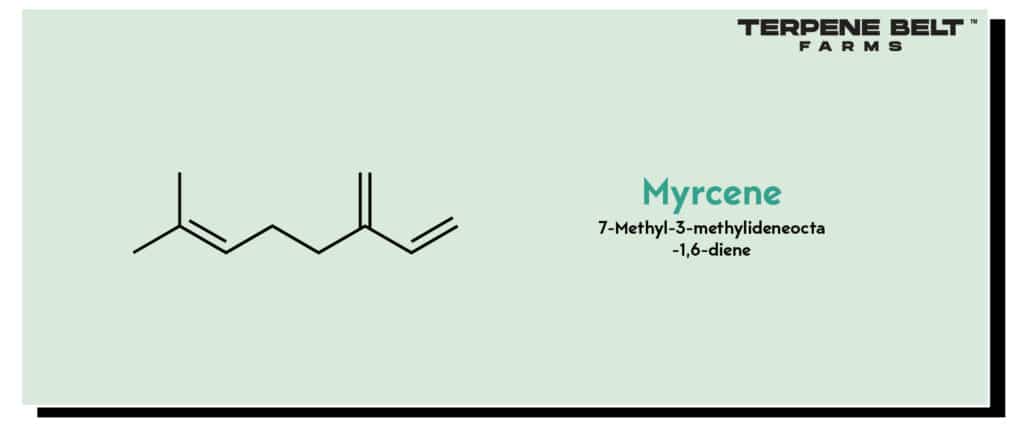
Myrcene serves as Sour Diesel’s secondary terpene, appearing at concentrations between 9-20% depending on cultivar genetics and growing conditions.
This monoterpene provides the earthy, herbal undertones that ground Sour Diesel’s more volatile top notes, preventing the profile from becoming too sharp or one-dimensional.
Myrcene exhibits sedative properties at concentrations above 0.5% when combined with cannabinoids, though Sour Diesel’s balanced profile typically produces energizing effects due to the modulating influence of limonene and pinene.
The compound’s earthy, musky aroma with subtle clove notes creates depth in the Sour Diesel profile while contributing to the strain’s reported pain-relieving properties. Studies demonstrate myrcene enhances cannabinoid absorption through biological membranes, a property particularly relevant for topical and transdermal applications.
For formulators developing such products, myrcene concentrations of 12-18% optimize both sensory characteristics and enhanced cannabinoid delivery.
To summarize, Myrcene:
- Grounds the profile with earthy body
- Enhances cannabinoid absorption
- Supports physical relaxation without overwhelming sedation
Limonene: Diesel-Fuel Brightness
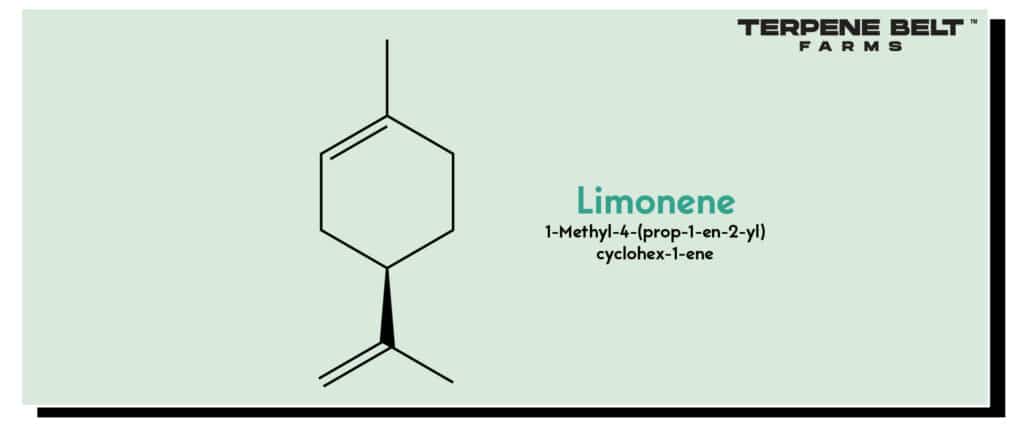
D-limonene contributes Sour Diesel’s signature citrus brightness and sharp diesel-fuel character, typically appearing at 8-20% concentration in authentic profiles. This monoterpene produces the bright, lemony top notes that give Sour Diesel its distinctive “sour” designation while providing the fuel-forward aroma that defines the strain.
Research demonstrates limonene produces mood-elevating effects through interaction with serotonin and dopamine pathways, contributing to Sour Diesel’s reputation as an energizing strain suitable for daytime use.
Clinical studies indicate limonene can selectively attenuate THC-induced anxiogenic effects, making it particularly valuable in formulations where consumers seek THC’s benefits without excessive anxiety. This study also demonstrated that concurrent administration of 30mg THC with 15mg limonene significantly reduced ratings of “anxious/nervous” and “paranoid” compared to THC alone.
For product developers, this suggests limonene-rich profiles like Sour Diesel may offer advantages in markets where THC-induced anxiety represents a barrier to adoption.
In short, limonene:
- Delivers Sour Diesel’s sharp citrus-fuel brightness
- Elevates mood and energy
- Helps reduce THC-associated anxiety
Pinene: Structural Complexity

Alpha-pinene and beta-pinene isomers together constitute Sour Diesel’s quaternary terpene component, appearing at combined concentrations of 5-22% depending on cultivar. These bicyclic monoterpenes contribute sharp, piney notes that add structural complexity to the profile while providing potential bronchodilatory effects that may improve inhalation comfort. Research indicates pinene exhibits anxiolytic properties and may counteract THC-induced memory impairment, making it particularly valuable in Sour Diesel formulations where mental clarity represents a desired outcome.
Pinene provides the crisp, forest-like top notes that distinguish authentic Sour Diesel from generic diesel profiles. The compound’s presence at 8-15% creates the characteristic sharpness consumers associate with premium Sour Diesel products, while concentrations below 5% produce profiles that lack the strain’s signature bite.
Alpha-pinene normally dominates over beta-pinene in Sour Diesel cultivars, with ratios of approximately 2:1 to 3:1 representing authentic expression.
Pinene can:
- Add crisp structural sharpness
- Support mental clarity and focus
- Improve overall inhalation comfort
Matching Sour Diesel with Cannabis-Derived Profiles
Formulators seeking authentic Sour Diesel recreation require access to cannabis-derived terpene profiles that genuinely match the strain’s four-terpene foundation at optimal ratios.
Generic “diesel” or “fuel” blends frequently fail to deliver authentic expression due to simplified terpene compositions, use of botanical alternatives lacking molecular complexity, or ratios optimized for cost rather than sensory accuracy.
Dessert #111
2023 Dessert #111 delivers the closest match to classic Sour Diesel expression with limonene at 23.16%, caryophyllene at 13.9%, and ocimene at 15.31%.
While ocimene substitutes for myrcene in this profile, it provides similar earthy grounding while adding subtle floral notes that complement the dominant citrus-spice character.
This profile works exceptionally well in vape applications where bright top notes represent priority characteristics, and the elevated limonene content compensates for typical vaporization losses.
Fruit #130
2023 Fruit #130 offers balanced terpene distribution with limonene at 14.22%, caryophyllene at 9.13%, pinene at 5.32%, and myrcene at 4.69%.
This profile’s moderate terpene concentrations make it ideal for concentrate enhancement where excessive terpene addition would compromise product viscosity or cannabinoid stability.
The lower overall terpene percentages allow formulators to add sufficient volume for sensory impact without reaching concentrations that produce harshness or interfere with hardware performance.
Citrus #143
2023 Citrus #143 presents a terpinolene-forward variation (22.94%) that maintains Sour Diesel character through substantial caryophyllene (10.1%), limonene (8.52%), and myrcene (9.39%) contributions.
Terpinolene’s herbal, slightly floral notes add complexity while supporting the energizing effect profile consumers expect from Sour Diesel. This profile particularly suits products targeting differentiation within the Sour Diesel category, offering familiar characteristics with subtle uniqueness that sophisticated consumers appreciate.
Savory #84
2024 Savory #84 provides an alternative approach for formulators seeking pronounced fuel-forward expression. While specific terpene percentages vary by harvest, this profile consistently delivers the pungent, gassy notes that define Sour Diesel’s most intense phenotypes.
Products developed with Savory #84 appeal to consumers seeking maximum aromatic impact and the heavy, diesel-dominant character associated with premium Sour Diesel selections.
| Profile | Key Terpenes (Approx.) | Best Use | Why It Matches Sour Diesel |
| Dessert #111 (2023) | Limonene 23.16%, Caryophyllene 13.9%, Ocimene 15.31% | Vape formulations | Bright citrus-spice dominance with ocimene replacing myrcene for earthy grounding, elevated limonene offsets vaporization losses |
| Fruit #130 (2023) | Limonene 14.22%, Caryophyllene 9.13%, Pinene 5.32%, Myrcene 4.69% | Concentrate enhancement | Balanced ratios allow higher terpene loading without viscosity, stability, or hardware issues |
| Citrus #143 (2023) | Terpinolene 22.94%, Caryophyllene 10.1%, Limonene 8.52%, Myrcene 9.39% | Differentiated Sour Diesel SKUs | Maintains core Sour Diesel character while adding herbal-floral complexity for a unique, energizing expression |
| Savory #84 (2024) | Fuel-forward blend, percentages vary | Aromatic-forward products | Delivers intense gassy, diesel-heavy character favored by consumers seeking maximum pungency |
Formulation Strategies When Working with Sour Diesel Terpenes
Successful Sour Diesel profile recreation extends beyond terpene selection to encompass integration methodology, processing parameters, and format-specific considerations that determine final product quality and consistency.

Optimal Addition Rates by Format
Vape cartridge formulations perform best with 4-7% terpene addition, balancing aromatic impact against viscosity requirements for standard 510-thread hardware. Lower percentages (4-5%) maintain appropriate flow characteristics while higher percentages (6-7%) suit specialized cartridges designed for terpene-rich products.
Concentrate applications, including shatter, wax, and live resin, require 1.5-3% addition rates—lower percentages preserve firm dabbing consistency while higher rates produce fluid, sauce-like textures.
Pre-roll and flower enhancement demands the most conservative approach at 0.5-2% by weight, with NEU Bag vapor-phase infusion achieving superior penetration compared to surface application methods.
Processing Temperature and Timing
Temperature management proves critical for preserving volatile Sour Diesel terpenes during integration. Vape and concentrate formulations should incorporate terpenes below 40°C, with gentle magnetic stirring over 10-15 minutes, ensuring homogeneous distribution without generating heat or incorporating excessive oxygen.
For crystalline concentrates, gradual terpene addition over 20-30 minutes at 30-35°C prevents crystal disruption and separation issues. Post-integration cooling to final packaging temperature before filling minimizes vapor-phase terpene losses in container headspace.
Volatility Compensation Strategies
Cartridge heating elements reaching 180-220°C during use create depletion challenges where volatile limonene and pinene vaporize preferentially, leaving later draws caryophyllene-dominant. Compensating for this requires either elevating initial monoterpene percentages by 20-30% or selecting balanced profiles where depletion produces less dramatic character shifts.
Fresh Never Frozen extraction methods preserve complete molecular complexity that botanical alternatives lack, providing formulators with profiles that maintain Sour Diesel character throughout the product lifecycle despite inevitable volatile losses.
Closing Thoughts: Why Terpene Belt Farms for Sour Diesel Terpene Replication
Authentic Sour Diesel recreation requires cannabis-derived profiles that capture the strain’s complete four-terpene foundation with proper ratio precision. Generic botanical blends approximate major terpene percentages while missing the 150+ supporting compounds defining authentic strain expression, producing products that fail consumer recognition testing.
Terpene Belt Farms‘ Fresh Never Frozen extraction preserves the complete terpene spectrum from California-grown Cannabis Sativa L cultivars. Our four Sour Diesel-matched profiles, 2023 Dessert #111, 2023 Fruit #130, 2023 Citrus #143, and 2024 Savory #84, maintain the caryophyllene-myrcene-limonene-pinene foundation consumers recognize as genuine Sour Diesel, backed by thorough COA documentation and technical formulation support.
Ready to experience authentic Sour Diesel terpene profiles in your formulations? Shop our sample packs and see the difference cannabis-derived complexity makes.
Frequently Asked Questions About Sour Diesel Terpene Profile
What Terpenes Give Sour Diesel Its Characteristic Smell?
Sour Diesel’s distinctive aroma results from four primary terpenes working in concert: caryophyllene (10-17%) provides spicy, peppery notes; myrcene (9-20%) contributes earthy, herbal undertones; limonene (8-20%) delivers the signature citrus brightness and fuel-forward character; and pinene (5-22%) adds sharp, piney top notes. The specific ratios of these compounds determine whether a Sour Diesel product expresses more diesel-forward or citrus-dominant characteristics.
What’s the Ideal Terpene Percentage for Sour Diesel Vape Formulations?
Optimal terpene addition for Sour Diesel vape products ranges from 4-7% of total product mass depending on base distillate viscosity and hardware specifications. Lower percentages (4-5%) suit standard 510-thread cartridges requiring specific viscosity ranges, while higher percentages (6-7%) work in specialty hardware designed for terpene-rich formulations. Addition rates above 8% typically produce viscosity issues and harsh vapor, while rates below 3% lack sufficient aromatic impact for authentic strain recognition.
How Does Caryophyllene Dominance Affect Formulation?
Caryophyllene’s CB2 receptor activity provides functional benefits including anti-inflammatory and analgesic effects that distinguish caryophyllene-dominant profiles from other strain families. From a formulation perspective, caryophyllene’s larger molecular size and thermal stability mean it survives processing conditions better than lighter monoterpenes like limonene and pinene. Products lose less caryophyllene during vaporization, meaning caryophyllene-dominant profiles like Sour Diesel may shift toward even greater caryophyllene dominance as lighter terpenes deplete from cartridge products during use.
What Stability Challenges Exist with Sour Diesel Terpene Profiles?
Sour Diesel’s high limonene and pinene content creates vulnerability to oxidative degradation and volatile loss. Limonene readily oxidizes when exposed to oxygen, light, or elevated temperatures, producing off-flavors and reduced aromatic impact. Proper storage requires sealed containers, refrigerated temperatures (below 4°C), protection from light exposure, and minimized headspace oxygen. Products formulated with Sour Diesel profiles should undergo accelerated stability testing to verify shelf life under expected storage conditions and establish appropriate use-by dates.
Sources Used for This Article
- PMC: “Beta-Caryophyllene, a Cannabinoid Receptor Type 2 Selective Agonist, in Emotional and Cognitive Disorders” – pmc.ncbi.nlm.nih.gov/articles/PMC10970213/
- PMC: “Beta-caryophyllene as an antioxidant, anti-inflammatory and re-epithelialization activities in a rat skin wound excision model” – pmc.ncbi.nlm.nih.gov/articles/PMC8831077/
- Leafly: “What is caryophyllene and what does this cannabis terpene do?” – leafly.com/news/science-tech/caryophyllene-terpene
- PMC: “Myrcene—What Are the Potential Health Benefits of This Flavouring and Aroma Agent?” – pmc.ncbi.nlm.nih.gov/articles/PMC8326332/
- ScienceDirect: “Vaporized D-limonene selectively mitigates the acute anxiogenic effects of Δ9-tetrahydrocannabinol in healthy adults who intermittently use cannabis” – sciencedirect.com/science/article/abs/pii/S0376871624001881
- ScienceDirect: “Rosemary (Rosmarinus officinalis L.) as a therapeutic and prophylactic agent” – sciencedirect.com/science/article/abs/pii/S0944711321000167
- PMC: “A Review of the Potential Use of Pinene and Linalool as Terpene-Based Medicines for Brain Health: Discovering Novel Therapeutics in the Flavours and Fragrances of Cannabis” – pmc.ncbi.nlm.nih.gov/articles/PMC8426550/
- Nature: “Effects of super-class cannabis terpenes beta-caryophyllene and alpha-pinene on zebrafish behavioural biomarkers” – nature.com/articles/s41598-022-21552-2