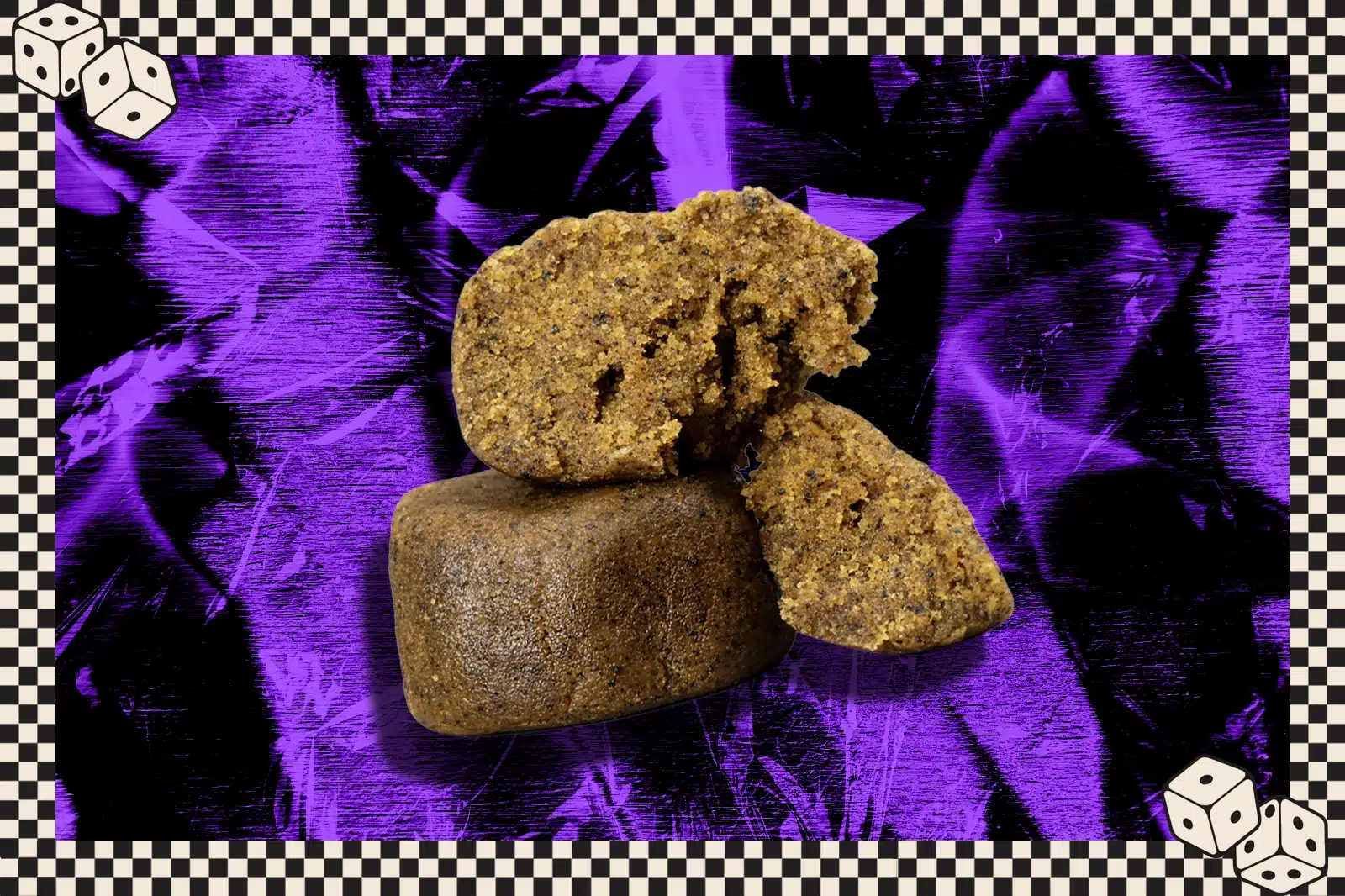
Quick Answer: Hashish smell changes dramatically based on freshness, age, and heat. Fresh hash smells intense and concentrated, earthy and dank with bright citrus or pine notes, because exposed trichomes release terpenes immediately at 2–4× flower strength.
Aged hash loses lighter monoterpenes like limonene and pinene, shifting toward hay-like, woody, spicy, or musty aromas dominated by caryophyllene and humulene. When smoked, original terpene character disappears entirely, replaced by harsh, acrid, burnt odors from terpene breakdown and combustion byproducts, which is why vaporized hash smells cleaner and more strain-accurate than smoked hash.
Key Takeaways
- Hashish aroma is driven almost entirely by terpene concentration, which is higher than flower because extraction breaks trichomes and exposes volatile compounds directly to air.
- Fresh hash smells intense and complex, typically earthy and dank with bright citrus or pine notes, due to intact monoterpenes like myrcene and limonene.
- Aging causes rapid loss of light monoterpenes through oxidation and evaporation, shifting aroma toward hay-like, woody, spicy, or musty notes dominated by caryophyllene and humulene.
- Storage conditions strongly affect aroma retention, as poor oxygen, heat, and light control can reduce terpene content by 30–50% within six months.
- When hash is smoked, original terpene character is destroyed by combustion, producing harsh, acrid odors from terpene breakdown and pyrolysis byproducts rather than strain-specific aromas.
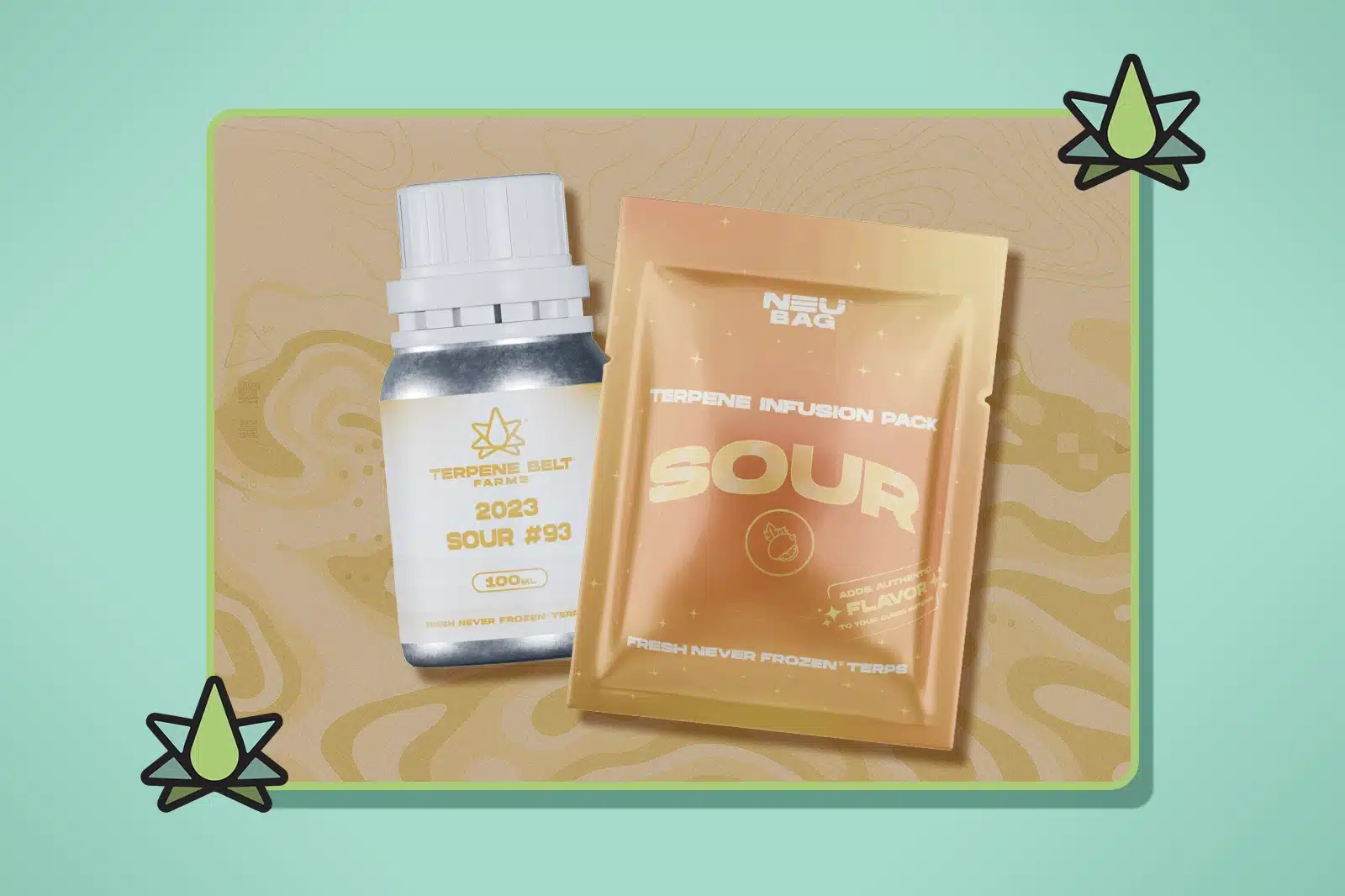
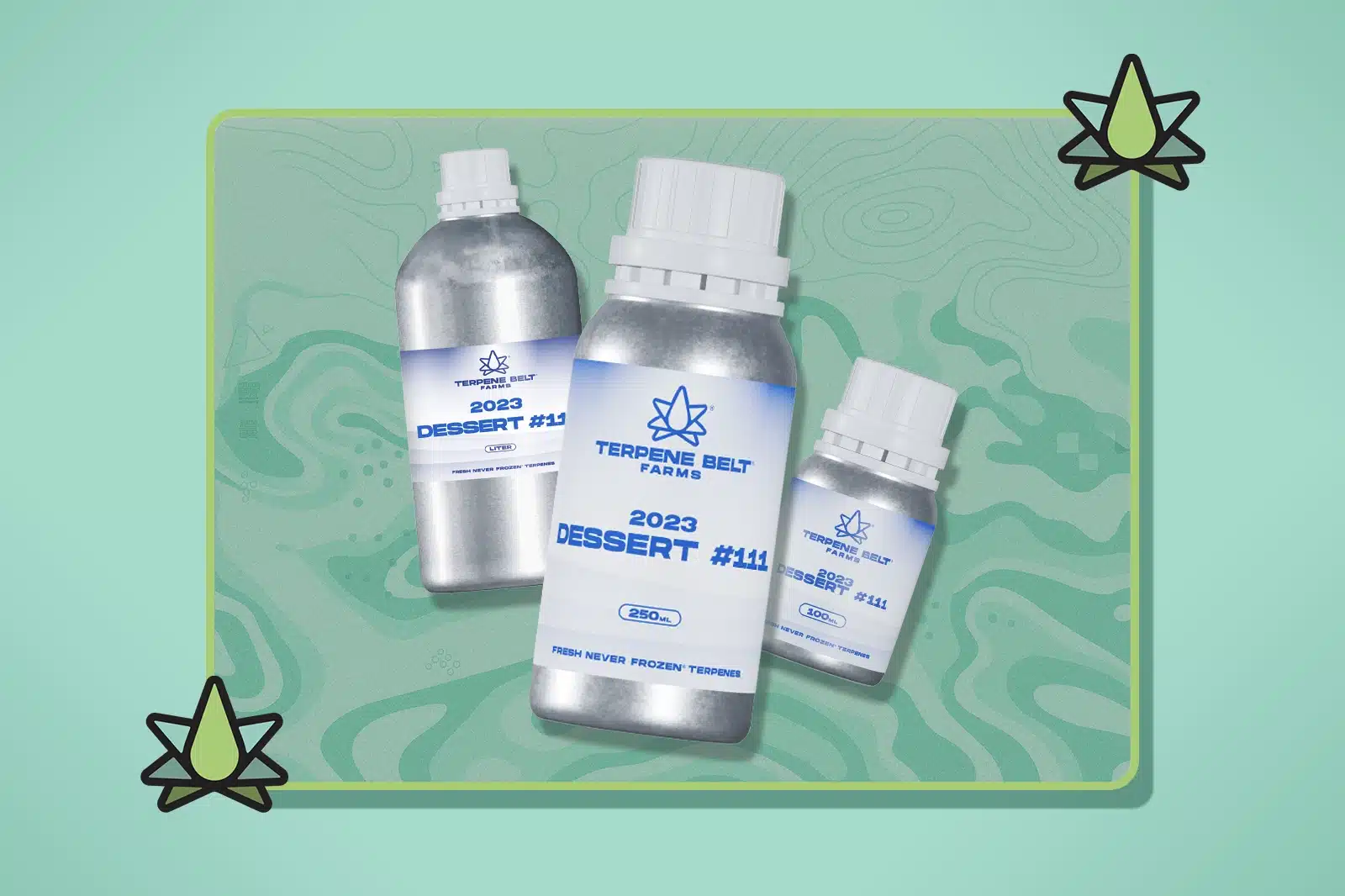
- Partner with Terpene Belt Farms for cannabis-derived terpenes across the world to restore fresh, strain-accurate aroma to hash and concentrates and maintain consistent sensory quality across batches.
Keeping hash smelling consistent batch after batch is harder than most people realize. Unlike flower, where terpenes stay protected inside trichomes, hash exposes these compounds directly to air, heat, and oxidation during extraction. Cannabis can lose 30-50% of its terpene content within six months under poor storage.
For product developers, this matters because aroma drives sales. Hash that smells like hay gets rejected by wholesalers no matter what the THC percentage is. Retailers won’t stock products with weak aromatics because they know consumers make purchase decisions based on smell. Premium products need premium aromas to justify their price point.
This guide breaks down how hash smells at three stages: right after extraction, after aging, and when heated for consumption. We’ll also cover practical solutions for fixing aromatic problems in production.
How Hash Gets Its Aroma
Hash doesn’t get its smell from cannabis magic. It releases specific molecules called terpenes that your nose detects. These compounds are a processor’s bread and butter and control aroma during production.
Terpenes are volatile organic compounds that plants make to attract pollinators and repel pests. In quality cannabis flower, they make up about 1-4% of dry weight. Hash extraction concentrates these compounds, sometimes reaching 5-10 times the levels found in source material.
Hash smells so much stronger than flower because when you smell flower, you’re detecting terpenes slowly releasing from intact trichome glands. Hash extraction breaks open those protective structures, exposing concentrated terpenes directly to the air. That’s why fresh hash hits your nose harder and faster than the flower it came from.

How Production Method Affects Hash Scent Profile
Your extraction method determines which terpenes make it into the final product. Temperature control matters most here. Studies show that extraction at -40°C preserves significantly more terpenes than warmer temperatures. At -20°C versus -40°C, you lose over 50% of your terpene content.
Mechanical methods like dry sifting and ice water extraction work at ambient or freezing temperatures. These preserve volatile monoterpenes that evaporate above 70°F. You capture profiles closer to the source flower. Solvent extractions with ethanol or CO2 can work well when controlled properly, but any heat during solvent removal costs you the light aromatics.
Heat-based production, traditional hand-pressing or modern rosin, sacrifices volatile terpenes by design. Research on extraction methods confirms that even low-temp rosin pressing at 130-170°F loses some monoterpenes. Higher temps (170-220°F) prioritize yield over aroma. You’re making a trade-off.
Terpene Aroma in Hash Vs. Source Flower
Fresh hash doesn’t smell like super-concentrated flower. The profile shifts because different terpenes survive extraction differently. Light monoterpenes like myrcene (boiling point 334°F) and limonene (349°F) evaporate more easily than heavier sesquiterpenes like caryophyllene.
Here’s what changes during extraction:
- Less Bright, Sharp Notes: Lighter compounds like pinene and ocimene partially evaporate during processing
- More Woody, Spicy Character: Heavier compounds like caryophyllene and humulene stick around better
- Stronger Immediate Impact: The terpenes that remain exist at 5-10x flower concentrations
- Different Balance Overall: The ratio between terpene types shifts even when total concentration increases
This matters for effect-specific products. A flower profile dominated by energizing limonene (25%) might produce hash that’s richer in relaxing caryophyllene just because limonene evaporates faster during processing.
1. Fresh Hash Smell
Properly extracted fresh hash captures cannabis aromatics at their strongest. Right after production, terpene content peaks before degradation starts. This brief window is your quality benchmark and everything else gets measured against it.
Dominant Aromatic Compounds in Fresh Hash
Cannabis terpene profiles usually have 8-12 major compounds, with myrcene, limonene, and caryophyllene leading the pack. In fresh hash, these drive the overall character while minor compounds add complexity.
Myrcene smells earthy and musky, like cloves or cardamom. It often makes up 20-40% of total terpenes in indica varieties, creating that “dank” smell. But myrcene disappears fast because it’s so volatile. Atmospheric research confirms it degrades quickly through photo-oxidation, turning into p-cymene, which is a compound that signals aging.
Limonene brings bright citrus notes that lift heavy, earthy profiles. It survives extraction better than pinene but still volatilizes easily above room temperature. Caryophyllene adds spicy, peppery depth. As a sesquiterpene, its larger molecular structure resists evaporation better than lighter compounds, creating an aromatic foundation in fresh hash.
Does Hashish Have a Strong Smell When Fresh?
Hash smell strength comes down to total terpene percentage and which terpenes are present. Fresh hash normally ranges from 2-8% terpenes, compared to 1-4% in quality flower. That 2-4x concentration amplifies smell naturally.
Production variables make huge differences here too. Ice water hash made at near-freezing temps preserves 70-90% of source terpenes, which is the maximum aromatic impact you can get. Hot-pressed hash or concentrates exposed to heat during purging might only retain 30-50% of the original terpenes and create weaker aromatics despite higher THC. Terpene preservation requires careful temperature management throughout production.
Compared to flower, fresh hash smells stronger in absolute terms due to concentration. But flower releases aromatics slowly over time as trichomes gradually open. Hash dumps concentrated terpenes immediately when exposed to air. The first impression is intense here, but it fades faster than a flower’s sustained output.
2. Aged Hash Smell: Chemical Changes Over Time
Hash aroma changes during storage as terpenes oxidize, evaporate, and chemically rearrange. These degradation patterns are predictable, which helps processors anticipate shifts and implement fixes.
Why Hash Smells Different After Aging
Terpene oxidation follows known atmospheric chemistry principles. Research on cannabis terpene stability documents how terpenes undergo isomerization, photo-oxidation, dehydrogenation, and thermal rearrangement under environmental stress. These transformations change the smell fundamentally.
Monoterpene loss drives the most obvious aging effects. Myrcene, pinene, and limonene, all C10 compounds with high vapor pressure, disappear first through evaporation and oxidation. Myrcene converts to p-cymene, a marker for aging. Studies tracking cannabis storage show monoterpene content dropping 40-70% within weeks under poor conditions.
Sesquiterpene retention shifts the aroma toward woody, spicy, earthy notes. Caryophyllene, humulene, and other C15 compounds resist evaporation due to larger size and lower volatility. As lighter terpenes disappear, these heavier ones dominate what’s left. The hash stops smelling bright and fruity, expressing a darker, earthier character instead.
Aged Hash Smell Profile Characteristics
Aging hash develops these predictable signatures:
- Earthy, hay-like notes emerge as monoterpenes oxidize and chlorophyll breaks down
- Spicy, peppery character intensifies as caryophyllene and humulene become proportionally dominant
- Citrus and pine fade completely with limonene and pinene loss
- Overall complexity decreases as diverse profiles collapse into monotonous earthiness
- Musty, aged quality develops from oxidized terpene transformation
3. What Does Hashish Smell Like When Smoked
Heating hash for consumption completely transforms its aromatic profile through thermal decomposition and pyrolysis. The compounds you smell when smoking differ substantially from the terpenes present beforehand.
Hash Odor When Heated: Chemical Volatilization
Terpene vaporization starts at surprisingly low temps. Myrcene volatilizes around 334°F, limonene at 349°F, and other common cannabis terpenes between 311-388°F. During consumption, these compounds transition from liquid to gas, releasing characteristic aromatics.
Combustion versus vaporization produces dramatically different outputs. Studies on cannabis vaporization show that temps below 392°F release cannabinoids and terpenes without significant breakdown. Above 400°F (200°C), combustion starts producing benzene, carbon monoxide, and polycyclic aromatic hydrocarbons that weren’t in the original extract.
Research on hash dabbing identified methacrolein, benzene, acrolein, and other toxic degradation products formed when terpenes decompose at high temperatures. These contribute harsh, acrid notes completely different from the original sweet, earthy, or fruity terpene profiles. That “burnt hash” smell reflects terpene degradation products, not the original compounds.
What Does Hash Smell Like When Smoked Vs. Vaporized
Combustion aromatics present completely different sensory experiences:
- Acrid, burnt notes dominate as terpenes break down into aldehydes, ketones, and aromatic hydrocarbons
- Sweet, fruity characteristics disappear with complete thermal decomposition of monoterpenes
- Harsh throat sensation accompanies inhalation of methacrolein, acrolein, and other irritants
- Carbon monoxide odor adds to the burnt profile at full combustion temps
- Original terpene character becomes unrecognizable after exposure to 500°F+ combustion
| Hash State | Dominant Compounds & Chemistry | Aroma Characteristics | Why It Smells This Way |
| Fresh Hash (Post-Extraction) | High total terpene load (2–8%), dominated by myrcene, limonene, and caryophyllene, with 8–12 major compounds preserved | Intense, dank, earthy with bright citrus and peppery depth | Peak terpene concentration and minimal oxidation, monoterpenes are intact and volatile, sesquiterpenes provide aromatic foundation |
| Fresh Hash vs Flower | 2–4x higher terpene concentration than flower | Stronger initial smell, faster fade | Hash releases concentrated terpenes immediately on air exposure, while flower releases aromatics gradually as trichomes open |
| Aged Hash (Storage) | Monoterpene loss (myrcene, limonene, pinene) with relative sesquiterpene dominance (caryophyllene, humulene) | Earthy, hay-like, spicy, musty, reduced complexity | Oxidation, evaporation, and chemical rearrangement convert volatile terpenes (e.g., myrcene → p-cymene) and collapse aromatic diversity |
| Aged Hash Signature | Monoterpenes down 40–70% under poor conditions | No citrus or pine, heavier peppery and woody tones | Larger C15 sesquiterpenes resist evaporation and dominate remaining aroma |
| Heated Hash (Vaporized) | Terpene volatilization at ~311–388°F without breakdown | Clean expression of original terpene profile | Controlled temperatures release terpenes intact without forming degradation byproducts |
| Heated Hash (Combusted / Dabbed Too Hot) | Terpene decomposition into aldehydes, ketones, PAHs, benzene, acrolein | Acrid, burnt, harsh, unrecognizable | High heat (>400–500°F) causes pyrolysis, destroying terpenes and creating toxic byproducts |
Fixing Poor Hash Aroma: Formulation Solutions for Processors
Hash batches with weak, aged, or unpleasant aromatics create serious commercial problems. Processors can restore market-viable sensory characteristics through strategic terpene reintroduction.
Why Hash Loses Aromatic Appeal During Production
Terpene loss through heat exposure during extraction is the primary culprit. Rosin pressing, solvent purging, and even mechanical processing generate enough heat to volatilize light monoterpenes. Prioritizing yield over terpene preservation sacrifices aromatic quality.
Oxidation during storage and handling compounds initial production losses. Hash exposed to air during processing, packaging, or handling continues degrading as oxygen attacks double bonds in terpene molecules. Even brief oxygen exposure starts oxidation cascades that alter profiles within days.
Starting material quality impacts final hash aromatics more than most processors realize. Flower that smells like hay produces hash that smells like hay; extraction concentrates existing aromatic defects rather than correcting them.
Reintroducing Cannabis-Derived Terpenes to Hash Products
Terpene reintroduction allows processors to restore consistent aromatic profiles to batches affected by production loss, aging, or poor starting material and make cannabis products smell better. The approach involves carefully adding cannabis-derived terpenes matched to target sensory characteristics.
This is where Terpene Belt Farms comes into play. We specialize in cannabis-derived terpenes extracted from California-grown hemp using our Fresh Never Frozen methodology. Our cryogenic extraction process preserves complete aromatic profiles, including 150+ minor compounds that create authentic strain character and not just the major terpenes you’ll find in cheaper botanical alternatives.
Our product line includes strain-specific terpene oils that match authentic cultivar profiles, from myrcene-heavy OG varieties to limonene-forward fruit genetics. These aren’t approximations. They’re full-spectrum captures of real cannabis aromatics that help hash processors restore consistency across batches, correct production losses, and establish brand-defining sensory signatures.
Whether you’re dealing with aged inventory that’s lost its appeal, batches affected by heat during processing, or simply trying to standardize aromatics across variable source material, our team provides technical support on terpene selection, integration techniques, and dosing calculations specific to hash and concentrate applications.
Shop our sample kits today and see how premium terpenes from Terpene Belt Farms can help make your hash smell and taste better for consumers.
Frequently Asked Questions About Hashish Smell
Does Hashish Have a Strong Smell?
Fresh, properly extracted hash typically smells stronger than flower due to 2-4x terpene concentration. Smell strength varies significantly based on extraction method, with ice water hash and solventless techniques preserving more volatile compounds than heat-based processes.
What Does Hash Smell Like When Smoked?
Smoked hash produces acrid, burnt aromatics from terpene breakdown rather than original terpene profiles. Methacrolein, benzene, and acrolein formation is a problem at combustion temperatures above 400°F, compounds absent in pre-heated hash. Original citrus, pine, or fruity notes disappear with thermal decomposition, replaced by harsh, carbon-heavy combustion aromatics.
Why Does Old Hash Smell Different?
Aged hash undergoes predictable terpene degradation through oxidation and evaporation. Light monoterpenes like myrcene and limonene disappear first, leaving heavier sesquiterpenes like caryophyllene. Research on terpene stability documents myrcene converting to p-cymene, a marker indicating age. This transformation produces characteristic hay-like, musty aromatics replacing original fresh profiles.
Is Hash Smell Related to Terpenes?
Yes, hash aroma comes almost entirely from terpene content and composition. These volatile organic compounds interact with olfactory receptors to create distinctive cannabis aromatics. While other compounds like thiols contribute to specific characteristics, terpenes dominate sensory perception. Hash containing 5-8% terpenes smells significantly stronger than batches with 1-2% terpenes, demonstrating direct correlation between terpene concentration and aromatic intensity.
How Does Hash Smell Compare to Flower?
Hash delivers more immediate, concentrated aromatic impact than flower due to terpene concentration during extraction, but the profile shifts toward heavier compounds. Fresh hash emphasizes sesquiterpenes (woody, spicy notes) over monoterpenes (bright, citrus notes) due to selective retention during processing. Learn more about terpene extraction methods and their impact on final aromatic profiles.
Can You Reduce Hash Smell Strength?
Hash aromatic intensity can be managed through proper storage in airtight, opaque containers at cool temps (60-68°F). However, attempting to reduce smell through extended air exposure or heating causes permanent terpene degradation rather than temporary reduction. Processors seeking less aromatic products should adjust terpene content during formulation rather than degrading finished hash.
Sources Used for This Article
- Western States: “The Cold Standard: How Low-Temperature Ethanol Extraction Preserves Cannabinoids and Terpenes” – westernstates.com/the-cold-standard-how-low-temperature-ethanol-extraction-preserves-cannabinoids-and-terpenes/
- Liebertpub: “Vapor Pressure, Vaping, and Corrections to Misconceptions Related to Medical Cannabis’ Active Pharmaceutical Ingredients’ Physical Properties and Compositions” – liebertpub.com/doi/10.1089/can.2021.0173
- PMC: “Extraction of Phenolic Compounds and Terpenes from Cannabis sativa L. By-Products: From Conventional to Intensified Processes” – pmc.ncbi.nlm.nih.gov/articles/PMC8230455/
- True Labs Cannabis: “Terpene Boiling Points and Temperature” – truelabscannabis.com/blog/terpene-boiling-points
- Wiley Online Library: “Comprehensive analysis of chemical and enantiomeric stability of terpenes in Cannabis sativa L. flowers” – analyticalsciencejournals.onlinelibrary.wiley.com/doi/10.1002/pca.3432
- PMC: “Thermography of cannabis extract vaporization cartridge heating coils in temperature- and voltage-controlled systems during a simulated human puff” – pmc.ncbi.nlm.nih.gov/articles/PMC8791474/
- PMC: “Toxicant Formation in Dabbing: The Terpene Story” – pubs.acs.org/doi/10.1021/acsomega.7b01130