Quick Answer: Pinene is a highly volatile monoterpene, especially alpha-pinene, valued in cannabis formulations for its crisp pine aroma and functional effects like cognitive clarity and potential THC memory modulation. It performs best in vapes at 5–12% total terpene load, with pinene making up 15–30% of the terpene fraction, while coil temperatures must stay below 200°C to avoid harsh pinene oxide formation.
Because pinene oxidizes quickly under heat, light, and oxygen, stability depends on amber glass, nitrogen headspace, cold storage, and late-stage addition. Synergistic blends with limonene or caryophyllene help balance stimulation and improve effect consistency.
Key Takeaways
- Alpha-pinene and beta-pinene are volatile monoterpene isomers (C₁₀H₁₆) with distinct sensory and biological roles, with alpha-pinene driving most cognitive and functional activity in cannabis formulations
- Alpha-pinene demonstrates acetylcholinesterase inhibition, supporting cognitive clarity and potentially attenuating THC-induced short-term memory impairment in high-THC products
- Vape formulations perform best at 5–12% total terpenes with pinene comprising 15–30% of the terpene fraction, while coil temperatures should remain below 200°C to prevent pinene oxide formation
- Pinene oxidizes readily to pinene oxide under heat, light, and oxygen exposure, producing harsh off-notes and respiratory irritation risk, requiring amber glass, nitrogen headspace, and storage below 20°C
- Synergistic blends pairing pinene with limonene enhance clarity and uplift, with beta-caryophyllene adding CB2-mediated balance, and myrcene softening stimulation for transitional profiles
- For COA-verified, cannabis-derived pinene-rich terpene profiles preserved through Fresh Never Frozen extraction, shop R&D samples from Terpene Belt Farms to evaluate stability and batch consistency in your formulations
Pinene shows up in a lot of cannabis products. It shows up intact in far fewer of them. As one of the most volatile monoterpenes in the cannabis terpene stack, alpha-pinene is highly susceptible to heat, oxidation, and poor handling, and when it degrades, it doesn’t go quietly. The resulting off-note, a harsh turpentine-like character, is one of the more common sensory complaints in pine-forward vape and concentrate products.
For R&D teams and product formulators, pinene is also one of the more rewarding terpenes to work with when conditions are right. Its cognitive-clarity associations, bronchodilatory properties, and documented interaction with THC make it a genuinely functional ingredient. But those benefits only reach the consumer if the compound survives extraction, processing, and packaging intact.
This article covers pinene’s molecular structure, biological activity, application-specific formulation parameters, stability protocols, and synergistic pairings, giving product developers the technical foundation to build pinene-forward profiles that actually perform.
What Is Pinene: Structure, Isomers & Source Material
Pinene is a bicyclic monoterpene with the molecular formula C₁₀H₁₆, placing it in the same chemical class as other 10-carbon terpene units derived from the mevalonate pathway.
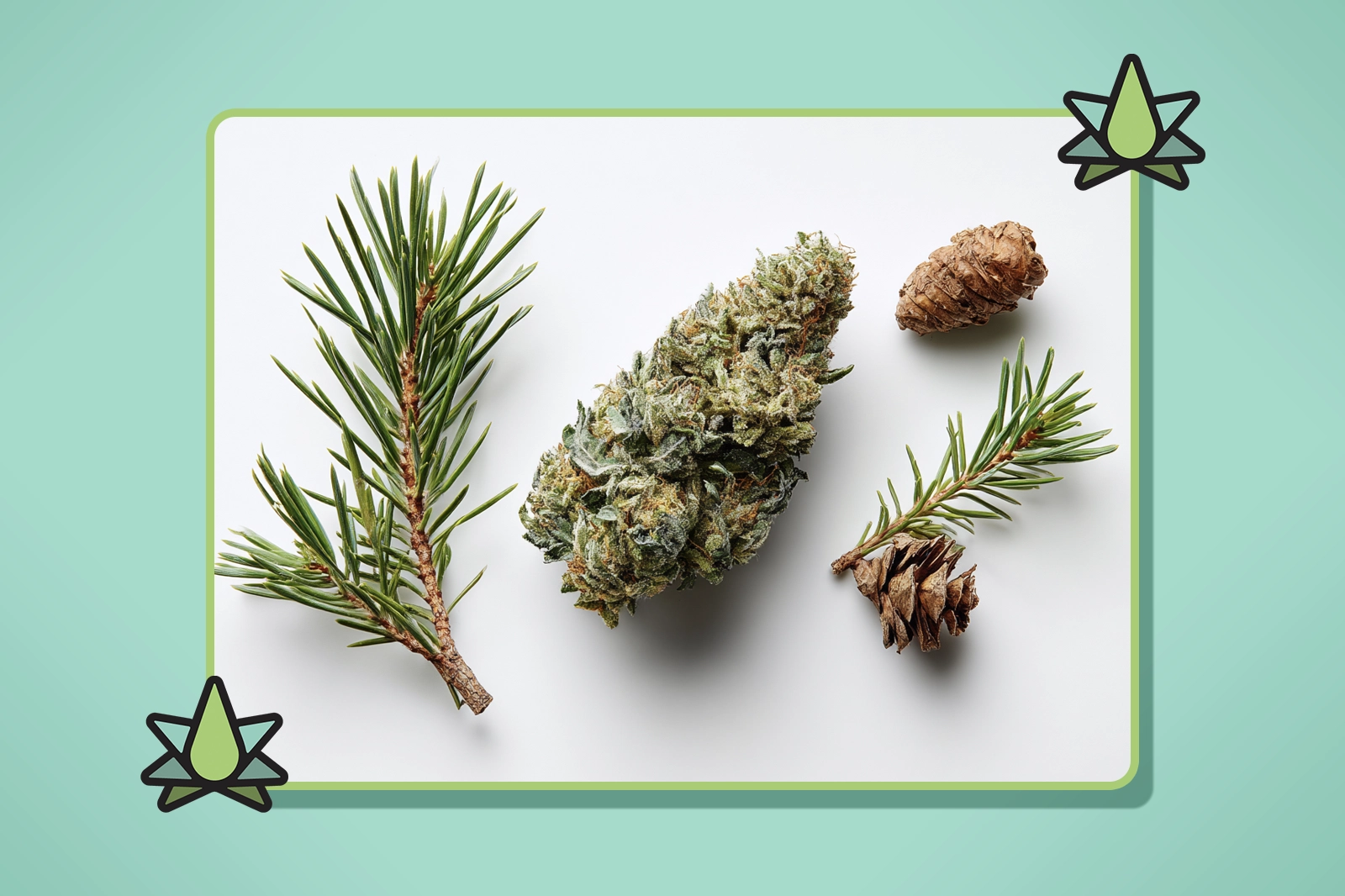
It is among the most widely distributed terpenes in the plant kingdom, present in conifer species, rosemary, eucalyptus, and, critically for cannabis product developers, in significant concentrations across a wide range of Cannabis sativa L. cultivars.
What sets pinene apart from other widely distributed monoterpenes like limonene or myrcene is that it exists in two structurally distinct isomeric forms that behave differently at a biological and formulation level. We’ll go through the two isomers next.
Alpha-Pinene Vs Beta-Pinene
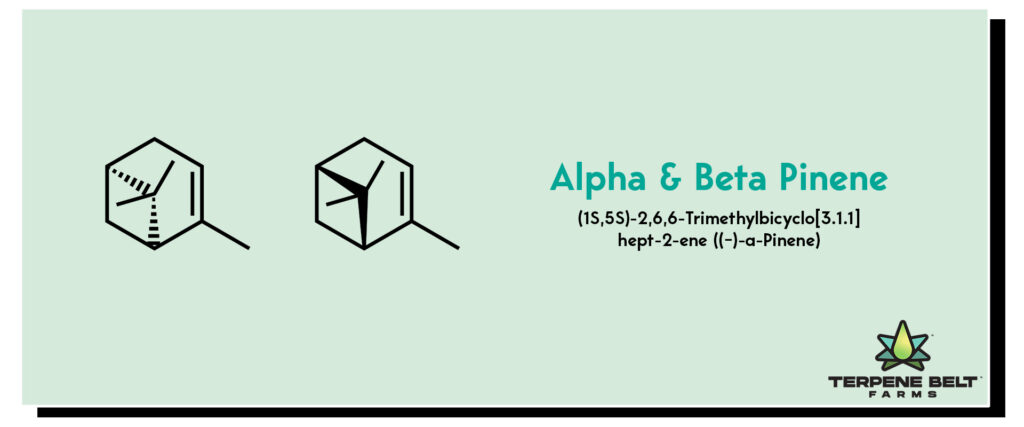
Pinene exists as two isomers, alpha and beta, that share the molecular formula C₁₀H₁₆ but behave differently in the nose, at the receptor level, and inside a formulated product.
Both are colorless, lipophilic liquids at room temperature with high vapor pressure relative to heavier sesquiterpenes, which means they volatilize quickly during processing and storage if conditions aren’t controlled.
Alpha-pinene is the dominant form in most pine-expressing cannabis cultivars and carries the majority of the functional activity associated with this terpene. Beta-pinene plays a supporting role, adding aromatic depth without replicating alpha-pinene’s sharper cognitive profile.
Here’s a deeper look at the differences between the two:
- Dominance in Cannabis: Alpha-pinene is the primary isomer in most pine-expressing cultivars; beta-pinene is present but typically at lower concentrations.
- Biological Activity: Alpha-pinene drives acetylcholinesterase inhibition and cognitive clarity; beta-pinene is less studied for receptor activity and contributes primarily at a sensory level.
- Aroma Character: Alpha-pinene reads as crisp, clean, and immediate; beta-pinene carries a more resinous, damp-wood quality that adds mid-range depth.
- Volatility: Alpha-pinene has a boiling point of ~155°C and oxidizes more readily; beta-pinene is slightly more stable and contributes to aromatic staying power in a finished product.
- Formulation Role: Alpha-pinene is the functional driver in effect-positioned products; beta-pinene smooths its sharpness and rounds out the profile in whole-plant or blended formats.
Pinene Effects & Mechanistic Activity in Cannabis Products
Pinene’s reputation as a mentally clarifying, focus-supporting terpene has solid mechanistic backing. This section covers the four primary mechanistic pathways associated with pinene and frames each in terms of formulation relevance for product developers working in vape, concentrate, and ingestible categories.
Acetylcholinesterase Inhibition & Cognitive Clarity
Acetylcholinesterase (AChE) is the enzyme responsible for breaking down acetylcholine at neural synapses. When AChE is inhibited, acetylcholine levels remain elevated, which correlates with improved attention, working memory, and cognitive processing.
Alpha-pinene has demonstrated AChE-inhibitory activity in multiple studies that identified pinene among several terpenes with relevant AChE activity.
This mechanism has direct implications for product positioning in the cannabis market. Formulations built around pinene-dominant profiles can legitimately support language around mental clarity and alertness, particularly in daytime or functional product categories where the consumer is looking for an active-use experience rather than sedation.
Bronchodilation & Respiratory Effects
A study published found that alpha-pinene demonstrated bronchodilatory effects in animal models, potentially through activity on smooth muscle tissue in the airways. For vape product formulators, this is relevant context.
Pinene-forward vape formulations may be better tolerated from a respiratory comfort standpoint than formulations dominated by heavier, potentially more irritating compounds.
That said, the caveat applies clearly here: degraded pinene, particularly oxidized alpha-pinene, can be an irritant. The respiratory benefit associated with intact alpha-pinene shifts to a respiratory negative when the compound has been allowed to oxidize or burn at excessive temperatures.
This reinforces why voltage control in vape hardware and temperature discipline in concentrate vaporization are not optional considerations when working with pinene-rich profiles.
If you’re new to manufacturing vape products and the technical details associated with them, our vape formulation R&D guide provides useful information for novice formulators.
THC Interaction
The British Journal of Pharmacology has published work suggesting that alpha-pinene may attenuate THC-induced impairment of short-term memory. This is an effect attributed to alpha-pinene’s AChE inhibitory mechanism, counteracting THC’s influence on cholinergic transmission.
For product developers, this is a functional formulation insight. If a brand is building a high-THC vape or concentrate positioned as functional or productive, rather than deeply sedating, incorporating alpha-pinene as a meaningful percentage of the terpene fraction gives that positioning biological backing.
It is one of the cleaner examples of the entourage effect functioning as a formulation lever rather than just a marketing concept.
Anti-Inflammatory & Antimicrobial Pathways
Alpha-pinene also demonstrates anti-inflammatory activity, including inhibition of pro-inflammatory gene expression. Research published identified anti-inflammatory properties in alpha-pinene across relevant cellular models. Additionally, both alpha- and beta-pinene have shown antimicrobial activity against a range of bacterial and fungal strains in vitro, which is relevant for topical and ingestible product categories targeting wellness applications.
These properties don’t replace cannabinoid-driven mechanisms, but they contribute meaningfully to the full-spectrum value of a cannabis-derived terpene profile in which pinene is present at therapeutically relevant concentrations.
| Mechanism | Primary Effect | Formulation Relevance | Key Caveat |
| AChE Inhibition | Elevates acetylcholine to support attention & memory | Enables clarity/daytime positioning in vapes & concentrates | Requires meaningful terpene concentration |
| Bronchodilation | Airway smooth muscle relaxation | May improve perceived respiratory comfort in vape products | Oxidized pinene becomes irritating; temp control critical |
| THC Modulation | May reduce THC-related short-term memory impairment | Supports functional high-THC positioning | Modulates, not eliminates, THC effects |
| Anti-Inflammatory | Downregulates pro-inflammatory signaling | Adds wellness depth in ingestibles & topicals | Supportive, not cannabinoid replacement |
| Antimicrobial | In vitro bacterial & fungal inhibition | Relevant for topical & wellness SKUs | Not a substitute for preservation systems |
Application-Specific Formulation Guidelines
Getting pinene from extraction to end product without significant loss or degradation requires discipline at every stage of the production workflow. The formulation parameters differ meaningfully depending on whether you’re working with inhalable concentrates, vape cartridges, or water-based consumable formats. Here’s what you need to know:
Vape Cartridge Optimization Parameters
Vape cartridges are both the most common application for premium terpene profiles and one of the most technically demanding environments for pinene.
The combination of heat, hardware variation, and consumer behavior, particularly chain vaping at high voltages, creates a significant risk of terpene degradation unless formulation parameters are tightly controlled.
In cannabis-derived terpene vape formulations, alpha-pinene’s volatility and low boiling point mean it expresses early in the vapor stream, often contributing to the first aromatic impression a consumer gets on the inhale.
That quality makes it valuable for nose-forward product positioning, but only if it’s intact when the consumer uses the product.
Here are some parameters to keep in mind for pinene-forward vape formulations:
- Total Terpene Load: 5–12% by weight in standard oil-based cartridges; higher loads increase viscosity variation and may require adjusted hardware
- Pinene Ratio Within Terpene Fraction: 15–30% of total terpene weight for a prominent pine character; 8–15% for secondary presence in a layered profile
- Temperature Threshold: Keep coil temperature below 200°C to minimize pinene oxide formation; 160–185°C coil range is optimal for clean expression
- Voltage Guidance: 2.4–3.2V is the recommended range for hardware used with pinene-rich formulations; above 3.6V accelerates oxidation and produces harsh vapor
- Viscosity Management: Pinene’s low molecular weight reduces overall oil viscosity; if formulating without distillate as a base, account for this when selecting hardware to avoid leakage
Concentrate & Dabbable Products
Concentrates present a different challenge set. Unlike vape cartridges, where the hardware controls heat delivery, dabbing allows the consumer to determine the temperature, and many consumers still use temperatures well above the optimal range for terpene preservation.
This means concentrate formulators need to build pinene load and profile with the assumption that some percentage of the terpene fraction will be lost to volatilization at point of use.
From a terpene integration standpoint, pinene should be added to concentrates at temperatures below 40°C to prevent premature volatilization during processing. For live resin or sauce-style products where the oil is already terpene-rich, supplemental pinene addition should be done cold and blended gently to avoid heat-driven loss.
Beverage & Edible Integration Challenges
Pinene’s lipophilic nature is its primary obstacle in aqueous delivery formats. It does not disperse in water without emulsification, and its high volatility means it can flash off during processing or storage if not properly encapsulated.
Beverage formulators who attempt to add pinene-rich terpene oil directly to a water-based matrix will get inconsistent flavor delivery, poor shelf stability, and rapid aromatic loss.
Nanoemulsification is the accepted technical solution for integrating lipophilic terpenes into beverage and edible formats. A particle size of 100–150 nanometers is generally targeted to achieve optical clarity and colloidal stability, though actual requirements depend on the beverage matrix, pH, and intended shelf life. Additional formulation considerations include:
- pH Stability Window: Alpha-pinene is sensitive to acidic hydrolysis; formulations below pH 4.5 can accelerate structural breakdown. Buffering to pH 5.0–6.5 helps preserve integrity.
- Antioxidant Inclusion: Adding a lipid-soluble antioxidant (such as tocopherol at 0.02–0.05% by weight) in the emulsion phase protects pinene from oxidation during shelf life.
- Thermal Processing: Pasteurization at temperatures above 72°C will cause significant pinene loss if the compound is not fully encapsulated in a stable emulsion prior to heat treatment.
For brands working on terpene-infused beverages, the applied context in the cannabis terpene beverage enhancement guide is worth reviewing before beginning formulation development, particularly for brands new to emulsification-dependent formats.
Stability Engineering: Preventing Oxidation & Off-Notes
Pinene stability is one of the more technically demanding aspects of working with this compound at scale. Unlike heavier sesquiterpenes that degrade slowly and relatively predictably, pinene’s oxidation pathways are fast-acting, sensitive to multiple environmental triggers, and produce byproducts that directly impact sensory quality and consumer safety.

Primary Degradation Pathways
Alpha-pinene undergoes several degradation pathways under real-world storage and processing conditions. Each pathway produces distinct byproducts that affect the sensory profile and safety of the final product differently.
- Oxidation to Pinene Oxide: The most common and problematic degradation pathway. Pinene oxide has a harsh, turpentine-like aroma that signals degraded material to consumers and trained evaluators. It forms readily in the presence of atmospheric oxygen, particularly at elevated temperatures.
- Heat-Driven Volatilization: Above 155°C, alpha-pinene volatilizes rapidly. In processing environments where heat is applied without controlled headspace, a significant percentage of the pinene fraction can be lost before the product is even packaged.
- Light Sensitivity: UV exposure accelerates the oxidation rate of alpha-pinene. Clear glass or transparent packaging without UV inhibition should be avoided for pinene-containing products.
- Acidic Hydrolysis: In acidic environments below pH 4.5, alpha-pinene can undergo structural rearrangement, producing camphene and other degradation products that alter both aroma and biological activity.
Packaging & Storage Protocols
Preventing pinene degradation in finished products and intermediate materials requires systematic control of the four primary stressors: oxygen, heat, light, and pH.
Amber glass is the preferred primary packaging material for terpene oils containing significant pinene fractions, as it blocks the UV wavelengths most responsible for photo-oxidation while maintaining chemical inertness. HDPE and some other plastics are not recommended for long-term terpene storage due to potential sorption of terpene compounds into the container wall.
Nitrogen headspace flushing at the time of fill significantly reduces the oxygen available for oxidation reactions. This is standard practice in premium terpene oil packaging and should extend to any intermediate storage container used during production. Shelf-life data from properly nitrogen-purged, amber glass packaging suggests alpha-pinene can remain stable for 18–24 months under controlled conditions.
Temperature control during storage and transit is non-negotiable. Refrigerated storage (2–8°C) is recommended for bulk terpene oil. Finished products that cannot be refrigerated should be stored below 20°C and out of direct sunlight.
COA Monitoring & Quality Control Frequency
Every production batch of pinene-containing terpene oil should be accompanied by a COA from an ISO-certified or state-licensed third-party laboratory.
At minimum, COAs should confirm alpha-pinene and beta-pinene concentrations, total terpene percentage, and absence of pinene oxide above threshold. For products with defined shelf lives, re-testing at 6-month intervals provides meaningful stability data and supports quality assurance claims with retail partners.
Synergistic Terpene Pairings with Pinene
One of the most formulation-relevant aspects of alpha-pinene is how it interacts with other terpenes in a complete profile. Pinene’s cognitive-forward, bright character creates natural pairing opportunities with terpenes that either extend its clarity, balance it with relaxation, or modulate its sharpness with warmth and complexity.
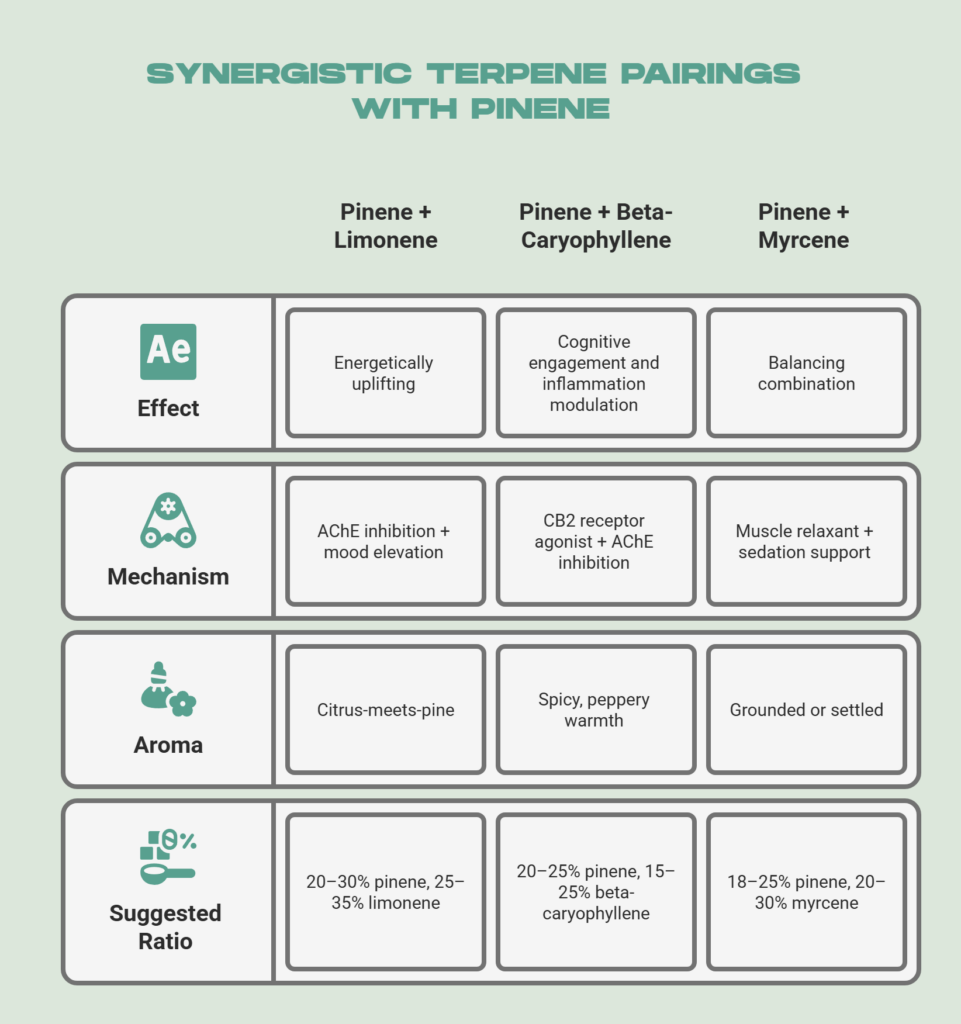
Pinene + Limonene
This pairing produces one of the more energetically uplifting combinations in the cannabis terpene toolkit. Alpha-pinene’s AChE inhibition layers with limonene’s mood-elevating properties to create a profile associated with mental clarity, brightness, and positive affect.
The Aromatic Result Is Citrus-Meets-Pine: clean, forward, and highly marketable in daytime or productive-use positioning.
Suggested ratio ranges for a balanced expression: alpha-pinene at 20–30% of the terpene fraction with limonene at 25–35%. For a limonene-forward product with pine support, shift to 30–40% limonene and reduce pinene to 12–18%.
Pinene + Beta-Caryophyllene
This pairing addresses a different formulation objective: maintaining cognitive engagement while modulating inflammation. Beta-caryophyllene is the only known terpene to act as a CB2 receptor agonist, giving it a direct cannabinoid-adjacent mechanism that complements rather than duplicates pinene’s AChE pathway.
The result is a profile that supports focus while reducing the restless or anxious edge that some consumers report from purely stimulating terpene combinations.
From a sensory standpoint, beta-caryophyllene’s spicy, peppery warmth rounds out pinene’s sharp pine character and adds body to the mid-range aroma. A ratio of alpha-pinene at 20–25% and beta-caryophyllene at 15–25% within the terpene fraction creates a balanced, rounded profile suited to functional concentrate or vape applications.
Pinene + Myrcene
Where the previous two pairings skew toward activation, pinene and myrcene together function as a balancing combination. This blend is particularly useful for evening or transitional products where clarity is still desirable, but full sedation is not the goal.
Myrcene’s muscle-relaxant and sedation-supporting properties soften pinene’s cognitive sharpness, producing a profile that many consumers describe as grounded or settled rather than wired.
The key with this pairing is ratio control. Myrcene is a dominant terpene in many cannabis-derived profiles, and it can overtake pinene’s contribution at high concentrations. For a pinene-forward product with myrcene support, target alpha-pinene at 18–25% and myrcene at 20–30%.
Product Profiles Featuring Pinene-Rich Expressions
Terpene Belt Farms’ Fresh Never Frozen cannabis-derived terpene oils are extracted from fresh, never-frozen Cannabis sativa L. biomass, a distinction that matters for pinene-rich profiles specifically because the fresh extraction process preserves volatile monoterpenes that are among the first compounds lost in freeze-dry or cured-biomass workflows.
The following profiles from our catalog represent distinct pinene-expression archetypes, each suited to different product and brand positioning strategies.
- Pine #37: A classic pine-dominant profile anchored by limonene (17.17%) and beta-caryophyllene (17.08%), with terpinolene (9.43%) and humulene (7.12%) adding herbal and earthy complexity. Pinene’s structural presence in this profile supports the broader pine character of the expression rather than leading with sharp monoterpene brightness.
- 2023 Fruit #132: Pinene leads at 20.3%, with myrcene (16.07%) and limonene (8.05%) rounding out the profile. This is a bright, fruit-forward expression with a distinct pine backbone, making it suitable for a daytime concentrate or vape product where the pine note reads as crisp and fresh rather than resinous.
- 2023 Gas #154: A more complex pinene-driven profile at 22.69%, paired with myrcene (15.37%), caryophyllene (9.8%), limonene (9.79%), and ocimene (4.26%). The gas-category expression here means the pine reads as fuel-pine rather than forest-pine. This profile works well in premium vape or live resin-style concentrates.
- Sweet #164: Myrcene-led (23%) with pinene at 17.69% and limonene (14.02%) creating a layered sweet-pine-citrus expression. The sweet aromatic context here makes pinene more approachable for consumers who don’t typically gravitate toward piney profiles.
Why Partner With Terpene Belt Farms for Pinene-Rich Profiles
Botanical isolates and blended lab profiles are assembled from individual compounds — not extracted as a coherent molecular expression from a single plant. Experienced formulators notice the difference. The sensory complexity and profile stability of a well-extracted cannabis-derived terpene oil is measurable on a COA and perceptible to a consumer.
Terpene Belt Farms sources exclusively from Cannabis sativa L. grown in California’s Central Valley. The Fresh Never Frozen extraction protocol preserves volatile monoterpenes like alpha-pinene at concentrations that cured-biomass workflows routinely sacrifice, giving wholesale buyers, private label manufacturers, and R&D teams access to batch-consistent, COA-verified profiles with full documentation support.
Want to see what Pinene can add to your product formulations? Request samples from Terpene Belt Farms today for your R&D into Pinene-centric product formulations.
Frequently Asked Questions About Pinene Terpene
What Is Pinene and What Does It Do in Cannabis Products?
Pinene is a monoterpene found in cannabis, pine trees, and other plants. It exists as alpha- and beta-pinene isomers. Alpha-pinene is associated with cognitive clarity, bronchodilation, and potential THC memory modulation. In formulated products, it contributes pine-forward aroma and may support focus-oriented effect positioning.
What Cannabis Strains Are Highest in Alpha-Pinene?
Pine-forward, gas, and certain fruit-category cannabis cultivars tend to express high alpha-pinene. Strains historically associated with pinene dominance include Jack Herer, Blue Dream, and OG Kush variants. Exact concentrations vary by harvest batch, which is why COA verification at the lot level is essential for formulators.
At What Temperature Does Pinene Degrade in Vape Cartridges?
Alpha-pinene begins to volatilize rapidly above 155°C. Oxidation to pinene oxide, the primary degradation byproduct, accelerates with increasing temperature and oxygen exposure. Vape hardware operating above 200°C coil temperature significantly degrades pinene integrity.
Can Pinene Be Used in Beverages?
Yes, but only with proper emulsification. Pinene is lipophilic and will not disperse in water without nanoemulsification (target particle size: 100–150nm). Direct addition to aqueous formulations results in poor sensory consistency and rapid aromatic loss. pH stabilization and antioxidant inclusion are also required for shelf-stable beverage applications.
Is Alpha-Pinene Safe for Inhalation in Cannabis Products?
Intact alpha-pinene is considered safe for inhalation at standard terpene use levels in cannabis products. The primary safety concern arises from oxidized alpha-pinene (pinene oxide), which is a respiratory irritant. Maintaining proper storage, temperature control, and COA verification of freshness minimizes oxidation risk.
How Does Pinene Interact with THC?
Alpha-pinene has been studied for its potential to attenuate THC-induced short-term memory impairment through AChE inhibition, as documented in the British Journal of Pharmacology. In formulation practice, this suggests that pinene-rich profiles may support clearer-headed product positioning even in higher-THC formulations.
Sources Used for This Article
- Wikipedia: “Pinene” – en.wikipedia.org/wiki/Pinene
- Taylor & Francis Online: “Acetylcholinesterases – the structural similarities and differences” – tandfonline.com/doi/full/10.1080/14756360701421294
- PMC: “Therapeutic Potential of α- and β-Pinene: A Miracle Gift of Nature” – pmc.ncbi.nlm.nih.gov/articles/PMC6920849/
- PubMed: “The therapeutic efficacy of α-pinene in an experimental mouse model of allergic rhinitis” – pubmed.ncbi.nlm.nih.gov/25242385/
- PMC: “Taming THC: potential cannabis synergy and phytocannabinoid-terpenoid entourage effects” – ncbi.nlm.nih.gov/pmc/articles/PMC3165946/