Quick Answer: Terpenes are not more important than THC, but they are often more decisive in determining product quality, differentiation, and consumer perception.
THC establishes psychoactive intensity, while terpenes shape flavor, effect direction, onset character, and overall experience. In competitive markets, products with optimized terpene profiles routinely outperform higher-THC formulations that lack aromatic and experiential depth.
The most successful commercial cannabis products balance THC potency with intentional, profile-driven terpene formulation.
Key Takeaways
- THC defines potency; terpenes define experience. THC sets the baseline psychoactive effect, while terpenes control how that effect feels, tastes, and persists.
- High THC alone does not guarantee product success. Products formulated solely around potency often struggle with differentiation, repeat purchases, and premium pricing.
- Terpenes modulate cannabinoid effects through multiple mechanisms, including blood-brain barrier permeability, neurotransmitter interaction, and receptor modulation.
- Lower-THC, terpene-forward products can outperform high-THC SKUs in consumer satisfaction, particularly in vape, concentrate, and functional-use categories.
- Authentic cannabis-derived terpene profiles outperform generic blends by delivering consistent strain character, better effect predictability, and stronger brand identity. Shop our sample kits at Terpene Belt Farms and see how premium terpenes can improve your final product.
Product formulators often look at THC and terpenes in black and white. Either they invest in high-THC distillate to capture consumers focused on potency numbers, or allocate budget toward premium terpene profiles that create distinctive experiences but command higher input costs.
Distillate producers emphasize cannabinoid purity and cost efficiency, while terpene suppliers highlight aromatic complexity and effect modulation. Both perspectives contain merit, yet neither tells the complete formulation story.
The debate matters because formulation decisions directly impact product performance, brand differentiation, and profit margins. A cartridge formulated with 90% THC distillate and minimal terpenes costs less to produce but struggles to justify premium pricing or create memorable consumer experiences.
Conversely, a terpene-forward formulation with moderate THC delivers a distinctive character but requires careful sourcing, precise blending, and higher material costs.
The reality is that neither THC nor terpenes alone determines product success. Effective formulation requires getting to know each compound’s functional role, its synergistic interactions, and category-specific application constraints.
This article looks at both components objectively, providing technical frameworks for formulation decisions based on product goals rather than supplier marketing claims.
Are Terpenes More Important Than Cannabis?
The question of whether terpenes or THC holds greater importance in cannabis formulation parallels asking whether an engine or steering system matters more in vehicle performance. Both are essential, and their relative priority depends entirely on application requirements.
Distillate suppliers emphasize THC concentration, purity, and cost efficiency, while terpene providers highlight experiential complexity, strain authenticity, and consumer differentiation. Both perspectives offer valid technical arguments, yet the either/or framing creates an artificial constraint that limits formulation effectiveness.
The productive approach is to look at formulation priorities within specific product contexts. A low-dose edible targeting functional daytime use requires different compound optimization than a high-potency concentrate designed for experienced consumers. THC and terpene ratios should align with product objectives rather than theoretical hierarchies about compound importance.
A 2021 study published in Scientific Reports found that cannabis terpenes “selectively enhance cannabinoid activity,” demonstrating that THC establishes psychoactive intensity while terpenes modulate how that intensity manifests experientially. Formulations with adequate THC but minimal terpene content produce effects that consumers consistently describe as one-dimensional or harsh. Conversely, terpene-rich products without sufficient THC cannot deliver the psychoactive properties most adult-use categories require.
The compounds function synergistically rather than competitively. Effective formulation requires understanding each compound’s distinct contribution and optimizing both components for targeted product outcomes.

THC and Its Role in Cannabis Formulation
Tetrahydrocannabinol (THC) functions as cannabis’s primary psychoactive cannabinoid, binding to CB1 receptors in the central nervous system. From a formulation point of view, THC establishes psychoactive intensity, which is the baseline, not the complete picture of consumer experience.
The endocannabinoid system mechanism involves CB1 receptors concentrated in brain regions controlling memory, pleasure, coordination, and time perception. When THC molecules bind these receptors, they trigger neurological cascades that consumers recognize as intoxication. However, THC concentration alone provides limited predictive value for actual product character.
Terpenes and Their Role in Cannabis Formulations
Terpenes constitute volatile aromatic compounds responsible for cannabis’s distinctive scents and flavors. Beyond their sensory contributions, these organic hydrocarbons exert direct physiological effects and modulate cannabinoid interactions, making them critical for product differentiation.
Cannabis primarily produces monoterpenes (10-carbon structures) and sesquiterpenes (15-carbon), with compounds like myrcene, limonene, pinene, linalool, and caryophyllene appearing in varying concentrations. NIH research documents several mechanisms:
Documented Terpene Mechanisms:
- Blood-Brain Barrier Modification: Alter permeability, affecting cannabinoid uptake rates
- Neurotransmitter Interaction: Direct engagement with serotonin, GABA, and opioid systems
- Receptor Binding Modulation: Allosteric enhancement or inhibition of cannabinoid receptor activation
- Enzymatic Influence: Modified breakdown rates, extending or shortening effect duration
Common terpenes demonstrate distinct properties. Myrcene shows sedative characteristics and may improve THC blood-brain barrier crossing. Limonene exhibits mood-elevating properties in preclinical studies. Beta-caryophyllene uniquely activates CB2 receptors directly, providing potential benefits without contributing to intoxication.
For manufacturers developing cannabis terpene products, these properties create opportunities for effect-targeted formulation. A vape cartridge with high-myrcene terpenes paired with moderate THC delivers distinctly different experiences than identical THC with pinene-dominant profiles, even though they might have identical potency metrics.
Practical implications extend beyond effects to formulation stability, hardware compatibility, and manufacturing efficiency. Terpene composition influences viscosity in vape oils, oxidative stability in concentrates, and flavor persistence across shelf life.
The Entourage Effect for Product Development
The entourage effect describes synergistic interactions where cannabis compounds’ combined effects exceed individual component activities. First documented by researchers Mechoulam and Ben-Shabat, this concept recognizes cannabis as a complex pharmacological mixture requiring whole-plant analysis.
THC alone, even at high concentrations, produces less nuanced experiences than THC combined with appropriate terpene profiles. British Journal of Pharmacology research documented how specific terpenes modify THC effects. However, recent studies note entourage effects operate through alternative pathways, including neurotransmitter modulation and metabolic influence rather than direct CB1/CB2 receptor interaction.

Sleep Product Formulations
Products designed for sleep and relaxation are mostly based around moderate THC concentrations (10-20mg per serving) with sedative terpene profiles.
Myrcene, the most abundant terpene in many cannabis varieties, demonstrates sedative properties in preclinical studies and may enhance THC’s ability to cross the blood-brain barrier. When paired with linalool, a terpene also found in lavender with documented calming effects, the combination produces enhanced sedation beyond what THC achieves independently.
Our 2023 Sour #93 features 20% Limonene, 9% myrcene, and 3% linalool, which make it the perfect terpene for sleep formulations.
This ratio creates the “heavy” feeling consumers associate with effective sleep products while minimizing next-day grogginess. Beta-caryophyllene additions (10-15%) can provide anti-inflammatory support that addresses physical discomfort interfering with sleep onset.
Energy and Focus Formulations
Daytime products require balancing psychoactive effects with functional clarity. Limonene-dominant terpene profiles (25-35% of total terpenes) provide the citrus-forward aromatics consumers associate with energizing effects, while preclinical research suggests mood-elevating properties.
Pinene additions (15-25%) contribute the crisp, forest-like notes that support alertness and may help counteract short-term memory impairment sometimes associated with THC consumption. Our Fruit #505 terpenes come with a 19% pinene concentration that works great for this kind of use case.
These formulations also include moderate THC levels (5-15mg per serving) to deliver benefits without overwhelming cognitive function. The terpene profile directs the experience toward mental clarity rather than sedation, creating products suitable for productive daytime use.
Beta-pinene and alpha-pinene both contribute to this effect profile, with many formulators including both isomers in their blends.
Microdose Applications
Microdosing strategies (1-5mg THC per serving) rely heavily on terpene profiles to deliver noticeable effects at sub-intoxicating cannabinoid levels.
These products serve consumers seeking therapeutic benefits, stress relief, mild pain management, and mood support, without significant psychoactive intensity. The formulation challenge involves selecting terpenes that amplify subtle THC effects while providing their own functional contributions.
Balanced terpene profiles combining limonene for mood support, beta-caryophyllene for its unique CB2 receptor interaction, and pinene for clarity create products that feel effective despite lower THC content.
Many successful microdose formulations incorporate 8-12% total terpenes by weight, higher than standard products, to compensate for reduced cannabinoid concentrations. This approach enables brands to offer functional products to THC-sensitive consumers or those requiring daytime discretion.
Pain Management Formulations
Beta-caryophyllene deserves particular attention in pain management applications due to its unusual ability to activate CB2 receptors directly.
Unlike other common terpenes that modulate cannabinoid activity indirectly, beta-caryophyllene functions as a selective CB2 agonist, providing anti-inflammatory and analgesic properties through cannabinoid receptor pathways without contributing to psychoactive effects.
Pain-focused formulations usually have:
- Beta-caryophyllene as the dominant terpene (30-40% of the terpene fraction), supported by moderate to high THC levels (15-30mg per serving depending on product format and intended use).
- Humulene additions that (10-20%) provide complementary anti-inflammatory properties, while myrcene (15-25%) contributes muscle-relaxant effects that address tension-related discomfort.
Our 2023 Gas #10 blend contains 22% beta-caryophyllene with humulene at a modest, but helpful, concentration of 8%. These two terpenes, along with some others in the mix, create woody and earthy undertones that work great for pain management formulations.
These multi-layered formulations target pain through several mechanisms simultaneously. CB1 receptor activation via THC, CB2 activation via beta-caryophyllene, and additional anti-inflammatory pathways from supporting terpenes.
Product Category Applications and Formulation Guidelines
If you’re looking to turn these basic formulation principles into successful formulations, you need to know how to work with terpenes and cannabis across vape, concentrate, edible, and flower applications.
Vape Cartridge Development
Vape products demand balance between viscosity, flavor delivery, and hardware compatibility. High-quality formulations incorporate 5-15% terpenes by weight.
Profile Selection by Effect:
- Daytime/Energy: Citrus profiles featuring limonene and pinene for mood elevation
- Relaxation: Sweet profiles emphasizing myrcene for sedative characteristics
- Balanced: Pine profiles combining citrus brightness with woody depth
Specific terpene percentages in authenticated profiles enable predictable outcomes. For instance, 2023 Citrus #7 with 38.15% terpinolene allows precise blending impossible with approximated botanical blends.
Concentrate Enhancement
Distillation strips terpenes that control strain character. Reintroducing strain-specific profiles restores aromatic authenticity while enabling strain-name marketing.
If you’re working with terpenes and concentrates, temperature control is extremely important.
Crystalline concentrates require precise temperature management due to their solid, low-terpene composition. Excess heat can compromise crystal integrity, while insufficient heat limits effective vaporization, making controlled, consistent temperatures essential during processing and use.
Sauce-style concentrates, by contrast, are formulated with significantly higher terpene content, typically in the 15–20% range by weight. This terpene fraction supports a fluid consistency and allows these products to perform optimally at slightly higher temperatures without sacrificing stability or flavor.
Matching temperature profiles to concentrate type and terpene loading is critical for maintaining product quality and predictable behavior.
Flower Infusion Applications
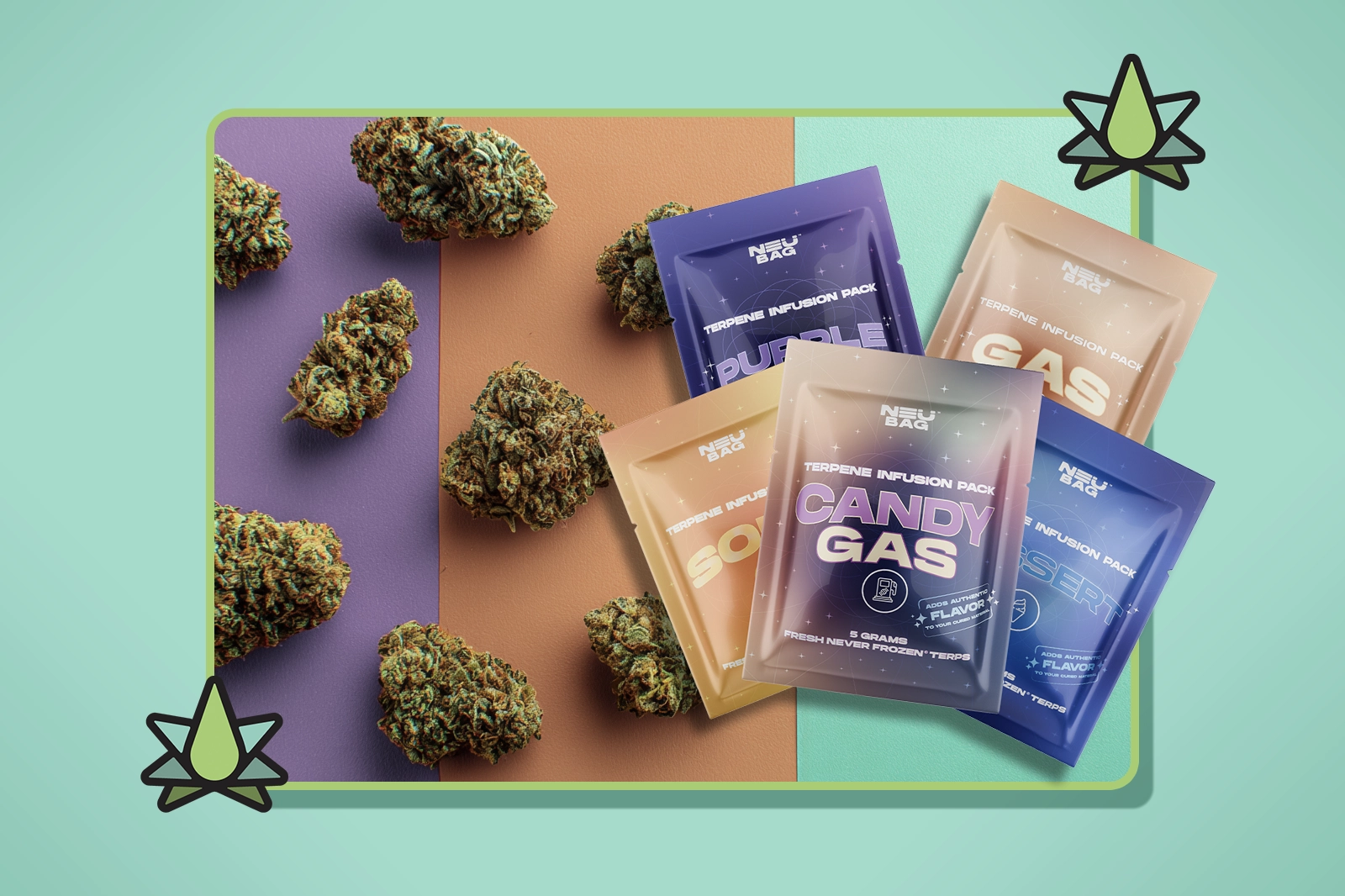
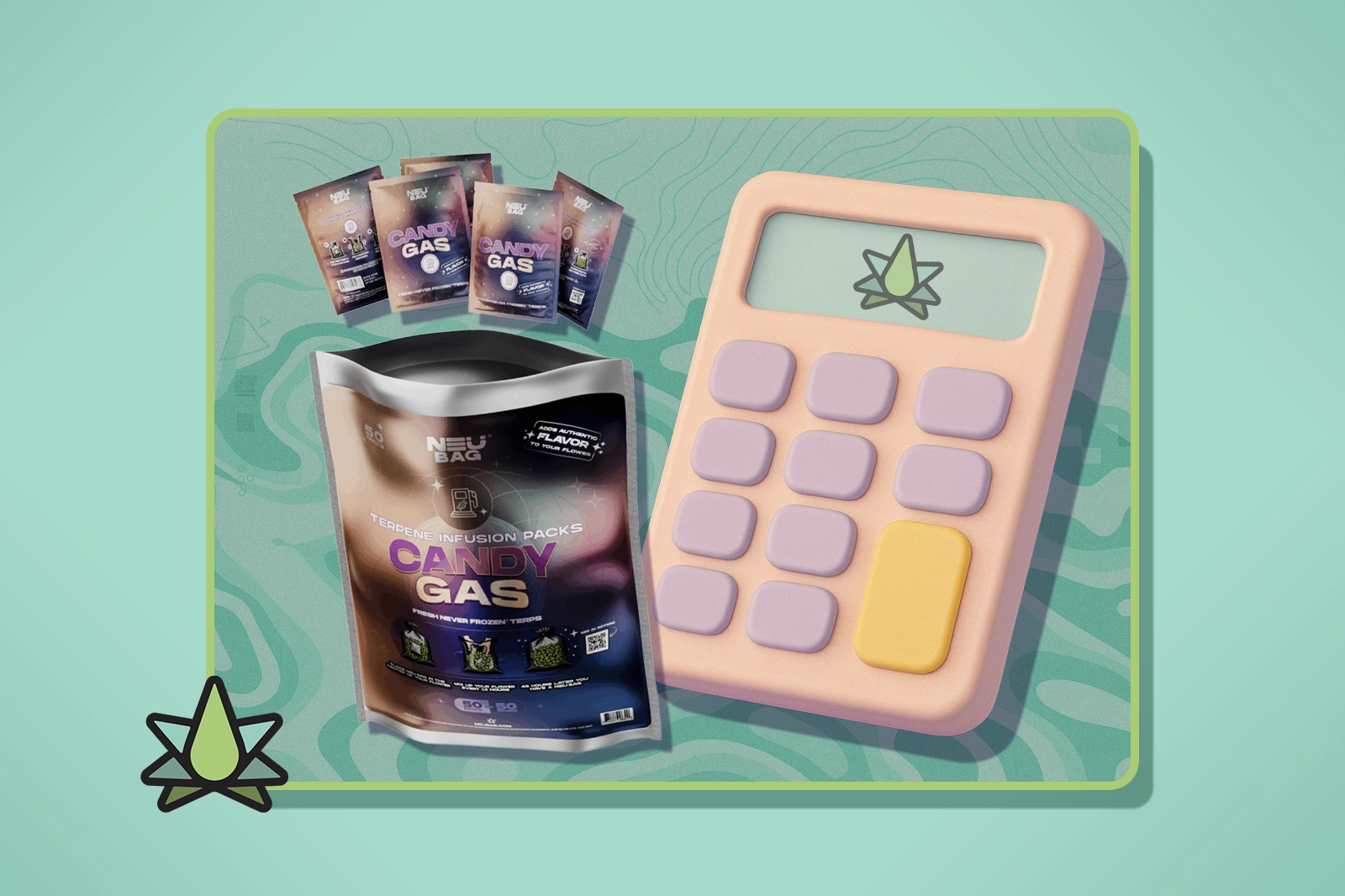
Pre-roll manufacturers use terpene infusion systems to increase the quality of the formulation or create signature profiles. Our NEU Bag technology enables controlled absorption without altering moisture or introducing solvents affecting combustion.
This addresses lost terpene content during trimming, curing, and storage and allows manufacturers to properly reintroduce terpenes in their products evenly across batches.
Common Formulation Mistakes to Avoid
While there’s a lot that can go wrong in the formulation process, here are a few common pitfalls that young brands face when working with THC and terpenes.
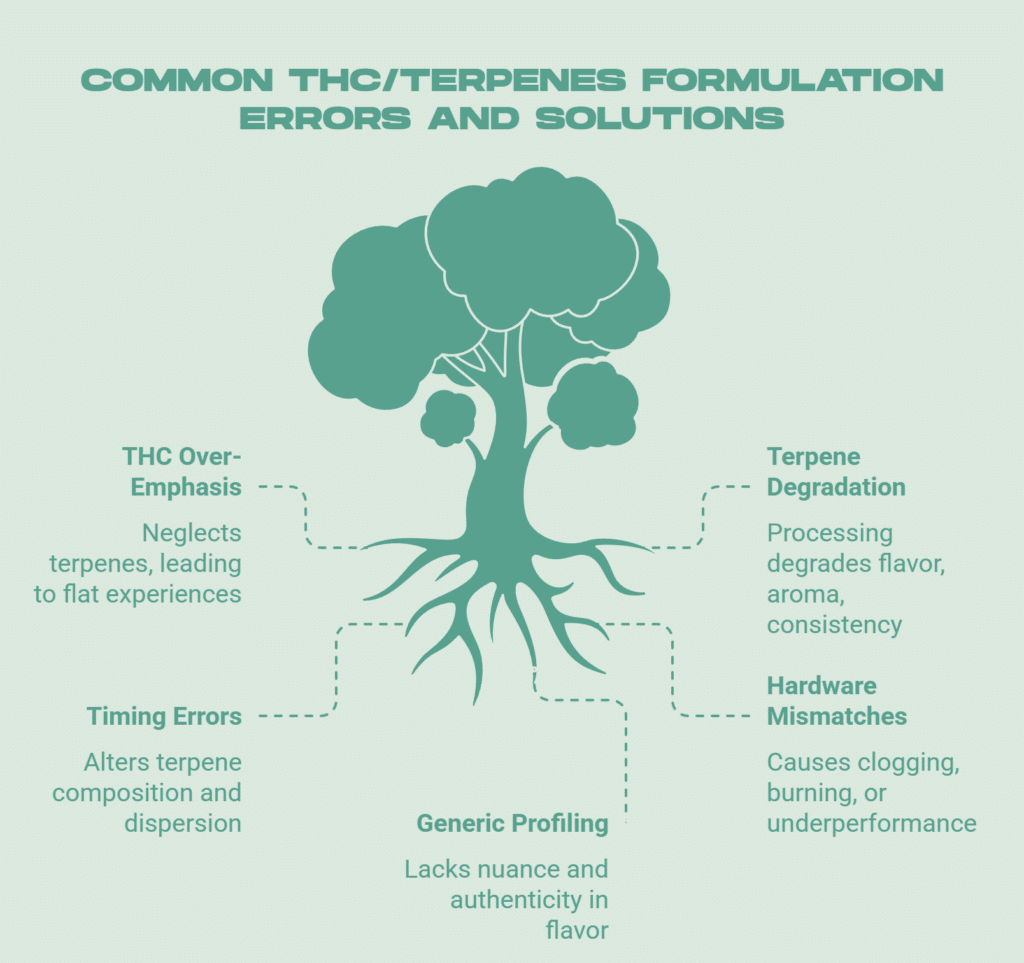
- Over-Reliance on THC Percentage: Designing products solely around maximum THC often results in flat, undifferentiated experiences that fail to stand out in a crowded market. Without intentional terpene strategy, even high-potency products can feel one-dimensional. Successful formulations prioritize the intended effect or experience first, then fine-tune cannabinoid ratios to support that outcome rather than chasing potency alone.
- Inadequate Terpene Preservation: Terpenes are frequently degraded during processing due to unnecessary exposure to heat, light, or oxygen long before the product reaches the consumer. These losses directly impact flavor, aroma, and consistency. Maintaining terpene integrity requires temperature-controlled workflows, reduced oxygen exposure during transfers, and packaging designed to limit permeability and oxidation.
- Terpene Addition Timing Errors: Introducing terpenes too early in the process can subject them to thermal stress or mechanical agitation that alters their composition. Adding them too late, however, can lead to poor dispersion and inconsistent performance. Identifying and validating optimal addition points, typically after major thermal steps but before final homogenization, is critical to ensuring stability and uniformity.
- Hardware–Formulation Mismatches: Vape hardware varies widely in airflow design, coil resistance, and wicking efficiency. A formulation that performs well in one cartridge may clog, burn, or underperform in another. Testing formulations across multiple hardware configurations helps ensure viscosity, vaporization efficiency, and terpene delivery remain consistent under real-world conditions.
- Generic Flavor Profiling: Attempting to recreate strain profiles using broad or approximated terpene blends often results in products that fall short of consumer expectations. These profiles tend to lack nuance and authenticity. More successful formulations rely on strain-specific terpene profiles supported by detailed compositional data and credible sourcing to deliver consistent, recognizable results.
Conservative approaches work best for first terpene-enhanced products: begin with proven ranges (5-10% terpene content), select well-characterized profiles, and conduct thorough stability testing. If you’re still having trouble, we have some helpful resources for vape formulation and concentrate development that may help you out.
Closing Thoughts — How Terpene Belt Farms Can Help Out With Your Formulations
Terpene Belt Farms specializes in cannabis-derived terpene extraction from Cannabis Sativa L, offering manufacturers the authentic profiles needed for effect-targeted formulation. Our vertically integrated production controls cultivation through extraction, ensuring genetic consistency, optimal harvest timing, and immediate processing that prevents terpene degradation.
We provide detailed terpene analysis with each batch, complete Certificates of Analysis from ISO/IEC 17025 accredited laboratories, and technical support throughout your formulation development process.
Whether you need strain-specific profiles for premium positioning or custom blends for proprietary products, our team works directly with R&D teams to optimize cannabinoid-terpene ratios for specific product goals.
Partner with Terpene Belt Farms for wholesale services that deliver consistent quality, transparent sourcing, and formulation expertise supporting your product development objectives.
Frequently Asked Questions
Can High Terpene Content Compensate for Lower THC?
Terpene-rich formulations with moderate THC (60-70%) often deliver more satisfying experiences than high-THC products (85-90%) with minimal terpenes. Terpenes modulate cannabinoid effects but don’t replace THC’s psychoactive properties—they direct and improve rather than substitute.
How Do I Determine Optimal Terpene Percentages?
Vape cartridges typically use 5-15% terpenes, concentrates 10-20%, edibles 1-5%. Start conservative and incrementally increase based on stability testing and feedback. Category and hardware constraints influence optimal ranges.
Do Botanical Terpenes Work as Well as Cannabis-Derived?
Individual botanical compounds function similarly to cannabis-derived versions when isolated, but lack complete strain profiles including minor terpenes creating authentic experiences. Cannabis-derived options support strain-specific claims botanical blends cannot authenticate.
What Testing Should I Require from Suppliers?
Require full terpene profile analysis via GC-MS, pesticide screening, heavy metals analysis, residual solvents testing, and microbial screening. Reputable suppliers provide third-party Certificates of Analysis for every batch.
How Do Terpenes Affect Shelf Life?
Terpenes are volatile and susceptible to oxidation and thermal degradation. Products require oxygen barrier packaging, UV protection, storage below 20°C (68°F), and minimal container headspace. Properly formulated products maintain acceptable profiles for 12-18 months.
Can I Blend Profiles for Custom Effects?
Yes, blending enables custom formulations targeting specific effects or flavors. Start with detailed analytical data for source profiles, document exact blend ratios, and conduct stability testing since some combinations may interact unexpectedly during storage.
How Do Minor Cannabinoids Interact with Terpenes?
CBD, CBN, CBG, and CBC interact through similar mechanisms as THC while providing distinct properties. CBD moderates THC intensity, CBN adds sedative properties, and CBG supports focus—all combining synergistically with strategic terpene selection for effect-targeted products.
What Differentiates Live Resin from Cured Terpenes?
Live resin terpenes extract from fresh-frozen material immediately post-harvest, preserving volatile compounds lost during curing. Fresh Never Frozen extraction maximizes delicate compound preservation while maintaining consistency.
Sources Used for This Article
- Scientific Reports: “Cannabis sativa terpenes are cannabimimetic and selectively enhance cannabinoid activity” – nature.com/articles/s41598-021-87740-8
- PMC NLM NIH: “The “Entourage Effect”: Terpenes Coupled with Cannabinoids for the Treatment of Mood Disorders and Anxiety Disorders” – pmc.ncbi.nlm.nih.gov/articles/PMC7324885
- PMC NLM NIH: “Terpenes/Terpenoids in Cannabis: Are They Important?” – pmc.ncbi.nlm.nih.gov/articles/PMC8489319
- PubMed: “Limonene has anti-anxiety activity via adenosine A2A receptor-mediated regulation of dopaminergic and GABAergic neuronal function in the striatum” – pubmed.ncbi.nlm.nih.gov/33548867
- PMC NLM NIH: “β-Caryophyllene, a CB2-Receptor-Selective Phytocannabinoid, Suppresses Mechanical Allodynia in a Mouse Model of Antiretroviral-Induced Neuropathic Pain” – pmc.ncbi.nlm.nih.gov/articles/PMC6983198
- PMC NLM NIH: “The Entourage Effect in Cannabis Medicinal Products: A Comprehensive Review” – pmc.ncbi.nlm.nih.gov/articles/PMC11870048
- PMC NLM NIH: “Taming THC: potential cannabis synergy and phytocannabinoid-terpenoid entourage effects” – pmc.ncbi.nlm.nih.gov/articles/PMC3165946
- Frontiers: “Terpenoids From Cannabis Do Not Mediate an Entourage Effect by Acting at Cannabinoid Receptors” – frontiersin.org/articles/10.3389/fphar.2020.00359/full
- PMC NLM NIH: “Myrcene—What Are the Potential Health Benefits of This Flavouring and Aroma Agent?” – pmc.ncbi.nlm.nih.gov/articles/PMC8326332
- ScienceDirect: “Effects of inhaled Linalool in anxiety, social interaction and aggressive behavior in mice” – sciencedirect.com/science/article/pii/S0944711309002578