Quick Answer: Cannabis extract types are best sorted by what part of the plant each method captures and what it leaves behind. Steam-distilled cannabis essential oil is the volatile terpene fraction with no cannabinoids. Solvent and CO2 extracts such as live resin, HTE, HTFSE, sauce, and distillate sit on a range from terpene-rich to nearly terpene-free, while solventless products like rosin, hash, and kief are pressed or sifted rather than chemically extracted. The plant supplies the chemistry, and the extraction method decides which fraction reaches your finished product.
Key Takeaways
- Cannabis extract types are best defined by extraction method and target fraction, including volatile terpenes, resin, cannabinoids, or whole-plant material.
- Cannabis essential oil captures the volatile terpene fraction through steam distillation, leaving cannabinoids, waxes, and fats behind.
- Solvent and carbon dioxide extracts include live resin, high terpene extract, high terpene full spectrum extract, sauce, and distillate.
- Distillate is a refined cannabinoid fraction with most terpenes removed, which is why formulators often add terpenes back afterward.
- Solventless extracts such as rosin, hash, and kief retain terpenes based on starting material quality and post-harvest handling.
- Terpene Belt Farms steam-distills cannabis terpenes live on site within minutes of harvest to preserve volatile monoterpenes and cannabinoid-free cannabis character.
- Put the volatile fraction to work in your formulation with Fresh Never Frozen cannabis essential oil that delivers real plant aroma without cannabinoids.
Cannabis Extract Types and What You Need to Know
An extract is any material pulled out of the plant by a defined process, and the process is what separates one type from the next. Two variables do most of the sorting: the method used, whether heat, solvent, pressure, or CO2, and the fraction that method targets, whether the light volatile terpenes, the heavier resin, the cannabinoids, or everything at once. Get those two straight, and most of the label confusion falls away.
For a formulator, the category label should predict how a material behaves. A few things a real definition tells you before you ever open the jar:
- Volatile Content: whether the material is terpene-rich or terpene-poor, which drives aroma and flavor.
- Cannabinoid Load: whether it carries THC and other cannabinoids or tests clean.
- Format Behavior: how it pours, disperses, and holds up under heat.
- Compliance Footprint: whether it triggers cannabinoid testing thresholds in your finished product.
The terminology in this guide follows ISO 9235:2021, the international vocabulary standard for aromatic natural raw materials that the flavor and fragrance world already runs on. Cannabis rarely gets mapped to it, which is exactly why the category talks past itself. The single most useful line to draw is between terpenes and cannabinoids, since most extract types are defined by how much of each they keep.
Cannabis Essential Oil: The Volatile Terpene Fraction
The cleanest place to start is the lightest fraction. Cannabis essential oil is the volatile aromatic layer of the plant, captured on its own and separated from the waxes, fats, and cannabinoids.
It is the closest cannabis analog to a lavender or citrus essential oil, and it is where steam-distilled cannabis terpenes belong in the taxonomy.
Steam Distillation and Expression
Steam distillation passes hot vapor through plant material, lifts the volatile terpenes into the steam, then condenses and separates them from the water. Expression, the other classic essential-oil method, presses volatile oil out mechanically and shows up mainly with citrus peels.
Both target the same thing, the light fragrant molecules, not the heavy resin. Research suggests the volatile fraction migrates out of the trichome glands during distillation, while the cannabinoids largely stay behind, which is why a properly distilled cannabis essential oil tests free of THC and CBD, according to published research on hemp distillation.
Why Steam-Distilled Cannabis Terpenes Sit Here
Because the method captures only the volatile layer, steam-distilled cannabis terpenes are aroma and flavor with none of the intoxicating compounds. That makes them a clean input for products that need cannabis character without cannabinoids, from beverages to topicals.
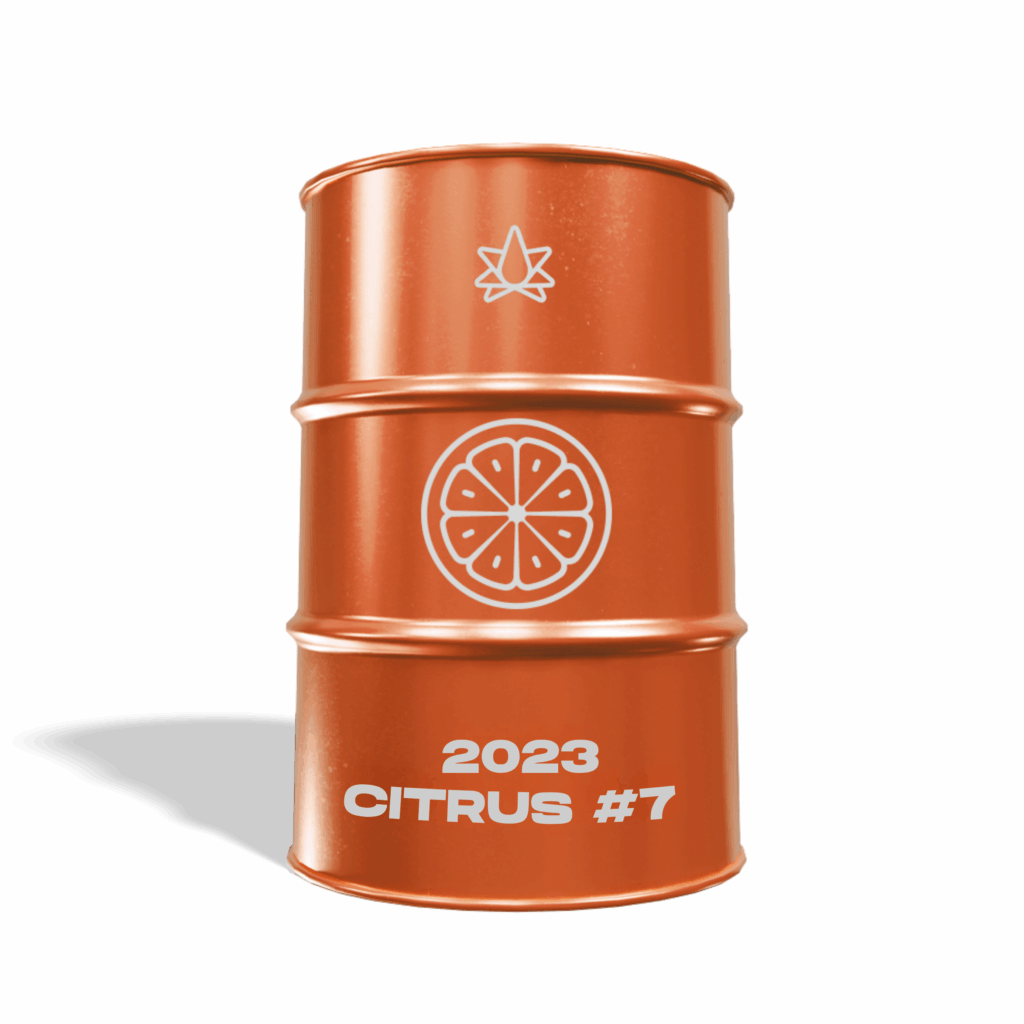
A profile like 2023 Citrus #7, which runs Terpinolene near 38% with Ocimene and Limonene underneath, shows what a monoterpene-forward volatile fraction looks like on a COA: bright, light, and dominated by the molecules that leave first when a plant is dried.
The Solvent and CO2 Extract Family, Mapped to Cannabis
Move past the volatile-only fraction, and you enter the solvent world, where the goal shifts from isolating aroma to pulling broader sets of compounds.
The flavor industry already has precise names for these materials, and each one has a cannabis parallel that the concentrate market quietly renamed. Lining them up side by side removes most of the guesswork.

1. Concrete and Absolute
A concrete is a solvent extract that captures aroma compounds along with plant waxes and fats, giving a thick, waxy material. An absolute is a concrete washed with ethanol to strip those waxes, leaving a cleaner aromatic.
In cannabis, waxy full-plant solvent extracts sit in concrete territory, while a dewaxed, refined aromatic pull moves toward the absolute idea. The distinction matters because waxes change how a material flows and how it behaves under heat.
2. Oleoresin, HTE, and HTFSE
An oleoresin is a solvent extract holding both the volatile oil and the heavier resin together in one viscous material. High terpene extract (HTE) and high terpene full spectrum extract (HTFSE) are the cannabis members of this group: resin-rich fractions carrying an unusually high terpene load alongside cannabinoids.
They are prized for flavor but can behave unpredictably in some hardware.
3. Tinctures and Infusions
A tincture is a material dissolved in ethanol, and an infusion carries compounds into a carrier oil. Both are dilutions rather than concentrations, which makes them delivery formats more than true extract types.
In cannabis, they show up as alcohol tinctures and oil infusions used in edibles and wellness lines. Terpenes are often added to them after processing because heat and time strip the originals.
4. Resinoids, Balsams, and Hash-Adjacent Materials
Resinoids are solvent extracts of dried exudates and resins, while balsams and gum resins are the raw exuded materials themselves. Cannabis has no true balsam, but its resin-heavy, trichome-derived materials are the closest cousins, which is where hash and its relatives conceptually sit.
5. CO2 Fractions: Liquid, Select, and Total
CO2 extraction uses pressurized carbon dioxide as a tunable solvent, and the pressure setting decides what comes out. Lower-pressure liquid or select runs pull lighter volatile and mid-weight compounds, while total or supercritical runs pull almost everything, including waxes.
As per research comparing supercritical CO2 against steam and hydrodistillation, CO2 can recover a broader compound set but shifts the ratio of light monoterpenes to heavy sesquiterpenes.
The Modern Cannabis Extract Types
This is the part the flavor-industry playbook never had to solve, because these categories were born inside cannabis. Live resin, distillate, sauce, diamonds, and rosin all describe real, distinct materials, and each one lands somewhere on the same method-and-fraction map. Placing them precisely is what lets a spec sheet actually mean something.
1. Live Resin, Live Rosin, and Cured Resin
The “live” label refers to timing, not chemistry: the plant is flash-frozen fresh so its volatile terpenes never get a chance to evaporate during drying. Live resin is a hydrocarbon extract of that frozen material, so it keeps a high volatile load.
Live rosin reaches a similar place without solvent, using heat and pressure on frozen hash, while cured resin starts from dried flower and carries fewer of the light monoterpenes that leave first.
2. Distillate
Distillate is the opposite of an essential oil. It is a cannabinoid fraction refined by short-path or wiped-film distillation until it is almost pure THC or CBD, with the volatile terpenes stripped away in the process.
That is why nearly every distillate cartridge has terpenes added back after refinement, since the base has almost none left. For teams building carts this way, our R&D guide on vape formulation covers reintroduction ratios and hardware fit, and the drawbacks of HTE in vapes are worth reading alongside it.
3. Sauce, Diamonds, and Crumble
These are textures, not separate chemistries. Sauce is a terpene-rich liquid layer around cannabinoid crystals, diamonds are those crystallized cannabinoids, and crumble is a whipped, low-moisture concentrate.
All three of these concentrates fall inside the oleoresin and HTE zone, distinguished mostly by how much volatile fraction stayed with the cannabinoids and how the material was finished.
4. Hash, Kief, and Rosin
These are the solventless and mechanical types. Kief is sifted trichome heads, hash is pressed or agitated trichomes, and rosin is hash or flower squeezed under heat and pressure. None of them use a chemical solvent, and each retains terpenes to the degree the starting material did, which is why fresh-frozen inputs make more aromatic solventless products.

Why Real Cannabis Terpenes Are Scarce and Fragile
Two facts explain why authentic cannabis terpenes cost what they do, and why timing shows up in every serious conversation about them. First, the plant makes very little volatile oil. Second, what it makes starts leaving the moment the plant is cut.
The Yield Reality
Cannabis is a low-yield source of essential oil. Published research on hemp distillation has reported essential oil yields ranging from roughly 0.37% to 1.85% of dry biomass depending on cultivar, and comparative extraction studies have measured volatile oil yields well under a tenth of a percent by weight.
In practical terms, it takes a large amount of flower to produce a small amount of true terpene oil, which is the honest reason authentic cannabis terpenes are not cheap. A few figures worth keeping in mind:
- Essential Oil Yield: Often under 1% of dry weight, and frequently a fraction of that.
- Monoterpene Share: The lightest, most aromatic molecules dominate fresh material but evaporate fastest.
- Sesquiterpene Share: Heavier molecules like Caryophyllene survive longer but carry less of the top-note aroma.
Why Timing Changes the Profile
When the oil is captured decides what the oil contains. Volatile monoterpenes, the molecules behind the brightest aromas, begin evaporating as soon as flower is cut and continue leaving through drying and curing.
Research on cannabis drying found that hot-air drying can cut individual monoterpene levels by 38% to 95%, while heavier sesquiterpenes hold on far better. Separate research on post-harvest storage similarly shows monoterpenes are more prone to loss than sesquiterpenes across drying, curing, and storage.
This is why the same cultivar can produce two very different terpene profiles depending only on processing timing. A profile captured from living or flash-frozen material keeps its light top notes, while one captured after a long cure reads heavier and flatter.
This timing problem is the reason Terpene Belt Farms built its process around it. Terpene Belt Farms steam-distills cannabis terpenes from flower extracted live on site, within minutes of harvest, before the volatile monoterpenes have a chance to escape.
The result is a cannabinoid-free cannabis essential oil that keeps the light top notes most dried-flower extracts lose, captured under the company’s Fresh Never Frozen approach. Because the oil is distilled rather than reconstructed, it carries the plant’s real profile instead of a blended approximation, and every batch ships with the documentation formulators need to keep products consistent.
Frequently Asked Questions About Cannabis Extract Types
What Is Cannabis Essential Oil?
A cannabis essential oil is the volatile terpene fraction of the plant, captured by steam distillation or expression and separated from waxes, fats, and cannabinoids. It carries the aroma and flavor of the cultivar but tests free of THC and CBD, since those heavier compounds do not travel with the steam during distillation.
What Is the Difference Between Live Resin and HTE?
Live resin is a solvent extract made from flash-frozen fresh flower, so it keeps a high volatile terpene load tied to freezing. HTE, or high terpene extract, is a resin-rich fraction concentrated for terpene content, often from cured material. Both are terpene-heavy, but their profiles come from different points in the process.
Is Distillate a Terpene Extract?
No. Distillate is a refined cannabinoid fraction, purified until it is almost entirely THC or CBD, with the volatile terpenes removed during distillation. That is why most distillate products have terpenes added back afterward. It is effectively the opposite of an essential oil, which keeps the terpenes and leaves the cannabinoids behind.
How Much Terpene Oil Does Cannabis Actually Yield?
Very little. Essential oil yields from cannabis and hemp typically fall below one percent of dry weight, and often only a fraction of that, depending on cultivar and method. Because the volatile fraction is so small and evaporates easily, authentic cannabis terpenes are inherently scarce, which is reflected in their price relative to botanical blends.
Are Steam-Distilled Cannabis Terpenes Psychoactive?
No. Steam distillation captures only the light volatile terpenes, not the cannabinoids, so a properly distilled cannabis essential oil contains no measurable THC. Terpenes themselves are non-intoxicating aroma and flavor compounds. This is why steam-distilled cannabis terpenes can be used in products that need cannabis character without any cannabinoid content or intoxicating effect.
What Does Fresh Never Frozen Mean?
Fresh Never Frozen refers to capturing cannabis terpenes from flower processed live, shortly after harvest, rather than from dried, cured, or frozen material. The point is timing. Volatile monoterpenes evaporate during drying and curing, so extracting early preserves the lighter aromatic molecules that would otherwise be lost before they reach the bottle.
Sources Used for This Article
- ISO: “ISO 9235:2021 — Aromatic natural raw materials — Vocabulary” – iso.org/standard/78908.html
- Nature: “Evaluation of different drying methods on the physical and chemical properties of Cannabis sativa L.” – nature.com/articles/s41598-021-99335-4
- PubMed: “A Comparative Study on Hemp (Cannabis sativa) Essential Oil Extraction Using Traditional and Advanced Techniques” – pubmed.ncbi.nlm.nih.gov/30221908/
- PMC: “Chemical and Biological Characterization of Cannabis sativa L. Essential Oil: A Systematic Review” – pmc.ncbi.nlm.nih.gov/articles/PMC8494916/
- PMC: “In Pursuit of Optimal Quality: Cultivar-Specific Drying Approaches for Medicinal Cannabis” – pmc.ncbi.nlm.nih.gov/articles/PMC11013261/
- PMC: “Terpene and Cannabinoid Extraction Methods for Cannabis sativa L. and Their Impact on Product Quality: A Review” – pmc.ncbi.nlm.nih.gov/articles/PMC11013627/