Quick Answer: Several terpenes, including humulene, limonene, and beta-caryophyllene, have published research linking them to appetite modulation and metabolic effects. They work primarily through the endocannabinoid system and related signaling pathways, not as direct fat-burning compounds. The evidence ranges from preliminary to moderately supported depending on the terpene, and most data comes from animal models rather than human clinical trials.
Key Takeaways
- Terpenes are aromatic compounds produced by cannabis that can influence neurotransmitters and biological pathways regulating hunger and fat metabolism.
- Appetite regulation involves multiple hormonal and neurological signals, with the endocannabinoid system (ECS) and CB1 receptors in the hypothalamus playing a central role.
- Humulene shows mechanistic potential for appetite suppression through CB1, CB2, and adenosine A2a receptor interactions and possible interleukin-8 signaling, though human clinical trials are lacking.
- Limonene has the strongest metabolic evidence; animal studies show reduced body weight, fat tissue, and LDL cholesterol through activation of the AMP-activated protein kinase (AMPK) pathway.
- Beta-caryophyllene binds directly to CB2 receptors and may support metabolic health by reducing inflammation that disrupts insulin signaling and satiety hormones.
- Current research mainly comes from animal models; optimal human dosing, delivery methods, and direct appetite-suppression effects remain unconfirmed.
- Shop R&D samples at Terpene Belt Farms today to test COA-verified humulene, limonene, and beta-caryophyllene formulations before committing to production.
Terpenes are aromatic compounds naturally produced by the cannabis plant, and they do a lot more than determine how a strain smells.
They interact with receptors in the brain and body, influence neurotransmitter activity, and in some cases, affect the very biological systems that regulate hunger and fat metabolism.
The catch is that most of what gets written about terpenes for weight loss reads like a wellness blog written by someone who skimmed a PubMed abstract. The same three terpenes get listed with the same vague claims, and nobody explains why they supposedly work or where the evidence actually falls short.
The reality is more nuanced and, if you are a product formulator, more useful. Some terpenes interact with the endocannabinoid system in ways that genuinely touch on hunger signaling. Others affect fat cell formation at a cellular level through completely separate pathways.
This article breaks down the terpenes with the strongest research ties to appetite suppression and metabolism, explains the mechanisms honestly, and draws a clear line between what the data supports and what is still speculative.
What Does “Appetite Suppression” Actually Mean at a Biological Level?
Before going terpene by terpene, it is worth clarifying what appetite suppression actually means at the receptor level because most content on this topic skips this entirely and goes straight to ingredient lists. That gap leaves formulators and product developers without the framework they actually need.
The short version? Appetite is not a single signal. It is the result of multiple overlapping hormonal and neurological inputs, and the endocannabinoid system (ECS) sits near the center of that regulation.
The CB1 Receptor Is the Primary Hub for Hunger
The brain’s CB1 receptors, concentrated heavily in the hypothalamus, play a central role in regulating hunger hormones like ghrelin and leptin. Research published in Frontiers in Neuroscience confirmed that promoting CB1 signaling increases appetite and stimulates feeding, while blocking or modulating CB1 has the opposite effect.
This is the same receptor that THC activates to produce the well-known “munchies” effect and the same system that pharmaceutical researchers targeted when developing the anti-obesity drug rimonabant, a hard CB1 antagonist that was eventually pulled from markets due to psychiatric side effects.
That context matters for terpene formulators: compounds that modulate CB1 gently are doing something categorically different from what rimonabant did. Terpenes interact with this system at lower receptor affinities and without the blunt antagonism that caused those adverse outcomes.
Two Types of Appetite Modulation Worth Distinguishing
Not every terpene discussed in this context works the same way. There are two meaningfully different mechanisms at play:
- Anorectic: Direct reduction of hunger drive, typically through ECS receptor modulation or neurohormonal signaling. This is what humulene is primarily associated with.
- Metabolic: Reducing lipid accumulation, improving insulin sensitivity, or lowering triglycerides. These are indirect mechanisms that affect weight over time, rather than hunger in the moment, which is where limonene’s research sits.
Conflating these two is one of the most common mistakes in coverage of this topic. A terpene that reduces fat cell formation is not the same as one that makes someone feel full faster and knowing which category a compound falls into changes how you would formulate with it.
The Terpenes Most Linked to Appetite Suppression
Not all terpenes associated with appetite regulation work through the same receptor system or at the same confidence level. Each one below carries a different evidence profile, and that distinction matters when you are making formulation decisions or building product claims around ingredient function.
1. Humulene

Humulene takes its name from Humulus lupulus, the Latin name for hops, which is why IPAs carry a similar earthy, herbal character to cannabis strains where humulene is prominent. It is also found in basil, ginseng, cloves, and sage, and has been used in Eastern medicinal traditions for centuries.
The research on humulene has become more defined in recent years. A 2024 scoping review published in PMC, which analyzed 340 studies referencing alpha-humulene, confirmed that the compound exhibits cannabimimetic properties through interactions with CB1, CB2, and adenosine A2a receptors.
Research also points to a secondary mechanism: humulene’s ability to stimulate interleukin-8 (IL-8) production, which acts directly in the central nervous system to reduce appetite. That is a different pathway from direct ECS modulation and suggests humulene may suppress hunger through more than one route simultaneously.
The truth here is that human clinical trials specifically measuring humulene’s anorectic effect in people do not yet exist.
The evidence is mechanistically plausible, scientifically grounded in receptor interaction data, and well-supported anecdotally across cannabis testing labs and clinical communities. But “proven appetite suppressant in humans” is not a claim the current literature supports. For formulators building product copy, that distinction matters.
2. Limonene
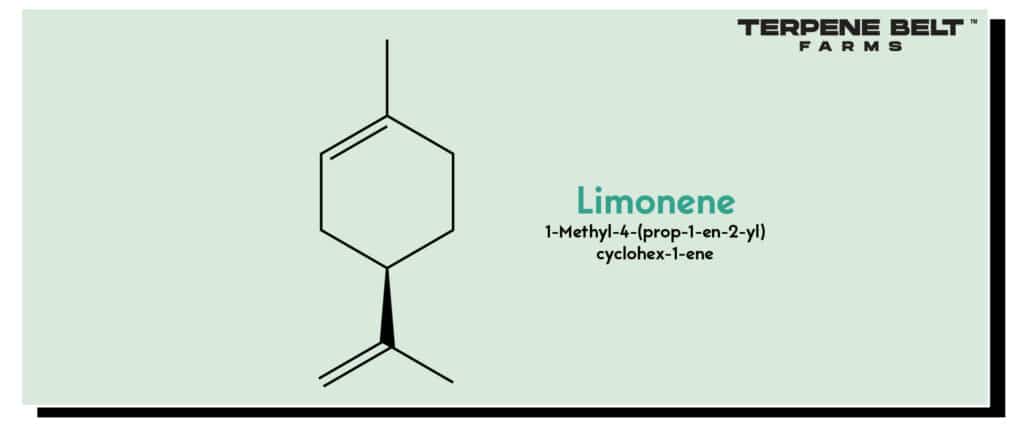
Limonene is the most citrus-forward terpene in cannabis, responsible for the sharp lemon and orange character in profiles like Lemon Haze-adjacent genetics. It is also, at this point, the most research-backed terpene in the appetite and metabolism space.
A 2023 study published in Nutrients examined D-limonene’s effect on obese rats fed a high-calorie diet over 16 weeks. The results showed that limonene reduced body weight, total fat tissue weight, and LDL cholesterol levels.
It is also interesting that the effect worked through activation of the AMPK signaling pathway. This is the same cellular energy-sensing pathway that metformin, the most widely prescribed diabetes drug in the world, targets. AMPK activation is linked to reduced fat cell formation, improved glucose metabolism, and increased fat oxidation.
A separate 2021 study published in Pharmaceutics found that D-limonene supplementation over 84 days decreased weight gain in high-fat diet mice, further supporting the metabolic angle.
Limonene also has a documented olfactory mechanism worth noting. Research published in PubMed found that flies exposed to D-limonene scent alongside food showed significantly reduced appetite in subsequent exposures, with the effect lasting more than three days.
The mechanism appeared to involve memory formation via olfactory processing rather than direct hunger hormone suppression. This is a separate pathway from the metabolic effects, and one that points to the compound’s potential relevance in inhalable or aromatic product formats specifically.
3. Beta-Caryophyllene
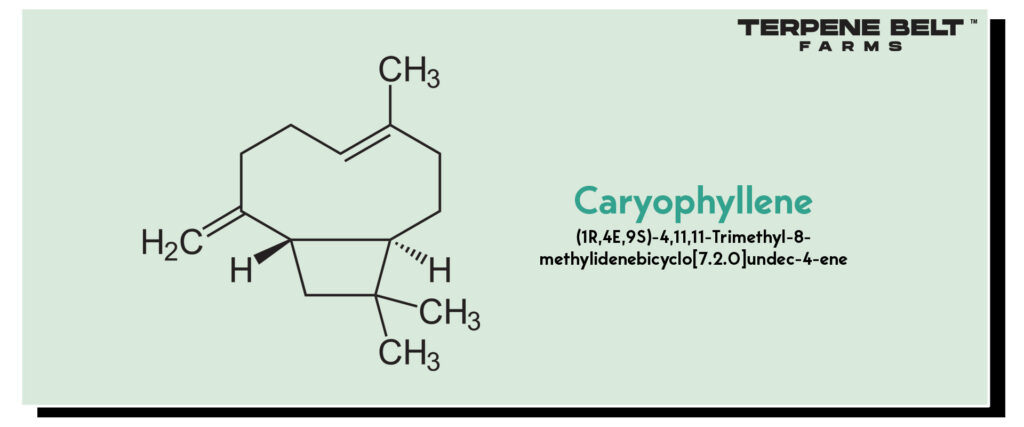
Beta-caryophyllene is the only terpene currently classified as a “dietary cannabinoid” because it directly binds CB2 receptors, unlike most terpenes that interact with the ECS indirectly. Its primary research base covers anti-inflammatory effects, and that connection to inflammation is where its metabolic relevance comes from.
Chronic inflammation is increasingly understood as a driver of metabolic dysregulation. Inflammatory markers interfere with insulin signaling, promote fat storage, and disrupt hormones like leptin that regulate satiety.
Research published in the European Journal of Pharmacology found that alpha-humulene and trans-caryophyllene combined produced anti-inflammatory effects comparable to dexamethasone, a commonly prescribed pharmaceutical anti-inflammatory. Reducing that inflammatory burden may improve the metabolic environment in which weight gain thrives.
A 2023 systematic review published in PMC on essential oils and appetite also noted that cyclic sesquiterpenes, including humulene and caryophyllene, showed particularly favorable receptor accessibility due to their compact molecular structure and blood-brain barrier permeability.
That structural factor may partly explain why these two sesquiterpenes appear consistently in the appetite-related research literature while acyclic terpenes receive less attention.
Beta-caryophyllene is less a “diet terpene” and more a metabolic support compound. Framing matters, especially if you are building products around this terpene’s function.
4. Pinene
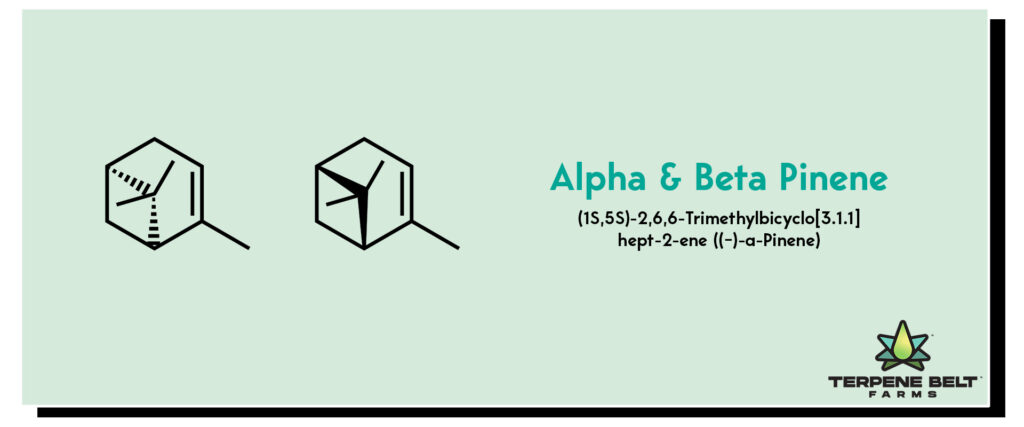
Pinene’s inclusion in this conversation is more indirect. It is not primarily studied as an anorectic compound, and positioning it that way would be an overreach. Where pinene shows up in the appetite-adjacent literature is through its cognitive and anti-fatigue effects.
As an acetylcholinesterase inhibitor, it supports mental clarity and alertness in ways that may reduce tiredness-driven eating behavior. The same 2023 PMC review mentioned above noted that pine essential oils, in which pinene is the dominant compound, appeared in the appetite-suppressing category among the 18 samples that showed anorectic activity out of 86 tested.
For formulators, pinene is more useful as a supporting terpene in an appetite-modulating profile than as a headline ingredient.
What the Research Actually Confirms and What It Does Not
Most online content on this topic either overclaims what terpenes can do or undersells the real mechanistic evidence that does exist. Both are problems for formulators who need to make accurate decisions and build defensible product claims.
Here is an accurate summary of where the evidence stands across the compounds covered above:
What is supported by peer-reviewed data:
- Limonene activates the AMPK pathway and reduces lipid accumulation, fat tissue weight, and LDL in animal models
- Humulene exhibits cannabimimetic properties through CB1, CB2, and A2a receptor interactions, with a plausible anorectic mechanism via IL-8 stimulation
- Among 86 essential oil and fragrant compound samples tested in a systematic review, 18 showed appetite-suppressing effects — and cyclic sesquiterpenes like humulene and caryophyllene were among the most studied due to their molecular structure and receptor accessibility
What is still anecdotal or early-stage:
- Humulene’s hunger-suppressing effect in humans — mechanistically plausible, clinically unconfirmed
- Pinene as a direct appetite suppressant — largely extrapolated from cognitive effects
- The optimal dose, delivery method, and duration for any of these terpenes in a weight management context
How Formulators Should Think About Appetite-Suppressing Profiles
The biological mechanisms are only half the picture. The other half is what these terpenes actually mean for someone building a product — which delivery format, which terpene stacking decisions, and where sourcing quality changes what ends up in the final formulation.
Application Contexts Where These Terpenes Are Relevant
Appetite-modulating terpenes have the clearest formulation fit in specific product categories:
- Wellness Capsules and Gummies: Delivery formats where limonene’s metabolic mechanism is most relevant; terpene stability at processing temperatures requires careful management
- Functional Beverages: Water solubility is a formulation challenge. Standard terpene oils require emulsification for aqueous applications, and not all profiles behave the same way post-emulsification
- Vape Products: Inhalable formats are most relevant for olfactory-mediated appetite suppression, aligned with limonene’s documented olfactory mechanism; onset is faster, which fits pre-meal appetite management use cases. For detailed formulation parameters, check out our R&D vape formulation best practices guide
- Tinctures: Allow for precise dosing, relevant for brands making structured claims around serving size and effect consistency
Profile Stacking Considerations
When building a profile intended for appetite modulation, terpene ratios matter as much as terpene selection. A few specific considerations worth flagging:
- Humulene + limonene pairing gives you both the anorectic and metabolic mechanisms in one profile, which is the most defensible combination from a research perspective
- Adding beta-caryophyllene layers in the anti-inflammatory CB2 pathway, which may improve the metabolic environment both compounds are working within
- Myrcene-heavy profiles work against this application — research suggests myrcene affects dopamine levels in ways associated with feeding behavior and appetite stimulation, and its sedative character is directionally opposite to the energized states most associated with appetite management products
If you want to go deeper on how different terpene classifications interact in formulation contexts, this terpene classifications guide for product development covers the structural and functional groupings in more detail.
TBF Profiles Relevant to Appetite Modulation
Three in-stock profiles are worth evaluating if you are building in this category, each with a different terpene emphasis.
2023 Gas #10 covers all three primary mechanisms in one profile: alpha-humulene at 8.27%, limonene at 27.68%, and beta-caryophyllene at 22.63%. The high caryophyllene content makes it one of the most CB2-active profiles in the catalog. Bold gasoline, banana custard, and spearmint flavor make it best suited for vape, concentrate, or tincture applications.
Gas #707 is a multi-vintage profile built for year-round supply consistency. It carries humulene at 3.50%, caryophyllene at 10.95%, and limonene at 11.55%. The lower humulene concentration is offset by its batch-to-batch reliability. This product is a practical choice for brands that cannot build around single-harvest availability. Tart cherry and lemongrass character make it more approachable than typical gas profiles.
2024 Fruit #6 leads with limonene at 25.41%, making it the clearest option for formulators focused on the metabolic and olfactory mechanisms specifically. Beta-caryophyllene at 16.05% provides secondary support. The tropical, guava-forward flavor profile makes it a natural fit for wellness gummies, functional beverages, and topicals where gas-forward character would be out of place.
Why Terpene Belt Farms for Appetite-Suppressing Formulations
Building a product around terpene-mediated appetite modulation is credible only if the terpenes in your formulation are actually present at the concentrations your COA shows and remain consistent batch to batch. That is where most terpene supply chains fail in practice.
Humulene is a minor sesquiterpene. Limonene is volatile. Both degrade under the kind of freeze-thaw cycles that characterize conventional post-harvest cannabis processing.
Terpene Belt Farms‘ Fresh Never Frozen extraction methodology was built to address exactly this problem. Terpenes are captured directly from fresh plant material without freezing, preserving the volatile minor compounds that degrade fastest under conventional processing.
COA-verified percentages are tested per batch under ISO/IEC 17025 standards, so the concentration data reflects what is actually in the bottle and not what it was before shipping and storage. For formulators making efficacy-adjacent claims around appetite modulation, that traceability is not a marketing detail. It is a product integrity requirement.
Request R&D samples at Terpene Belt Farms to evaluate profiles against your specific formulation before committing to volume.
Frequently Asked Questions About Terpenes and Appetite Suppression
What Terpene Is Most Commonly Associated With Appetite Suppression?
Humulene is the terpene most frequently cited for appetite-suppressing properties in both the cannabis industry and natural medicine literature. It appears in cannabis, hops, sage, and cloves. Preliminary research points to interactions with CB1 and adenosine A2a receptors, and a secondary mechanism through IL-8 stimulation in the central nervous system. Human clinical trials on humulene’s anorectic effects specifically have not yet been completed.
Is Humulene Proven to Suppress Appetite in Humans?
Not in a clinical trial context. The evidence for humulene’s anorectic properties is mechanistically plausible and supported by receptor interaction data and preclinical scoping reviews, but human-specific clinical data on appetite suppression has not been published. The compound is well-established for anti-inflammatory effects and has been used in holistic medicine for centuries. The appetite suppression angle remains scientifically credible but clinically unconfirmed.
Can Terpenes Help With Weight Loss on Their Own?
No. Terpenes are not weight loss compounds in isolation. At best, certain terpenes interact with pathways related to hunger signaling and fat metabolism in ways that may support a broader health and activity strategy. Limonene’s AMPK activation in animal models is the strongest metabolic signal in the current literature, but none of the research supports the idea that consuming terpenes alone produces meaningful weight reduction without dietary and lifestyle factors alongside them.
How Do Terpenes Affect the Endocannabinoid System in Relation to Hunger?
The endocannabinoid system regulates hunger primarily through CB1 receptors in the hypothalamus. Activating CB1 promotes appetite, which is how THC produces the munchies. Terpenes like humulene interact with CB1 indirectly, potentially modulating how the receptor responds to endocannabinoids rather than acting as a direct agonist or antagonist. Beta-caryophyllene takes a different route, binding directly to CB2 receptors and influencing the inflammatory environment that affects metabolic signaling.
What Is the Difference Between Anorectic and Metabolic Terpene Effects?
Anorectic effects refer to direct suppression of the hunger drive — reducing appetite in the moment. Humulene is primarily discussed in this context. Metabolic effects refer to changes in how the body processes and stores fat, independent of whether the person feels hungry. Limonene’s AMPK pathway activation is a metabolic effect. Both are relevant to weight management but operate through different mechanisms and would be formulated for different product applications and timing.
Should I Avoid Myrcene in Appetite-Suppressing Formulations?
Myrcene is not contraindicated, but it works against the directional intent of appetite-suppressing formulas. It affects dopamine levels in ways linked to feeding behavior and appetite stimulation. Its sedative character is also directionally opposite to the energized, active states most associated with appetite management products. Formulators targeting appetite modulation should look for profiles where limonene, caryophyllene, or humulene lead — not myrcene.
Does Limonene Actually Reduce Body Fat?
In animal models, yes. A 2023 study published in Nutrients found that D-limonene reduced body weight, total fat tissue weight, and LDL cholesterol in obese rats over 16 weeks through AMPK pathway activation. A 2021 study found that daily supplementation over 84 days decreased weight gain in high-fat diet mice. Whether these effects translate directly to humans at practical doses has not been established in clinical trials. Limonene should be understood as a metabolic support compound with promising preclinical data, not a confirmed fat-reduction ingredient.
Sources Used for This Article
- Frontiers in Neuroscience: “The ‘Entourage Effect’: Terpenes Coupled with Delta9-Tetrahydrocannabinol Leverage Pain Relief but Not Anxiety-Like Behavior in Mice” – frontiersin.org/journals/neuroscience/articles/10.3389/fnins.2017.00293/full
- PubMed Central (PMC): “Cannabis Sativa: The Plant of the Thousand and One Molecules” – pmc.ncbi.nlm.nih.gov/articles/PMC11254484/
- PubMed: “Medicinal cannabis: Is delta9-tetrahydrocannabinol necessary for all its effects?” – pubmed.ncbi.nlm.nih.gov/15630185/
- PubMed Central (PMC): “The ‘Entourage Effect’: Terpenes Coupled with Delta9-Tetrahydrocannabinol Leverage Pain Relief but Not Anxiety-Like Behavior in Mice” – pmc.ncbi.nlm.nih.gov/articles/PMC8620497/
- PubMed: “Cannabidiol – recent advances” – pubmed.ncbi.nlm.nih.gov/18809464/
- PubMed: “Cannabinoid receptors: where they are and what they do” – pubmed.ncbi.nlm.nih.gov/20554040/
- PubMed Central (PMC): “The Cannabis Terpenes: A Review of Their Phytochemistry, Therapeutic Potential, and Cannabis and Non-Cannabis Extraction Methods” – pmc.ncbi.nlm.nih.gov/articles/PMC10178777/