



Quick Answer: True Terpenes is a well-established Portland-based terpene supplier offering primarily botanical and hemp-derived strain profiles for vape, pre-roll, and edible manufacturers. If you’re evaluating a True Terpenes alternative, the considerations most likely driving that search are: wanting CDT profiles from authenticated fresh-extracted cannabis, COAs with verified terpene compound percentages from ISO/IEC 17025 accredited third-party laboratories, and contaminant panels that include microbials and mycotoxins alongside heavy metals.
Key Takeaways
- True Terpenes is a Portland-based supplier offering primarily botanical and hemp-derived terpene profiles for vape, pre-roll, edible, and beverage manufacturers.
- Formulators evaluating alternatives often need authenticated cannabis-derived terpene profiles, third-party ISO/IEC 17025 testing, compound-level percentages, and broader contaminant panels.
- True Terpenes holds ISO 9001:2015, FSSC 22000, GMP, and ISO Class 9 facility credentials, showing meaningful production quality infrastructure.
- Key documentation gaps include in-house COAs since 2025, no individual terpene percentage disclosure, and no publicly shown microbial or mycotoxin testing.
- Terpene Belt Farms provides full-spectrum Northern California CDTs with Fresh Never Frozen cold-chain extraction, third-party testing, and full terpene percentage disclosure.
- Ready to move forward with a reliable wholesale supplier? Start with Fresh Never Frozen sample kits and test verified CDT profiles in your format.
Selecting a terpene supplier feels like a straightforward decision until you’re three samples deep and realizing two products carrying the same strain name smell almost nothing alike.
For vape manufacturers, pre-roll producers, and concentrate brands, terpene quality directly shapes the consumer experience. That quality depends almost entirely on what’s in the supplier’s documentation and what they’re willing to share. COA panels, terpene composition data, lab accreditation, and contaminant scope aren’t secondary details.
They’re the actual product specification.
True Terpenes is one of the most frequently searched names in the wholesale terpene category. They’ve built a wide catalog, earned certifications, and marketed aggressively to the B2B market for years. Having brand recognition, however, doesn’t automatically mean having the documentation framework that technical buyers actually require.
This article walks through everything you need to know about True Terpenes, what each of their major product categories does, where their COA framework has gaps worth knowing about, and what the formulator community has had to say firsthand.
Overview of True Terpenes

True Terpenes is a B2B terpene supplier based in Portland, Oregon, operating primarily in the botanical and hemp-derived terpene space. Their catalog targets cannabis brands, vape manufacturers, and CPG companies looking for flavor-forward, scalable terpene inputs.
On the quality certification side, they hold ISO 9001:2015, FSSC 22000, and GMP certifications and run production through an ISO Class 9 facility they call True HQ.
Where they sit in the broader terpene category matters for how you evaluate them. Their core catalog is built primarily on botanical isolate blends and reconstructed strain profiles, not cannabis-derived terpenes (CDTs) extracted directly from living cannabis plant material.
They offer hemp-derived live resin through their Live Resin and Headstash lines, but full-spectrum CDT extraction from fresh-frozen cannabis is not the foundation of what they sell. If you want a side-by-side evaluation including True Terpenes against other suppliers, our three-way comparison of Floraplex, True Terpenes, and Terpene Belt Farms covers that ground in detail.
That sourcing distinction is meaningful for formulators who specify origin authenticity as a hard procurement requirement, and it’s one of the most common reasons buyers begin searching for a True Terpenes alternative.
True Terpenes Background
True Terpenes traces its origins to founder Chris Campagna, who discovered cannabis in 2003 while recovering from a rare auto-immune disease that had left him temporarily paralyzed.
Looking for an alternative to pharmaceutical treatments, he found that cannabis helped his recovery in ways that stayed with him professionally. The work of Dr. Ethan Russo on the entourage effect later gave Campagna a method of understanding why certain strains worked better for him than others, specifically the terpinolene-dominant character of Durban Poison.
Before founding True Terpenes in 2016, Campagna ran a business connecting patients with growers during the early stages of medical cannabis legalization in Oregon.
True Terpenes launched with the stated goal of bringing terpene benefits to both medical and recreational consumers in a consistent and safe way. By 2017, the company was recreating classic strain profiles from botanical isolates using analytical data.
In 2019, they became one of the first terpene suppliers to invest in ISO 9001, FSSC 22000, and GMP certifications, which was a genuine industry milestone at the time.
The company continued building from there. Dr. Ethan Russo joined their science advisory board in 2020 and contributed to the Terpology effects-based blending line. Hemp-derived live resin launched in 2021.
By 2022, True Terpenes had moved from a one-person garage operation to a team of over 100 employees working out of True HQ. Today they’re one of the larger B2B terpene companies in the U.S. market with a catalog spanning multiple product categories and formulation formats.
Major Product Categories
True Terpenes’ catalog covers more ground than most suppliers in the category. They serve vape manufacturers, pre-roll producers, edible formulators, and beverage brands through several distinct product lines. Looking at each category on its own terms is the most useful way to evaluate where the fit is strongest, and where things get more complicated.

Loud Flavors
Loud Flavors is a high-intensity botanical flavor line designed for vape and pre-roll applications. SKUs include Watermelon, Blackberry Smash, Blue Razz Slush, and Mango Passion Punch, among ten total products.
These aren’t strain profiles in the traditional cannabis sense. They’re consumer-facing flavor solutions engineered for flavor-dominant market segments, and True Terpenes backs the positioning with market data showing flavor-forward products hold over half of national dollar share in vape and infused pre-roll.
Headstash
Headstash is the most technically substantive line in the True Terpenes catalog. It pairs hemp-derived high-terpene extract (HTE) with natural aromatic volatiles including thiols, esters, and other minor compounds that are typically lost during standard extraction and processing.
Five profiles are currently available: Kush, Sour Diesel, Haze, Gelato, and Purp. True Terpenes positions Headstash as a way to build premium, full-spectrum product lines without sourcing live resin directly from cannabis processors. For formulators building canna-forward products, Headstash is the most cannabis-authentic offering in the True Terpenes catalog, though it’s hemp-derived rather than CDT and stays below 0.3% total THC for compliance.
Terpene Modifiers
Modifiers is a focused line of three products: Ice, Skunk, and Sweet. Ice introduces a cooling sensation on the tongue without altering the base flavor profile. Skunk amplifies pungency in dank or canna-forward blends. Sweet pushes fruity or fresh profiles into candy-register territory.
These are highly concentrated add-ins with specific usage caps. Ice is capped at 0.59% in inhalable products. They’re not standalone terpene inputs but rather formulation tools designed to layer into existing profiles.
True Terpenes provides an SOP covering recommended pairings and inclusion percentages for all three.
Flow Extract Liquidizer
Flow is True Terpenes’ viscosity modifier for vape applications. It’s a proprietary blend of TEC (Triethyl Citrate) and terpenes, designed to reduce viscosity in high-purity extracts without affecting flavor.
It mixes at 1-5% by volume and is compatible with D9, D8, Live Resin, Live Rosin, CBD, and HHC. It’s worth acknowledging that Flow is explicitly labeled with its composition, and True Terpenes has published lot-by-lot COAs going back several years.
That level of disclosure is meaningful context given the earlier controversy around their legacy diluent product, covered in the community feedback section below.
Flavors for Beverages and Gummies
True Terpenes has expanded into the edible and beverage market with dedicated flavor systems including oil-based options, water-soluble formats, and bitter blockers for masking cannabinoid astringency in infused products.
Minimum order quantities are 5 gallons for oil-based and water-soluble formats and 20 gallons for emulsions. This category falls outside what most formulators classify as terpene inputs in the CDT or strain profile sense. These are functional flavor tools for brands building in the hemp-derived gummy and beverage categories.
Our Take on True Terpenes
True Terpenes has made real investments in quality infrastructure. ISO 9001, FSSC 22000, GMP, and an ISO Class 9 production environment represent genuine process control and safety management systems that matter in B2B sourcing.
They were early to make those investments relative to the broader terpene supplier market, and that matters. There are, however, three specific documentation gaps that technical buyers need to evaluate carefully before committing to them as a supplier.

COA Sourcing
Since 2025, the COAs posted publicly for True Terpenes products have been generated in-house. Their COA disclaimer notes that third-party ISO 17025 certified contract labs have tested the same material and returned matching results.
This is what the header of a third-party COA header looks like for one of our products:

The question worth asking is: if those independent results exist and align, why aren’t they what’s published? Posting both would remove any uncertainty for buyers running supplier qualification processes.
Our supplier audit checklist for terpene supply qualification covers the documentation standards most regulated market operators now expect from their inputs. Referencing third-party testing while publishing only internal results isn’t inherently wrong, and we’re sure those numbers are accurate. But, it isn’t the same as transparent third-party documentation.
Contaminant Panel Scope
True Terpenes’ published COAs include pesticide screening and four primary heavy metals. Microbial and mycotoxin testing are absent from their published panel. For formulators supplying into licensed dispensary markets or brands with documented input quality specifications, those contaminant categories are often mandatory.
Their absence doesn’t tell you the products are contaminated. It tells you the documentation can’t rule it out, which creates a real compliance gap for operations that require complete panel coverage from their supplier before production begins.
This is the type of microbial and mycotoxin screening our customers are used to at Terpene Belt Farms.

Individual Terpene Data
The third issue affects day-to-day formulation work most directly. True Terpenes’ product COAs function as safety documents, not composition maps. They don’t disclose individual terpene compound percentages within each blend.
Without that data, a formulator can’t verify compound ratios batch to batch, predict behavior in a specific matrix, or report input composition accurately to a regulatory body.
Now, does it make sense that a company wants to protect their formulation data? Yes, 100%. Does it also make sense that manufacturers want to know what they are putting in their products? Also yes.
Knowing the compounds you’re working with and at what concentrations is the baseline input specification in serious formulation work.
Here’s how we satisfy the needs of keen formulators here at Terpene Belt Farms

Reddit’s Take on True Terpenes
Community feedback on True Terpenes is genuinely split, which makes it more useful for evaluation than uniformly one-sided accounts.
The clearest positive signal comes from users with deep extract experience who specifically distinguish between True Terpenes’ live resin and CDT products versus their botanical blends.
One user in r/Terpenes noted that their 100% CDT products were great based on years of working with various extracts. That’s consistent with what formulators generally find: live-extracted or hemp-derived live resin profiles perform more authentically at the sensory level than their botanical-reconstructed counterparts.
The botanical strain profiles have generated more variable feedback across multiple threads. Several users describe opening live resin or canna-forward profiles and finding minimal aroma where a recognizable strain character should be.
Specific references in a thread discussing True Terpenes quality include Grandaddy Purple showing no smell on opening, and skunky and cheesy profiles not matching the strains they were supposed to represent.
Another user described their Mango Kush experience as tasting like pure chemicals rather than the named cultivar.
The more significant historical conversation involves a 2019 post in r/CannabisExtracts that attracted substantial community attention.
The author paid for three independent GC/MS tests on sealed bottles of True Terpenes’ then-available “Viscosity” vape diluent, which was marketed as 100% terpenes. The reported results across all three labs showed no detectable terpenes and what multiple labs characterized as heavy, non-volatile hydrocarbons consistent with mineral oil, though the exact composition wasn’t definitively identified across all testing.
The original poster had experienced throat irritation and was warning others to avoid the product. The post carries appropriate caveats: it dates to 2019, the testing conclusions came with qualifiers, and the complete composition was not conclusively established by every lab cited.
But the documented record is publicly searchable and too significant to omit in a straightforward review. What’s worth noting is that True Terpenes’ current Flow liquidizer explicitly states it’s TEC (Triethyl Citrate) plus terpenes. This is a substantially more transparent formulation declaration than what was apparently on offer six years ago.
As with any supplier, there are positive experiences and negative ones in the public record. We encourage potential customers to do their own research before committing to any single terpene supplier.
Terpene Belt Farms: Why We Should Be Your Next Terpene Supplier
For formulators who are looking for answers to questions about compound-level composition, third-party lab accreditation, or contaminant panel scope, those aren’t edge-case concerns.
They represent the documentation baseline any brand serious about input traceability needs to have covered. Terpene Belt Farms operates with ISO/IEC 17025 accredited third-party testing across every production batch, full terpene percentage disclosure on all COAs, and a cGMP-certified production process built around the Fresh Never Frozen® cold-chain extraction methodology.
Every profile is a full-spectrum CDT from Northern California cultivars, harvested and processed under temperature-controlled conditions that preserve the volatile compound complexity that distinguishes authentic CDT from both botanical reconstructions and standard HDT live resin.
The COA scope covers what regulated markets actually require: pesticides, heavy metals, microbials, and mycotoxins, all from an independent ISO/IEC 17025 accredited lab.
Where to Start with Terpene Belt Farms
If you’re coming from a supplier whose documentation left you with more questions than answers, the right first step is putting verified CDT profiles in your hands and testing them in your own format. Two profiles worth starting with depending on your application:
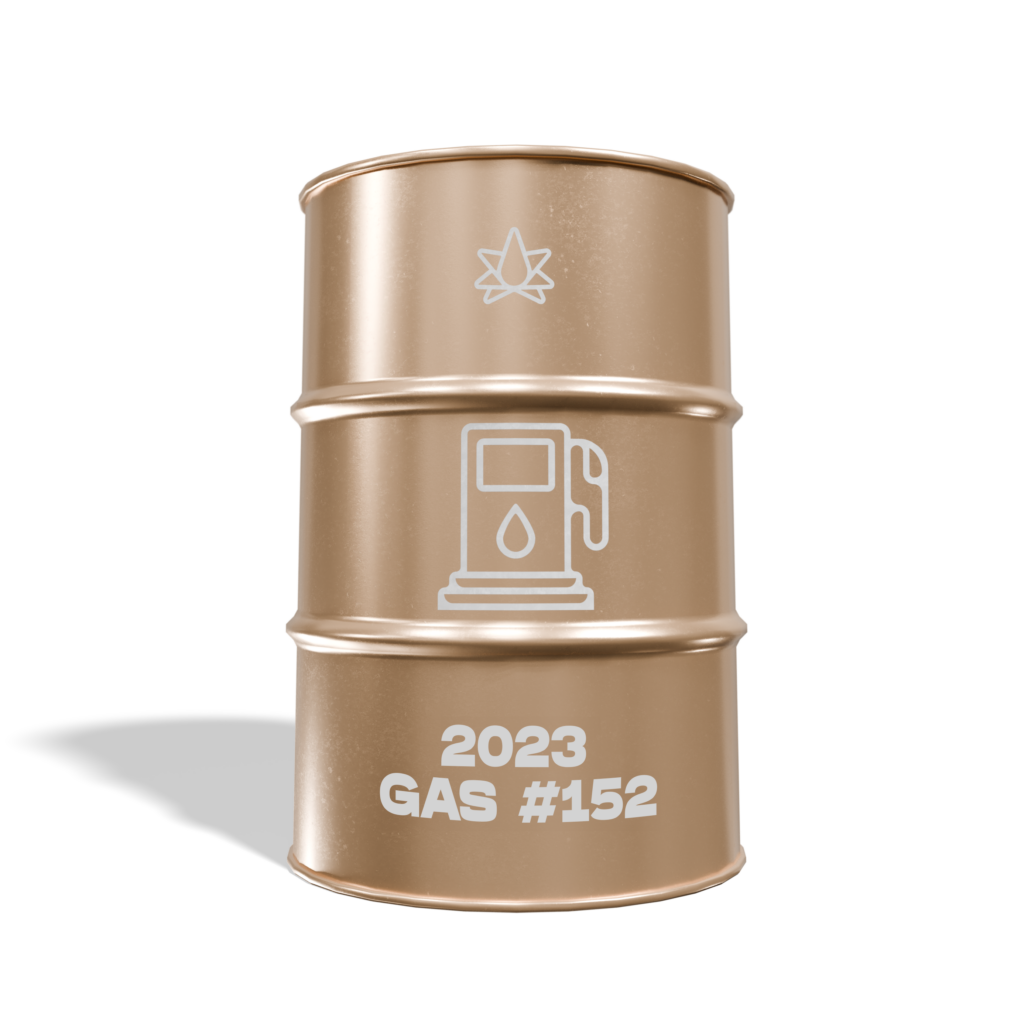
2023 Gas #152 is terpinolene-dominant at 28.13%, followed by myrcene at 20.9% and limonene at 8.66%. The terpinolene and myrcene pairing is one of the more complex aromatic combinations in CDT catalogs.
Terpinolene drives the bright, herbal-forward top notes while myrcene grounds it with earthy weight. For vape or concentrate formulators building canna-forward product lines where strain authenticity is part of the positioning, this is the kind of profile that holds up to scrutiny both on the COA and in the cart.
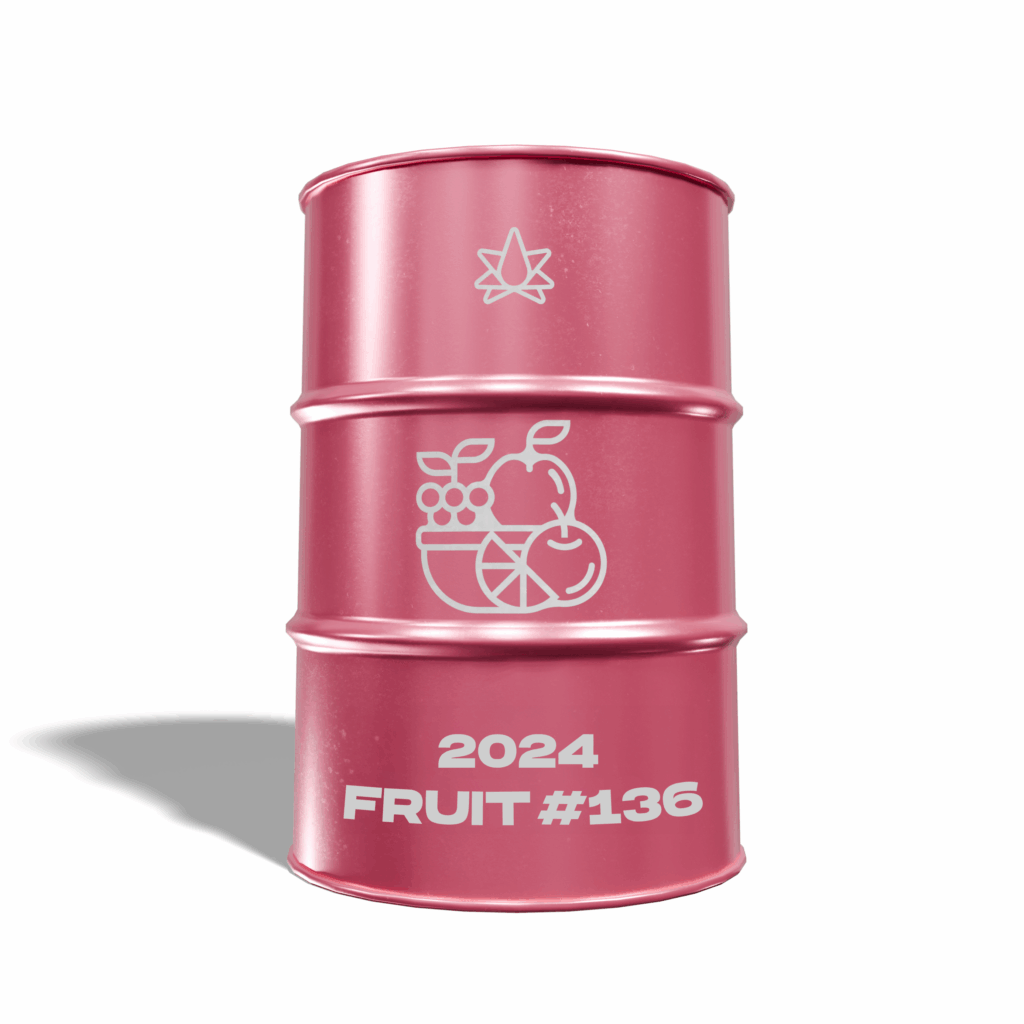
2024 Fruit #136 leads with limonene at 19.16%, followed by ocimene at 14.32% and caryophyllene at 11.88%. The limonene and ocimene pairing produces a clean, citrusy-bright character that works across vape, pre-roll, and edible applications without the flat single-note quality you get from botanical limonene-heavy reconstructions.
Caryophyllene at nearly 12% adds a spice-forward backbone that keeps the profile from reading as one-dimensional. It’s a versatile fruit CDT for formulators who need something that performs reliably across multiple product formats.
If you want to evaluate profiles across both categories before committing to volume, the Fresh Never Frozen® sample kits are the right starting point. They give you verified CDT profiles to test in your specific format, against your own production parameters, before any wholesale conversation begins.
Frequently Asked Questions About True Terpenes Alternatives
Are True Terpenes Products Cannabis-Derived?
Most of True Terpenes’ core catalog is built from botanical isolates assembled to reconstruct cannabis strain profiles. Their live resin and Headstash lines are hemp-derived, sourced from hemp rather than cannabis flower. Full-spectrum cannabis-derived terpenes extracted directly from fresh-frozen cannabis plant material are a distinct category. True Terpenes does not appear to offer this type of CDT product in their current lineup, which is a key distinction for formulators specifying authenticity of origin.
What Certifications Does True Terpenes Hold?
True Terpenes holds ISO 9001: 2015, FSSC 22000, and GMP certifications, and operates from an ISO Class 9 production facility. These are process-quality and safety management certifications that address production consistency. They are not the same as ISO/IEC 17025 laboratory accreditation, which governs the quality and independence of the analytical testing itself. Understanding that distinction is important when evaluating what a supplier’s certifications actually confirm.
Do True Terpenes COAs Show Individual Terpene Percentages?
No. True Terpenes’ published COAs cover safety parameters including pesticides and heavy metals but do not disclose individual terpene compound percentages within each product blend. Some product pages list terpene names without percentages. For formulators who need compound-level composition data to verify inputs against internal specifications or for regulatory reporting, this is a practical documentation gap that cannot be worked around using what’s publicly available.
Does True Terpenes Test for Microbials and Mycotoxins?
Based on their publicly available COAs, True Terpenes’ testing panels do not include microbial or mycotoxin screens. Their panels cover the four primary heavy metals and pesticide testing. Formulators working in licensed dispensary markets or operating against documented input quality specifications should determine whether those contaminant categories need to be covered by supplier documentation or whether independent incoming testing would need to fill that gap.
What Should I Look For in a True Terpenes Alternative?
The main criteria that typically drive the search for alternatives include: third-party ISO/IEC 17025 accredited lab testing with published results, COAs that disclose full terpene compound percentages, contaminant panels covering pesticides, heavy metals, microbials, and mycotoxins, and CDT sourcing from authentic cannabis extraction rather than botanical reconstruction. Our breakdown of the true cost of cheap terpenes outlines what limited testing and undisclosed composition actually cost at the formulation and compliance level.
Is True Terpenes Right for Vape Manufacturing?
True Terpenes offers products designed for vape applications, including botanical strain profiles and hemp-derived Headstash. Their ISO 9001 and GMP certifications provide a foundation of process control. The main considerations for vape formulators are the COA transparency gaps: no terpene percentages, no microbial or mycotoxin testing, and in-house-only lab results since 2025. Whether those gaps are acceptable depends on your market, your internal input specification, and whether your compliance obligations require more complete third-party documentation from your supplier.
Sources Used for This Article
- Reddit (r/Terpenes): “Comment on Terpenes Discussion” – reddit.com/r/Terpenes/comments/10nfu78/comment/j6c2xuu/
- Reddit (r/Terpenes): “True Terpenes quality” – reddit.com/r/Terpenes/comments/1gmvtfc/true_terpenes_quality/
- Reddit (r/Terpenes): “Comment on Terpenes Discussion” – reddit.com/r/Terpenes/comments/107rk8f/comment/jefy405/
- Reddit (r/CannabisExtracts): “True Terpenes VISCOSITY extract liquifier LAB TESTS: Mineral oil but no terps!!” – reddit.com/r/CannabisExtracts/comments/b1w76g/true_terpenes_viscosity_extract_liquifier_lab/


