Key Takeaways
- Agent Orange is a hybrid from Orange Velvet and Jack the Ripper, with terpene expression varying meaningfully by phenotype.
- Its core profile centres on terpinolene, limonene, beta-caryophyllene, ocimene, and myrcene, with total terpene content typically around 1.5–3.0%.
- Orange Velvet-leaning phenotypes are rounder and more limonene/myrcene-forward, while Jack the Ripper expressions are sharper, brighter, and more terpinolene-dominant.
- Terpinolene and ocimene are the most formulation-sensitive compounds, making temperature control, oxygen management, and cold handling especially important.
- Beta-caryophyllene acts as the profile’s thermal stability anchor, while myrcene adds base-note depth that keeps the citrus character from reading thin.
- Vape, concentrate, and pre-roll applications require different handling because Agent Orange’s volatile top notes degrade at different rates across formats.
- Shop our samples today and get terpenes that taste just like the real deal with Terpene Belt Farms’ cold-chain CDT profiles built around authentic Agent Orange-style citrus chemistry.
What Is the Agent Orange Terpene Profile?
Agent Orange is a hybrid strain bred by MzJill Genetics, developed by crossing Orange Velvet with Jack the Ripper. The resulting terpene profile carries traits from both parent lines, which is exactly why it creates the formulation complexity it does.
Orange Velvet contributes a rounded, creamy citrus character, while Jack the Ripper pushes brightness, sharpness, and an almost piney edge to the citrus notes. These two influences don’t always express at the same ratio, and the result is a strain that can present notably differently across separate runs, phenotypes, or harvests.
Working with terpene-rich cannabis strains for B2B product development requires looking at a terpene profile as a system rather than a list. The relationship between Agent Orange’s top-note terpenes, terpinolene and limonene, and its heavier, more stable anchor terpenes, beta-caryophyllene and myrcene, defines both the sensory character and the formulation behavior of the profile. Treating any one of these compounds in isolation misses the point of why this strain behaves the way it does.
Dominant Terpenes and Realistic Concentration Ranges
Lab data across Agent Orange batches consistently points to the following composition in tested flower:
- Limonene: 0.4–1.0% by weight, often accounting for 15–25% of the total terpene fraction
- Terpinolene: 0.3–0.9%, co-dominant in some phenotypes and clearly dominant in others
- Beta-Caryophyllene: 0.2–0.5%, reliably present and less variable than the top-note terpenes
- Ocimene: 0.1–0.4%, the profile’s freshness signature and one of its most volatile components
- Myrcene: 0.2–0.6%, providing the base-note earthiness that prevents the profile from reading as flat citrus
Total terpene content in cured Agent Orange flower typically lands between 1.5–3.0% by weight. In cold-processed or fresh-frozen extracts, total terpene density can push significantly higher as volatile top-note compounds are preserved rather than lost to warm drying or conventional extraction.

Two Phenotypes, Two Different Formulation Starting Points
The Orange Velvet parent tends to push the profile toward a limonene and myrcene-dominant expression, where the overall character is rounder, creamier, and more reminiscent of orange candy or orange soda.
The Jack the Ripper parent pulls in the opposite direction. Higher terpinolene, sharper citrus rind, and an almost green freshness that reads as piney or herbaceous in some batches. Both are legitimate expressions of Agent Orange, but they have meaningfully different implications for how you approach formulation.
The limonene-dominant phenotype is comparatively more stable in processed formats. With lower terpinolene concentration, it degrades less dramatically during fill operations, cartridge aging, or thermal stress in concentrate production.
The terpinolene-dominant phenotype delivers a more striking initial aromatic character, but it requires considerably more attention to oxygen exposure, temperature management, and container selection to preserve that character through a product’s commercial shelf life.
Terpene-By-Terpene Breakdown for Product Development
Most strain profile content stops at “limonene smells like citrus” and “caryophyllene is peppery.” That level of description is accurate, but not particularly useful if you’re the one deciding how much to add back to distillate, what fill temperature to run, or whether a product will hold its aromatic character six months into a cartridge’s shelf life.
Each terpene in the Agent Orange profile behaves differently under the conditions your production process creates, and those differences compound quickly in finished products.
1. Limonene: The Orange Zest Driver and Its Stability Trade-Offs
Limonene is the most immediately recognizable terpene in this profile because it smells like what the strain is named for. Its boiling point sits around 176°C, making it one of the lighter monoterpenes in this cluster, and it’s the compound most responsible for the bright, fresh orange note that consumers associate with Agent Orange products.
A 2024 study found that vaporized d-limonene selectively mitigated THC-induced anxiety in adults, adding a functional dimension to its aromatic role that’s relevant for effect-oriented formulation work.
Limonene is vulnerable to oxidation over time, primarily degrading into carvone, which shifts the aromatic character from fresh orange toward something more spearmint-adjacent.
That change is subtle at first and often doesn’t trigger immediate consumer complaints, but it does signal profile degradation. Keeping this terpene in a sealed, low-oxygen environment and working at controlled temperatures during processing reduces this risk substantially.
2. Terpinolene: Why This Terpene Is the Most Demanding in the Profile
Terpinolene is what gives Agent Orange its complexity and where formulators earn their headaches. Its boiling point falls around 183–186°C, technically higher than limonene, but its chemical structure tells a different story about reactivity.
Terpinolene belongs to the p-menthadiene class of compounds and features a conjugated diene configuration: two double bonds positioned in a way that dramatically increases its reactivity with oxygen, light, and heat. The Human Metabolome Database identifies this structural feature as a primary contributor to terpinolene’s elevated volatility and chemical reactivity compared to other monoterpenes at similar molecular weights.
The primary oxidation product of terpinolene is terpinolene oxide, which doesn’t retain the sharp, fresh-citrus character of its parent compound. When terpinolene degrades, the profile changes character in a way that’s difficult to mask. This is why proper terpene preservation is essential for any product built around a terpinolene-dominant phenotype of Agent Orange.
3. Beta-Caryophyllene: Stability Anchor in an Otherwise Volatile Mix
If limonene and terpinolene represent the profile’s expressive but fragile top notes, beta-caryophyllene is the compound that holds everything together. With a boiling point around 260–270°C, it sits far above the other terpenes in this profile in terms of thermal stability, meaning it survives processing conditions that progressively strip away the more volatile compounds.
In a heat-stressed concentrate or a cartridge stored at room temperature for several months, caryophyllene is often the dominant terpene left standing.
Beyond its stability, caryophyllene carries pharmacological relevance that the other terpenes in this profile don’t match. Research published in 2008 in the Proceedings of the National Academy of Sciences demonstrated that (E)-beta-caryophyllene selectively binds to CB2 receptors with a Ki of approximately 155 nM, identifying it as a functional cannabinoid receptor ligand and the only major cannabis terpene with documented receptor binding.
4. Ocimene and Myrcene: Minor Terpenes, Outsized Impact on Profile Authenticity
Ocimene presents a formulation paradox: it’s one of the smallest contributors by percentage in Agent Orange’s profile, but it may be the most reliable signal of whether you’re working with a quality CDT or a botanical reconstruction.
Its boiling point for the most common form, beta-ocimene, sits around 60–65°C, dramatically lower than every other terpene in this profile. That means it evaporates almost on contact with any significant heat during extraction, drying, or infusion. When ocimene appears in a terpene analysis, it’s a strong indication that the material was handled cold and carefully.
When it’s absent from a product claiming full-spectrum character, it’s a reasonable indicator that thermal shortcuts were taken somewhere in the supply chain.
Myrcene plays a quieter role but provides something none of the other terpenes in this profile do alone: base-note depth. Without myrcene, Agent Orange’s citrus character can read as thin or one-dimensional, particularly in vaporized formats where top-note terpenes volatilize quickly and leave only what’s behind. Myrcene at the 0.2–0.6% level acts as a rounding agent, grounding the profile so the citrus reads rich rather than sharp or hollow.
| Terpene | Boiling Point | Reactivity | Formulation Priority | Key Risk |
| Limonene | ~176°C | Moderate | High | Oxidation to carvone |
| Terpinolene | ~183–186°C | High | Critical | Oxide formation, profile shift |
| Beta-Caryophyllene | ~260–270°C | Low | Anchor | Profile skews BCP if others degrade |
| Ocimene | ~60–65°C | Very High | Quality marker | Lost in warm processing |
| Myrcene | ~167°C | Moderate-High | Supporting | Thin profile without it |
How This Profile Behaves Across Different Product Formats
Agent Orange’s profile doesn’t degrade uniformly. Different terpenes drop off at different rates under different conditions, shifting the sensory character of the finished product in predictable ways if you know what to watch for.
Vape Cartridges: Balancing Flavor Intensity Against Terpene Stability
The central tension in vaping a terpinolene-heavy Agent Orange profile is that the most exciting part of the profile is also the first to go. Early in a cartridge’s life, the terpinolene fraction delivers a clean, sharp citrus burst that immediately reads as premium.
Over weeks at room temperature, terpinolene degrades faster than limonene and far faster than caryophyllene, causing the profile to gradually shift toward a flatter, more generic citrus character. Consumers who try the product in week one and again in week six are often tasting what is effectively a different profile.
Managing this in vape formulation means prioritizing headspace reduction in filled cartridges, selecting hardware with lower operating temperatures where possible, and not over-correcting with excessive terpene concentrations.
Working in the 5–10% total terpene range when adding back to distillate is a reasonable starting point. Concentrations above that tend to create viscosity and hardware compatibility issues without offering meaningful protection against degradation.
Concentrates and Live Resin: Where the Full Complexity Gets to Breathe
Cold-processed and fresh-frozen concentrates are where the Agent Orange terpene profile gets to show what it actually contains. When material is processed fresh and kept cold throughout extraction, ocimene survives and that changes the aromatic character substantially.
A live resin from a terpinolene-forward Agent Orange phenotype with intact ocimene is a notably different product from a cured-flower rosin of the same strain, which will typically read as limonene-and-caryophyllene with reduced sharpness and no top-note sweetness.
In concentrate applications, total terpene content can remain high, 4–8% by weight is achievable with cold-chain extraction, and the full five-terpene character of the strain has a real chance of being present in the finished product. The caryophyllene fraction’s thermal stability also means it anchors the profile as concentrates age, preventing the complete aromatic collapse that sometimes happens with volatile-only profiles in concentrate form.
Infused Pre-Rolls: Low-Temperature Handling Considerations
Agent Orange’s terpene profile is among the more temperature-sensitive options for flower infusion applications, primarily because of ocimene’s extreme volatility and terpinolene’s reactivity.
Using any infusion method that involves heat, warm oil infusion, heated spraying, or high-temperature coating, will strip the compounds that make this profile distinctive before they ever reach the packaging.
Cold infusion methods are not optional here; they’re the only viable approach if you want to preserve anything above the limonene-caryophyllene baseline. For process-specific guidance, the pre-roll R&D guide outlines infusion methods appropriate for volatile profiles like this one.

Native Profiles Built Around Agent Orange’s Citrus Chemistry
Formulators looking for cannabis-derived citrus profiles that carry Agent Orange’s aromatic character have several options depending on whether they’re targeting the terpinolene-forward expression, the more balanced multi-terpene expression, or the rounded myrcene-dominant expression of the strain.
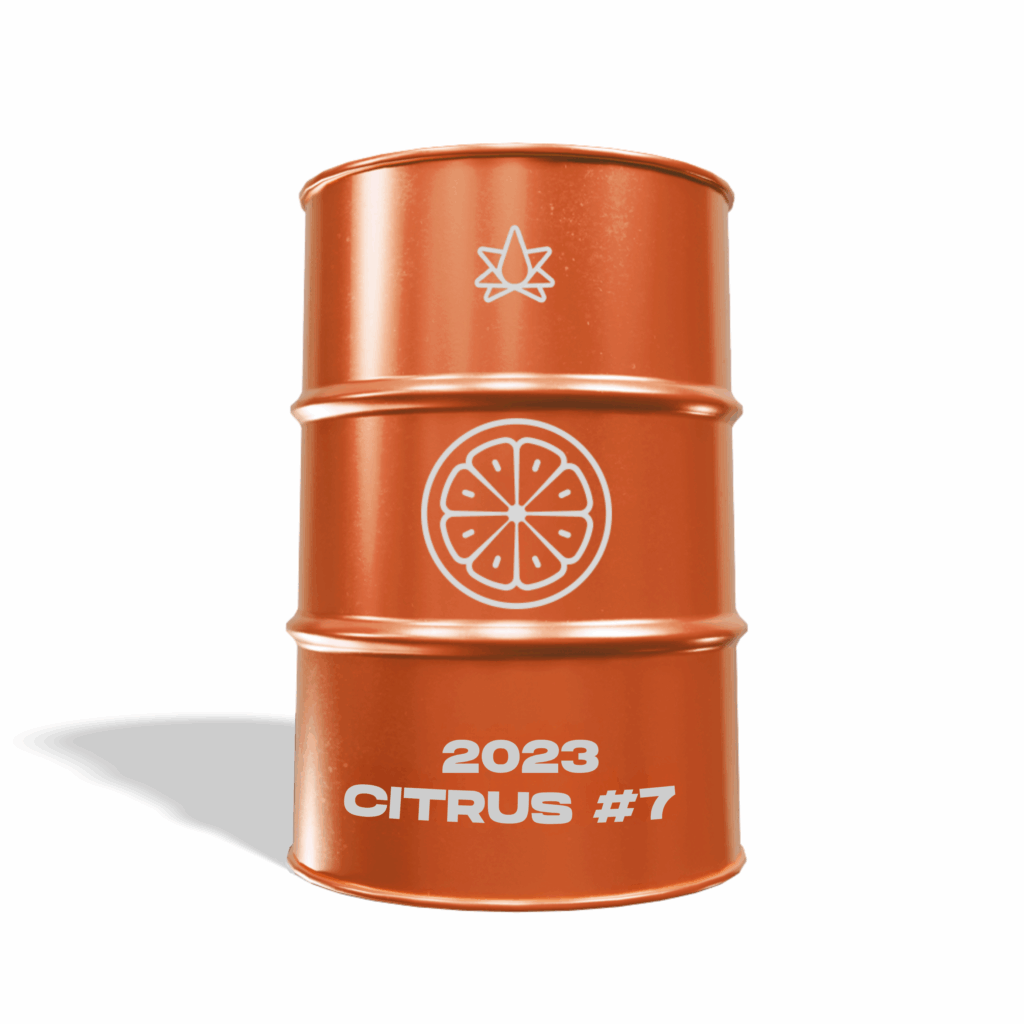
The 2023 Citrus #7 is the most direct match in the catalog for the terpinolene-dominant phenotype of Agent Orange. TBF’s own product listing explicitly notes its similarity to Agent Orange, Clementine, and Cali-O strains.
With terpinolene at 38.15%, ocimene at 9.8%, limonene at 6.24%, and pinene at 3.04%, this profile delivers the sharp, zesty citrus character that defines the Jack the Ripper side of Agent Orange’s genetic expression.
The 2023 Citrus #143 represents a more balanced expression of the Agent Orange profile, with terpinolene at 22.94%, caryophyllene at 10.1%, myrcene at 9.39%, limonene at 8.52%, and ocimene at 8.02%.
What makes this profile particularly valuable for B2B formulators is that all five of Agent Orange’s key terpenes are present at meaningful percentages. This isn’t a two-terpene reconstruction. The caryophyllene fraction at 10.1% provides the stability anchor that makes this a more forgiving option for products with longer shelf-life expectations, while the ocimene percentage reflects fresh, cold-chain extraction that preserves the profile’s complexity markers.
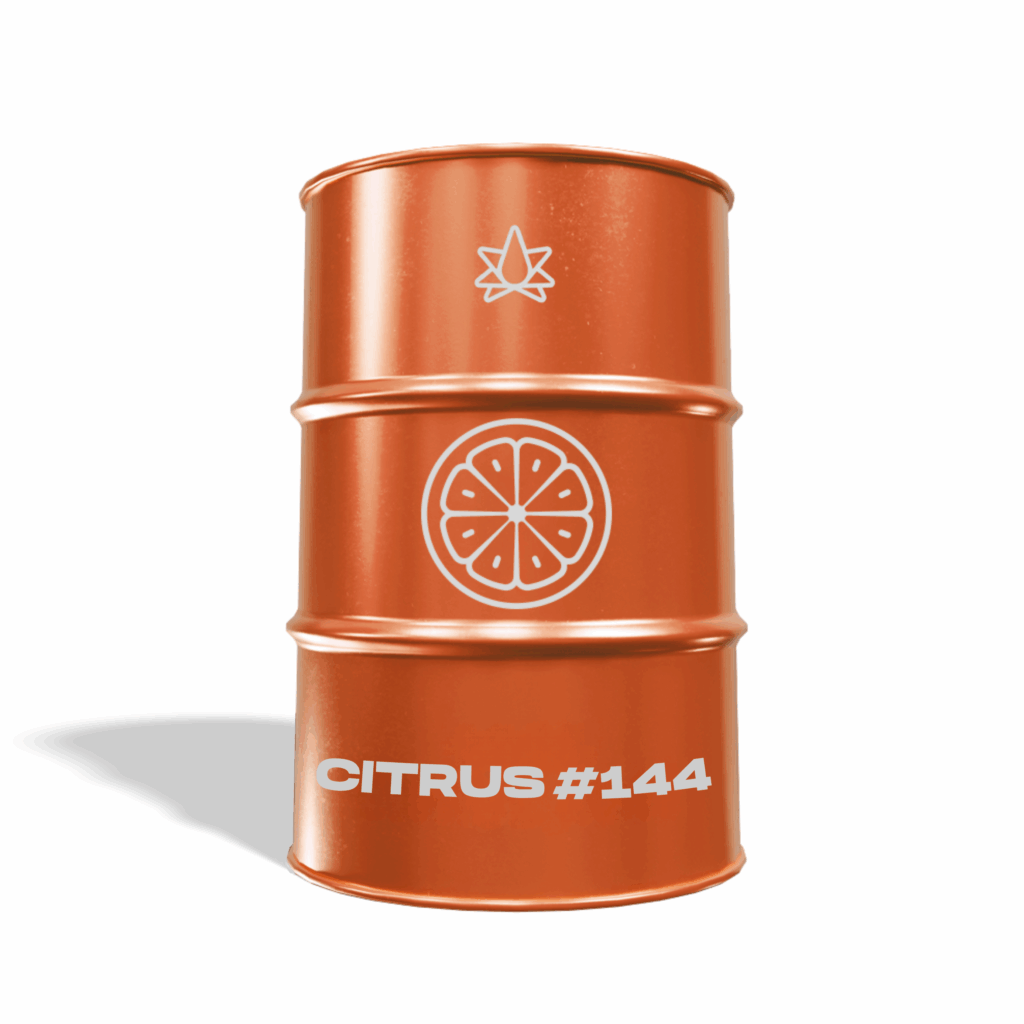
The Citrus #144 takes the profile in a myrcene-forward direction that mirrors the Orange Velvet parent’s contribution to Agent Orange’s character. With myrcene at 29.22%, limonene at 18.77%, terpinolene at 12.05%, caryophyllene at 11.37%, and pinene at 10.87%, this expression prioritizes the creamy, rounded citrus base over sharp terpinolene brightness.
It is comparatively more stable across processing conditions because the terpinolene fraction is lower, making it a better candidate for infused pre-rolls, warm-fill concentrate applications, or any format where terpene degradation is harder to manage.

Why Terpene Belt Farms Is the Right Partner for Citrus Profile Work
Working with a profile as technically demanding as Agent Orange’s requires a supplier that operates with the same level of precision you expect in your own production process.
Terpene Belt Farms is built around the Fresh Never Frozen® cold-chain standard. Terpene material is extracted and kept cold from harvest through bottling, never subjected to freeze-thaw cycling or warm storage that erodes ocimene and terpinolene before a product is ever made.
Every batch is tested by GC-MS and GC-FID, with COAs that reflect actual terpene composition at the batch level rather than blended averages. The catalog is organized by flavor expression and verified terpene percentages, so you can identify profiles that match the expression you’re targeting, terpinolene-forward, balanced, or myrcene-dominant, without relying on strain name alone.
For cannabis brands, vape manufacturers, and concentrate producers who need consistent, traceably sourced citrus profiles that perform across batches, the wholesale program is designed for exactly that kind of partnership. The work starts with samples, scales through formulation support, and continues with supply chain consistency that doesn’t drop off when production volume increases.
Frequently Asked Questions About the Agent Orange Terpene Profile
What Is the Dominant Terpene in Agent Orange?
It depends on the phenotype. Agent Orange expresses in two primary chemotypes: one where terpinolene leads, typically from Jack the Ripper-leaning plants, and one where limonene takes precedence, from Orange Velvet-leaning expressions. Leafly’s certified lab data most commonly lists terpinolene as dominant in tested retail batches, though limonene-dominant and even myrcene-dominant expressions appear in other batch sets.
Why Does Agent Orange Smell Like Oranges If Limonene Isn’t Always the Top Terpene?
Limonene’s citrus detection threshold is low enough that even at 0.4–0.6%, it registers prominently in the aromatic profile. Terpinolene also contributes citrus-adjacent notes that complement limonene, and together they create an orange-forward character even when neither compound is present at very high absolute concentrations.
How Much Terpene Should I Add When Formulating with an Agent Orange Profile?
For vape applications, targeting 5–10% total terpene by weight in a distillate base is a reasonable working range for citrus-forward profiles. For concentrates, terpene content varies by extract type and isn’t typically added in the same formulated way as in vape production. Pre-roll infusion applications generally use lower concentrations to avoid over-saturation of paper and flower material. The specific format, hardware, and desired effect profile will drive the final decision on addition rates.
Sources Used for This Article
- PMC: “Vaporized D-limonene selectively mitigates the acute anxiogenic effects of Δ9-tetrahydrocannabinol in healthy adults who intermittently use cannabis” – pmc.ncbi.nlm.nih.gov/articles/PMC11031290/
- Human Metabolome Database (HMDB): “Terpinolene” – hmdb.ca/metabolites/HMDB0036994
- PubMed: “Beta-caryophyllene is a dietary cannabinoid” – pubmed.ncbi.nlm.nih.gov/18574142/