



Quick Answer: The terpenes most consistently linked to euphoric effects in cannabis products are limonene, terpinolene, ocimene, beta-caryophyllene, and myrcene. But the type of euphoria a product delivers, whether cerebral and energetic or warm and body-centered, depends far less on any single terpene and far more on how these compounds interact within a complete profile. Knowing which terpenes to lead with, which to support, and which combinations actively work against euphoric intent is what separates a well-constructed profile from a product that falls flat.
Key Takeaways
- Euphoria in cannabis formulations generally falls into two categories: cerebral, energizing uplift and warm, body-centered well-being, each requiring different terpene architectures.
- Limonene is the terpene most consistently associated with mood elevation, while terpinolene supports energetic, creative effects and often appears in uplifting cannabis chemotypes.
- Ocimene acts as a brightness amplifier in euphoric profiles, enhancing fruit-forward and uplifting characteristics when paired with limonene or terpinolene.
- Beta-caryophyllene contributes anxiolytic and mood-stabilizing effects through CB2 receptor activity, helping balance stimulating terpene combinations and reduce anxious edge.
- Myrcene is highly dose-dependent: moderate levels add warmth and body, while high concentrations can suppress uplifting effects and shift formulations toward relaxation.
- Shop samples from Terpene Belt Farms to evaluate COA-verified CDT profiles and identify the terpene architecture best suited to your euphoria-focused formulations.
Euphoria in Cannabis Formulation
Consumers, brands, and even buyers often describe what they want as “euphoric”, but the experiences that fall under that label are mechanistically different from one another. Getting specific about which type you’re formulating for changes which terpenes you lead with, which you use in support, and which you deliberately limit.
Two Types of Euphoria and Why Formulators Need to Distinguish Them
At the formulation level, euphoria splits into two distinct experience types, each driven by a different terpene architecture. Knowing which one you’re building for before you select a profile is the difference between a product that lands with intention and one that lands somewhere in between.
- Cerebral Euphoria: Mental lift, heightened alertness, and a feeling commonly described as social, creative, or energizing. Dominated by monoterpenes like limonene and terpinolene, with low myrcene. Best suited for daytime-use positioning, focus-oriented products, and uplifting vape lines.
- Warm, Body-Centered Euphoria: Physical ease and a relaxed sense of well-being. This type is blissful rather than stimulating. Myrcene plays a larger supporting role here, beta-caryophyllene provides the emotional floor, and the overall profile softens the edge of the more heady monoterpenes. Associated with evening products, indica-adjacent positioning, and formulations designed to calm without sedating.
The distinction has direct implications for how you build a profile. If you’re chasing cerebral euphoria with a terpene blend that happens to run 25% myrcene, the sedative pull of that compound will consistently fight your intent, and your product will land somewhere muddled rather than either experience done well.
Terpenes That Drive Euphoric Effects in Cannabis Products
Each of the five terpenes below plays a specific functional role in euphoric formulations. Some are primary drivers, some are amplifiers, and one, myrcene, is a variable that cuts both ways depending on how it’s used. Knowing the distinction between these roles is what lets a formulator build with intention rather than approximation.
1. Limonene
Limonene is a cyclic monoterpene produced in abundance by the rinds of citrus fruits and expressed at meaningful concentrations across a wide range of cannabis chemotypes. Its aroma is bright, clean, and immediately recognizable: lemon zest, orange peel, and fresh citrus.
From a formulation standpoint, limonene is the terpene most consistently associated with uplifting mood effects, and the research backing that association is more direct than most terpenes can claim.
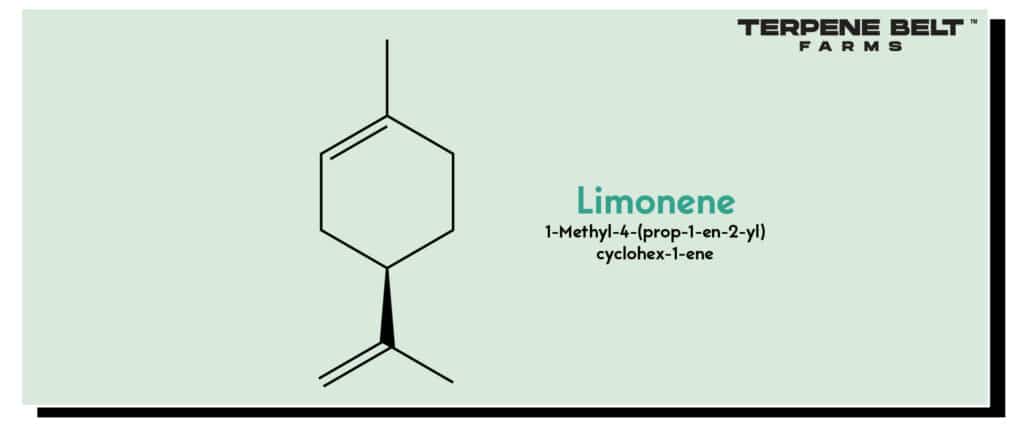
Effects of Limonene
Research published in Phytomedicine demonstrated that limonene upregulates tyrosine hydroxylase and GAD-67 protein expression in the striatum, directly increasing dopamine levels in the brain.
A separate study in the European Journal of Neuroscience found that limonene reduced depression-like behavior and enhanced learning through anti-neuroinflammatory mechanisms in chronically stressed subjects.
What this means practically is that limonene delivers a specific type of euphoria: bright, uplifting, and alert-feeling rather than sedative. It reduces anxiety through GABAergic pathways without causing cognitive fog, which makes it well-suited for products where consumers want to feel elevated and present rather than heavy.
Formulation Benefits for Manufacturers
- Boiling Point: 176°C — suitable for standard vape hardware without thermal degradation
- Volatility: Moderately volatile; vaporizes cleanly and contributes immediate top-note character in vape formats
- Processing Note: Encapsulation or low-temperature processing recommended for edible and concentrate applications to minimize loss
- Solvent Properties: Natural solvent-like character aids cannabinoid integration in distillate formulations
- Aroma Role: Dominant front-note in citrus profiles; supports brightness in fruit-forward blends
- Effect Direction: Cerebral euphoria, anxiety reduction, mood elevation
- Compatible with: Terpinolene (amplifies uplifting quality), ocimene (adds sweetness and lift), pinene (sharpens clarity)
If you want a limonene-centric product, the 2024 Dessert #116 is a phenomenal option. It is a CDT isolate where limonene leads at 23.27%, supported by beta-ocimene at 21.78% and beta-caryophyllene at 11.37%. The limonene-ocimene pairing creates a lemon pound cake-inspired profile that reads as uplifting and smooth in equal measure.
The beta-caryophyllene at just over 11% provides enough grounding to keep the experience from skewing anxious, making this a strong candidate for euphoria-forward vape and concentrate formulations.
2. Terpinolene
Terpinolene is the terpene that most consistently shows up in cannabis strains consumers describe as heady, spacey, or intensely uplifting. It appears at dominant concentrations in less than 10% of cultivars, but those cultivars tend to be the ones most associated with functional, active, daytime-use euphoria. Strains like Durban Poison, Jack Herer, and Golden Pineapple all carry terpinolene as a lead compound.
Its aroma is simultaneously piney, floral, herbal, and faintly citrusy. It doesn’t reduce to a single smell the way limonene does. That aromatic complexity is part of what makes terpinolene-dominant profiles feel more layered and interesting to consumers, and part of why it pairs so well with other uplifting monoterpenes.
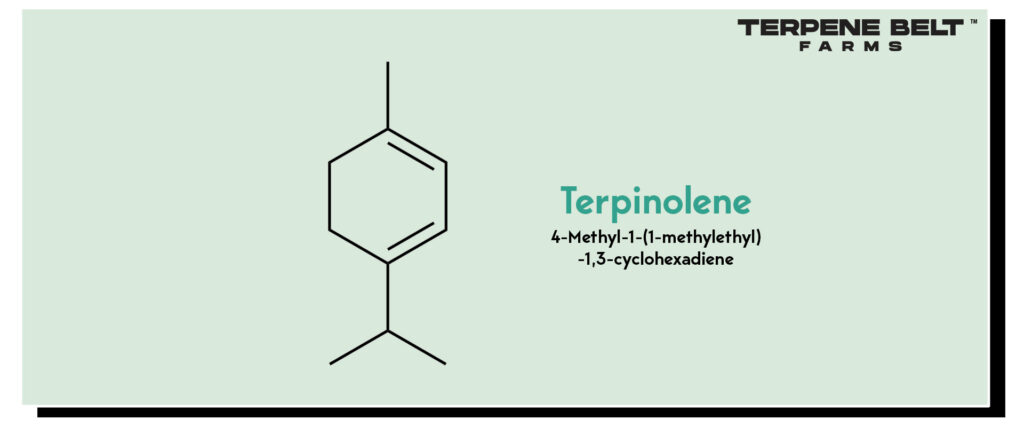
Effects of Terpinolene
Terpinolene is consistently linked to the cerebral, energizing end of the euphoria spectrum in both user reports and preclinical research. Research suggests terpinolene may interact with the central nervous system in ways that support uplifting and stimulating effects.
Terpinolene’s effects are highly context-dependent. At very high concentrations without sufficient support terpenes, it can read as jittery or ungrounded. This is why terpinolene profiles that include modest levels of beta-caryophyllene (5-10%) consistently get better user reception than terpinolene isolate-heavy formulations.
Formulation Benefits for Manufacturers
- Boiling Point: ~186°C — front-loaded volatility; best preserved in low-temp applications
- Vape Performance: Volatility works in its favor for vape formats; hits the front palate immediately and contributes strongly to first-impression aroma
- Processing Note: Compensate with slightly higher addition rates in high-temperature concentrate applications to account for expected process loss; see the R&D vape formulation best practices guide for retention guidance
- Aroma Role: Floral-herbal-citrus complexity; multidimensional rather than linear
- Effect Direction: Cerebral euphoria, heady lift, creative and uplifting
- Compatible with: Limonene (amplifies energetic quality), ocimene (adds fruit-forward brightness), caryophyllene (adds grounding depth)
2023 Pine #122 leads with terpinolene at 40.40%, one of the highest terpinolene concentrations available as a single-varietal CDT. Supported by myrcene at 7.57%, beta-caryophyllene at 5.48%, and limonene at 6.49%, the overall architecture delivers intense cerebral lift while staying grounded enough to remain pleasurable. This profile is reminiscent of Durban Poison, Lamb’s Bread, and Romulan — all cultivars associated with functional, clear-headed euphoria.
3. Ocimene
Ocimene is a monoterpene that doesn’t get enough attention in most terpene guides, largely because it rarely dominates a profile on its own. Its sweet, tropical, and herbal aroma reads as lighter and more floral than limonene or terpinolene, and at first glance, it can seem like a minor player.
In uplifting formulations, though, ocimene functions as a crucial amplifier. It improves the brightness of the terpenes around it and contributes to the kind of fruit-forward, lively aroma that consumers associate with positive, mood-elevating experiences.

Effects of Ocimene
Ocimene is consistently found in cannabis cultivars associated with energetic and uplifting effects. When present alongside limonene or terpinolene, it contributes to a bright, lively experience that feels more layered than either of those terpenes alone.
Formulation Benefits for Manufacturers
- Boiling Point: ~66°C — extremely volatile; suited for cold-process and vape-only applications
- Temperature Limit: Not recommended as a lead compound in applications involving heat above 150°C
- Vape Performance: Responsible for the “clean” or “bright” first-hit impression; contributes fresh top notes that enhance perceived product quality
- Flower Infusion: Must be handled at low temperatures to survive transfer; plan for meaningful loss at ambient or above-ambient processing conditions
- Aroma Role: Sweet, tropical, herbal brightness; amplifies citrus and fruit notes in surrounding profile
- Effect Direction: Uplifting, energetic; amplifies other euphoria-driving terpenes
- Compatible with: Limonene (brightness amplification), terpinolene (fruit-forward sativa profiles)
2023 Citrus #7 carries terpinolene at 38.15% as the primary terpene, with ocimene at 9.80% and limonene at 6.24% working in a supporting role. The result is a profile reminiscent of Clementine, Cali-O, and Agent Orange — strains well-known for bright, social, energetic euphoria. The ocimene contribution here is what gives the profile its peach-citrus sweetness, keeping the terpinolene from reading as too piney or medicinal. Vape cartridge manufacturers have found this profile particularly effective for uplifting citrus-forward formulations.
4. Beta-Caryophyllene
Beta-caryophyllene is the only terpene in cannabis that acts as a direct cannabinoid, binding selectively to CB2 receptors in the endocannabinoid system. This makes it categorically different from the monoterpenes above, which work primarily through neurotransmitter modulation and olfactory pathways.
CB2 activation by caryophyllene produces anxiolytic and mood-stabilizing effects without psychoactivity — meaning it directly addresses the anxiety undercurrent that can flip an elevated experience into discomfort.

Effects of Beta-Caryophyllene
Research published in Physiology and Behavior demonstrated that beta-caryophyllene produced significant anxiolytic and antidepressant effects in mice across multiple validated behavioral models, and critically, those effects were blocked when CB2 receptors were antagonized, confirming the direct receptor mechanism.
A 2024 review in the International Journal of Molecular Sciences further identified beta-caryophyllene’s CB2R activity as a strong candidate for addressing neuropsychiatric symptoms, including anxiety and depression. For formulators, this translates to a terpene that can meaningfully reduce the probability of an anxious, aversive experience while adding to the overall sense of well-being.
Formulation Benefits for Manufacturers
- Boiling Point: ~130°C — among the most heat-stable common cannabis terpenes
- Thermal Stability: Survives higher processing temperatures without meaningful degradation; reliable in concentrate, distillate add-back, and edible formats
- CB2 Synergy: Complements CBD-forward formulations where both compounds target overlapping receptor activity
- Aroma Role: Spicy, peppery depth; adds body and complexity to brighter profiles
- Effect Direction: Anxiolytic, mood-stabilizing, stress-reducing; grounds and anchors euphoric uplift
- Compatible with: Limonene (warm citrus profile, anxiety buffer), terpinolene (prevents jittery edge at high concentrations), myrcene (deepens warmth in body-centered euphoric blends)
2023 Fruit #130 features limonene at 14.22% as the lead, with beta-caryophyllene at 9.13% and beta-ocimene at 7.79% supporting. This profile, reminiscent of Starburst, Durban Poison, and Chocolope, represents a well-balanced euphoria architecture where the limonene-driven mood lift is complemented by caryophyllene’s anxiety buffer and ocimene’s aromatic brightness. For formulators building fruit-forward products intended to feel uplifting without edge, this profile hits the balance well.
5. Myrcene
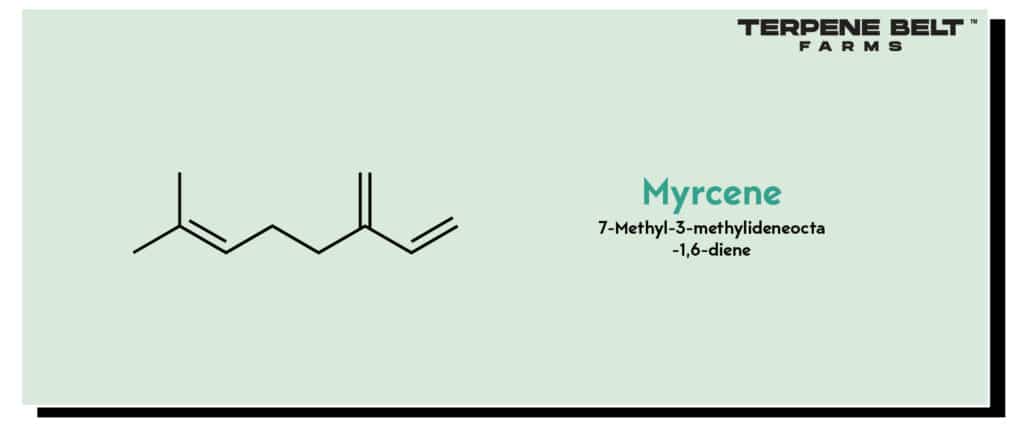
Myrcene deserves special treatment here because it’s the most abundant terpene in cannabis and the one most likely to determine which direction a euphoric formulation actually lands.
It’s earthy, musky, and warm in aroma — the smell associated with classic kush and OG strains. It’s also the terpene most associated with sedative, body-heavy effects, and it’s the one that trips up the most formulations chasing uplifting euphoria.
None of that makes myrcene bad. It makes myrcene context-dependent. Handled correctly at the right concentration, it adds warmth and body to a euphoric profile without blunting the lift. Handled poorly at high concentrations, it actively fights every other terpene in a profile that’s supposed to feel energizing.
Effects of Myrcene
Research published in Frontiers in Nutrition suggests myrcene may lower resistance across the blood-brain barrier, potentially increasing the rate and intensity at which cannabinoids like THC reach neural pathways. This mechanism explains why high-myrcene strains consistently feel more intensely sedative and physically heavy than their THC percentage alone would predict.
The same mechanism also explains why cannabis strains above 0.5% myrcene by dry weight are commonly associated with couch-lock effects, while those below 0.5% tend to produce more alert, uplifting experiences.
Formulation Benefits for Manufacturers
- Boiling Point: ~167°C — moderately volatile; best preserved in low-temp vape and infusion applications
- Thermal Stability: Low; not recommended as a lead compound in high-temperature concentrate processing
- Cost Profile: Among the least expensive and most abundant terpenes in cannabis; common anchor in cost-managed blends
- Euphoria Ceiling: Sedative pull is strong enough that myrcene concentration effectively sets the upper limit on how uplifting a profile can feel — regardless of what other terpenes are present
- Aroma Role: Earthy, musky warmth; signature kush character
- Effect Direction: Sedative and relaxing at high concentrations; warmth-adding at low-to-moderate concentrations
- Watch: Concentrations above 20% in a blend actively suppress the uplifting character of limonene and terpinolene
2024 Sweet #16 features myrcene at 23.84% as the lead, with alpha-pinene at 20.05% and limonene at 12.12% supporting. This profile, evoking blueberry, wild strawberry, mandarin, vanilla cream, and pine, represents a lush fruit architecture where myrcene’s musky sweetness is lifted by pinene’s clarity and limonene’s citrus energy. Ideal for calm, full-bodied fruit formulations.

How Terpene Combinations Shape the Type of Euphoria You Formulate
Now that each terpene’s individual contribution is clear, the more useful discussion is how they work together. Most cannabis products don’t fail at the compound level — they fail at the combination level, because the individual ingredients were chosen correctly but assembled without attention to how they interact.
Formulators working in the terpenes for distillate space, in particular, run into this constantly. Distillate formulations start from a blank canvas, which means the terpene profile is responsible for 100% of the effect direction. Getting that architecture right isn’t optional.
Terpene Pairings for Energetic, Cerebral Euphoria
Cerebral euphoria profiles are built around limonene and terpinolene as co-leads, with ocimene as a brightness amplifier and beta-caryophyllene held at low-to-moderate levels to prevent anxiety edge. Myrcene should be kept below 15% of total terpene concentration, and ideally below 10% in profiles targeting peak alertness.
The most effective pairings in this category tend to follow a few patterns:
- Limonene (20-30%) + Terpinolene (20-40%) + Ocimene (5-15%): The core architecture of uplifting, energetic euphoria. Reads as bright, complex, and mood-elevating. Best suited for daytime-use vapes, sativa-adjacent concentrates, and pre-roll formulations positioned as social or creative.
- Add Beta-Caryophyllene at 5-10%: This is the stabilizer that prevents the profile from reading as anxious or overstimulating at higher THC ratios. It adds a light spicy note that rounds out the citrus-forward brightness.
- Limit Myrcene to Under 10%: Enough to add a hint of warmth and body without blunting the terpinolene-limonene lift. Above 15%, myrcene starts competing with the intended effect direction.
Terpene Pairings for Warm, Body-Centered Euphoria
Warm euphoria profiles are built differently. Here, myrcene rises to a supporting role at 15-25%, beta-caryophyllene increases to 10-15% to anchor the body-centered character, and limonene remains present but secondary — enough to maintain mood elevation without driving the experience into purely cerebral territory.
- Myrcene (15-25%) + Limonene (12-18%) + Beta-Caryophyllene (10-15%): A warm, blissful profile that feels pleasant and physically comfortable. Reads as relaxed euphoria rather than energetic euphoria. Well-suited for evening-use products, relaxation-positioned flower, and indica-adjacent concentrates.
- Terpinolene at Low Levels (5-10%): Adds just enough cerebral brightness to prevent the profile from becoming purely sedative while keeping the overall feel relaxed and warm.
- Linalool as Optional Support (3-8%): Linalool adds a floral, calming note that complements the warm euphoria direction. It deepens the sense of physical comfort without contributing to the sedation that very high myrcene loads can produce.
Combinations That Quietly Undercut Your Euphoric Intent
This is the section most terpene guides skip entirely. Certain terpene combinations actively conflict with the goal of euphoria, even when each compound in the profile has documented mood-relevant properties.
- High Myrcene + High Terpinolene Without Caryophyllene Support: Terpinolene’s heady, slightly jittery character without a caryophyllene buffer can produce anxious or uncomfortable experiences at elevated THC concentrations. Myrcene deepens intensity but doesn’t provide the anxiolytic correction. The result is often a product that reviewers describe as “too much” or “overwhelming.”
- Dominant Linalool in an Uplifting Profile: Linalool is calming and relaxing. Adding it at concentrations above 10-12% in a profile that leads with limonene and terpinolene will soften the uplifting character substantially. This isn’t wrong — it’s a different product — but it’s a common error when formulators pull from “mood-enhancing terpenes” lists without accounting for directional conflicts.
- Low Total Monoterpene Concentration in a Cerebral Euphoria Build: If limonene and terpinolene together make up less than 25% of the total profile, and sesquiterpenes dominate, the profile will read as heavier, more complex, and less actively uplifting. Euphoria requires a meaningful monoterpene payload. Sesquiterpenes alone don’t deliver the same effect quality.
Why Terpene Belt Farms Delivers Euphoric Profiles Formulators Can Trust
Building euphoric profiles on paper is straightforward. Building them consistently across batches — with verified terpene concentrations, documented COA data, and CDT sourcing that actually reflects what the label says — is where most suppliers fall short.
Terpene Belt Farms produces hemp-derived CDT isolates and blends extracted using Fresh Never Frozen cold-chain methodology, which preserves the complete aromatic profile of each cultivar at harvest rather than allowing heat or time to degrade the most volatile compounds, the monoterpenes like terpinolene, ocimene, and limonene that drive the uplifting, euphoric effects discussed throughout this article.
Every product ships with GC-MS and GC-FID verified COAs from an ISO/IEC 17025 accredited laboratory, giving your R&D and QA teams the analytical documentation they need to formulate with precision and defend product claims at scale. The product catalog spans citrus, pine, fruit, sweet, gas, and dessert profiles — each capturing a distinct terpene architecture verified at the batch level.
If you’re building products where the effect experience has to be consistent enough to anchor your brand positioning, you need terpene inputs that perform the same way every production run.
Request samples from Terpene Belt Farms to evaluate which profiles fit your euphoria formulation goals before committing to volume.
Frequently Asked Questions About Terpenes for Euphoria
What Is the Single Most Euphoric Terpene in Cannabis?
No single terpene causes euphoria on its own. The experience requires a combination of compounds working together. That said, limonene is the terpene most consistently linked to mood elevation and uplifting effects across preclinical research, primarily through its influence on serotonin and dopamine pathways. If you’re formulating for euphoria and can only optimize one compound, limonene concentration and quality is the most impactful variable to control.
Can You Get Euphoria From Terpenes Without THC?
Terpenes influence mood and experience but do not produce the same intoxicating euphoria as THC. They can meaningfully shape the character of a product’s effect profile — reducing anxiety, adding warmth, or contributing cerebral lift, but the primary euphoric response in cannabis products is still driven by cannabinoids. Terpenes function as modulators and amplifiers rather than primary agents.
What Terpene Profile Should I Avoid If I Want an Uplifting Product?
Avoid profiles with dominant myrcene at concentrations above 20-25% if your goal is cerebral, energetic euphoria. High myrcene loading is the most common formulation error in products intended to feel uplifting. Similarly, high linalool concentrations (above 10%) in a profile targeting lift will consistently soften the uplifting character and push the experience toward relaxation instead.
Does Terpene Quality Affect Euphoric Effects?
Yes — and this is underappreciated in most discussions. Synthetic or botanical terpenes may carry the correct aromatic profile on paper but lack the full-spectrum minor terpene composition that CDT profiles contain. Those minor terpenes contribute to the entourage effect and shape how the dominant compounds land experientially. Products formulated with authentic CDT profiles consistently show different performance characteristics than those built from isolated or reconstructed botanical equivalents.
How Do I Know What Terpene Percentage to Use for Euphoria in a Distillate Cart?
There is no single correct ratio, but most distillate vape formulations work within a 5-15% total terpene concentration by weight. Within that range, the relative composition of the terpene blend determines effect direction. For cerebral euphoria, prioritize a blend where limonene and terpinolene together make up at least 40-50% of the terpene load, myrcene stays below 15%, and beta-caryophyllene is present at 5-10% as a stabilizer.
Is Ocimene Worth Including If It’s So Volatile?
For vape applications, yes. Ocimene’s volatility actually works in its favor in a cartridge — it contributes significantly to the front-of-inhale aroma that shapes consumer perception of product quality and sets the tone for the effect experience. For applications involving heat above 150°C, its contribution diminishes, but in low-temperature vape formats, its aromatic amplification of limonene and terpinolene is worth the handling care it requires.
Sources Used for This Article
- ScienceDirect: “Phytochemistry and potential health benefits of myrcene” – sciencedirect.com/science/article/abs/pii/S0944711321000167
- Wiley Online Library: “d‐Limonene reduces depression‐like behaviour and enhances learning and memory through an anti‐neuroinflammatory mechanism in male rats” – onlinelibrary.wiley.com/doi/10.1111/ejn.16455
- Frontiers: “Myrcene—What Are the Potential Health Benefits of This Flavouring and Aroma Agent?” – frontiersin.org/journals/nutrition/articles/10.3389/fnut.2021.699666/full
- PubMed: “β-Caryophyllene, a CB2 receptor agonist produces multiple behavioral changes relevant to anxiety and depression in mice” – pubmed.ncbi.nlm.nih.gov/24930711/
- PMC: “Beta-Caryophyllene, a Cannabinoid Receptor Type 2 Selective Agonist, in Emotional and Cognitive Disorders” – ncbi.nlm.nih.gov/pmc/articles/PMC10970213/
- PMC: “Beta-Caryophyllene, a Cannabinoid Receptor Type 2 Selective Agonist, in Emotional and Cognitive Disorders” – ncbi.nlm.nih.gov/pmc/articles/PMC10970213/


