



Quick Answer: The terpenes most relevant to sexual arousal formulations are limonene, beta-caryophyllene, linalool, alpha-pinene, and terpinolene. Each targets a distinct barrier to arousal, ranging from elevated cortisol and psychological inhibition to poor circulation and muscle tension. No single terpene addresses all of these. Effective intimate wellness products are built from profiles that combine these compounds strategically, with delivery method and concentration ratios determining the final clinical relevance.
Key Takeaways
- Sexual arousal is influenced by both excitation and inhibition systems; effective terpene formulations reduce barriers like anxiety, cortisol, distraction, discomfort, and low mood.
- Limonene is the strongest mood-support terpene in this context, associated with dopamine, GABA, and cortisol regulation that can help reduce psychological inhibition.
- Beta-caryophyllene supports arousal-focused formulations through CB2 receptor activity, anti-inflammatory effects, and vasodilation pathways relevant to physical response and comfort.
- Linalool and alpha-pinene address different barriers: linalool supports relaxation and mood through GABA and serotonin pathways, while pinene promotes clarity and vascular function.
- Delivery method matters: inhalables provide fast onset, topicals target localized comfort and circulation, and sublingual formats offer longer-lasting systemic support.
- Shop R&D sample kits at Terpene Belt Farms to evaluate COA-verified CDT profiles and develop more targeted intimate wellness formulations.
What Sexual Arousal Means from a Formulation Standpoint
When most people talk about “aphrodisiac” ingredients, they’re describing an output. What formulators actually need to work with is the input side: what physiological and psychological systems govern whether arousal happens, and what gets in the way.
Arousal is not a single switch.
It’s the net result of competing signals, and if the inhibitory side of that equation outweighs the excitatory side, no amount of pleasant scent or cannabinoid content will change the outcome. Terpenes are most useful when formulators understand which half of that equation their target consumer is struggling with.
The Dual Control Model and Why It Matters for Formulators
Sex researchers Janssen and Bancroft developed the Dual Control Model to explain why two people in the same conditions can have wildly different responses to the same stimulus.
The model describes two independent systems: a sexual excitation system (SES) that responds to sexually relevant cues, and a sexual inhibition system (SIS) that applies the brakes. Both run simultaneously. High arousal happens when the SES is active, and the SIS is suppressed.
The clinical relevance here is direct.
Performance anxiety, cortisol load, physical discomfort, emotional distraction, and lack of focus are all SIS activation factors. Formulators who select terpenes solely for their “uplifting” or “relaxing” properties are missing half the picture. The question isn’t only “does this excite?” but also “does this reduce what’s blocking arousal in the first place?”
Where Terpenes Fit in the Arousal Equation
Terpenes don’t create arousal. They adjust conditions. A well-constructed arousal profile does three things at the physiological level: reduces the cortisol and anxiety load that feeds the SIS, supports neurotransmitter activity associated with reward and desire, and, in topical or systemic applications, improves vascular function that drives physical response.
None of these happen with a single terpene at therapeutic concentrations found in typical cannabis oil percentages. They happen through synergistic profiles where multiple terpenes address different nodes in the same system. That’s the actual design challenge for product developers working in intimate wellness.
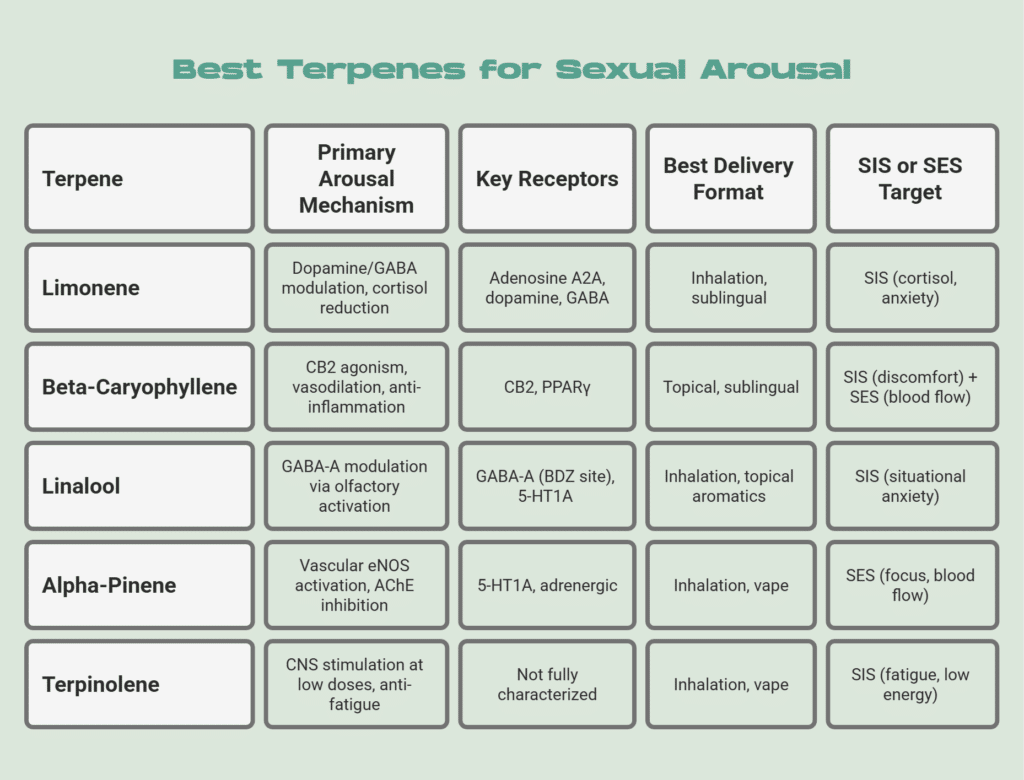
The 5 Terpenes Best Suited for Arousal Formulations
The terpenes covered below were selected because each has a documented mechanistic pathway, not just an anecdotal association with mood or relaxation. The effects listed below are based on published research, which is hyperlinked at each claim. Where a mechanism hasn’t been demonstrated in humans, that limitation is noted.
1. Limonene
Limonene is a monoterpene found abundantly in citrus rinds and in high concentrations across cannabis strains with fruit, dessert, and citrus flavor profiles. It’s the most well-studied terpene for mood-adjacent effects, and its neurotransmitter activity is more specific than most summaries suggest.
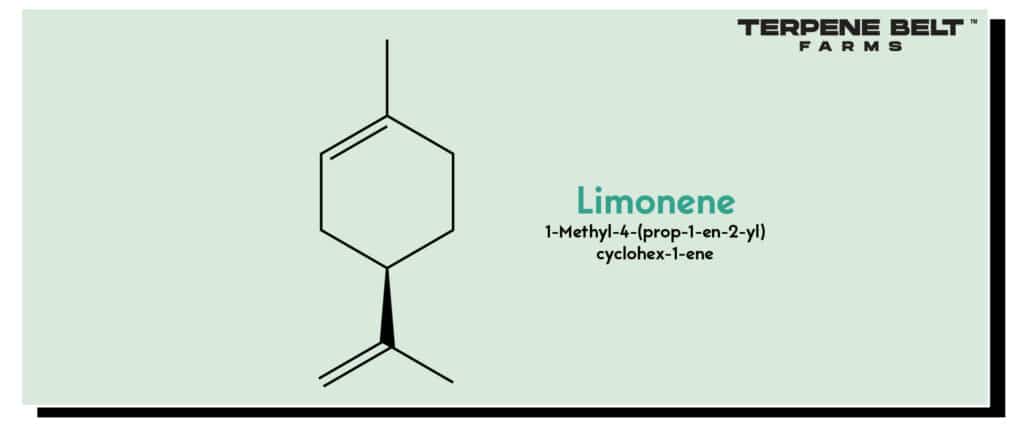
Effects of Limonene
Research published in Phytomedicine demonstrated that limonene reduces anxiety-related behavior via adenosine A2A receptor-mediated regulation of dopaminergic and GABAergic neuronal function in the striatum.
Separately, a 2024 study in the European Journal of Neuroscience found that D-limonene reduced depression-like behavior and enhanced learning and memory through an anti-neuroinflammatory mechanism in male rats under chronic stress.
On the cortisol side, research on Litsea cubeba essential oil (high limonene content) showed measurable reductions in salivary cortisol in healthy human subjects following inhalation. For arousal formulations, the practical relevance is this: limonene does not sedate, it sets a floor. It removes the neurochemical friction that prevents the excitatory system from engaging.
Formulation Benefits for Manufacturers
- Cortisol Reduction without Sedation: Limonene’s mechanism involves dopamine and GABA modulation, not opioid-like pathways, making it compatible with alert, engaged states
- Inhalation Bioavailability: Estimated 70% pulmonary uptake in humans, making vape and inhalation formats highly efficient delivery vehicles
- Profile Flexibility: Pairs cleanly with caryophyllene, linalool, and pinene without flavor clash in fruit, dessert, and citrus profiles
- Stability: Relatively stable monoterpene across standard manufacturing temperatures compared to more volatile arousal-relevant compounds
- Dose Range: Effective in aromatherapy contexts at low concentrations, making it useful across both inhalable and topical matrices without requiring high total terpene percentages
Product Recommendation
2024 Fruit #135 leads with limonene at 24.04% and carries beta-caryophyllene at 15.13%, drawn from Forbidden Fruit genetics. The limonene concentration puts it squarely in the mood-primer range, while the caryophyllene content gives it a natural secondary contribution to the CB2 pathway. Its dark orchard fruit profile, muscat grape, plum, zinfandel, and ruby red grapefruit, gives formulators an aromatic character that works distinctly well in intimate topicals and sublingual oils where complexity and richness are a better fit than straightforward citrus.
2. Beta-Caryophyllene
Beta-caryophyllene is a sesquiterpene found in black pepper, cloves, and cannabis. It occupies an unusual position in the terpene literature because it’s the only terpene confirmed to bind directly to a cannabinoid receptor, specifically the CB2 receptor. This single property makes it functionally different from every other terpene in an arousal formulation context.
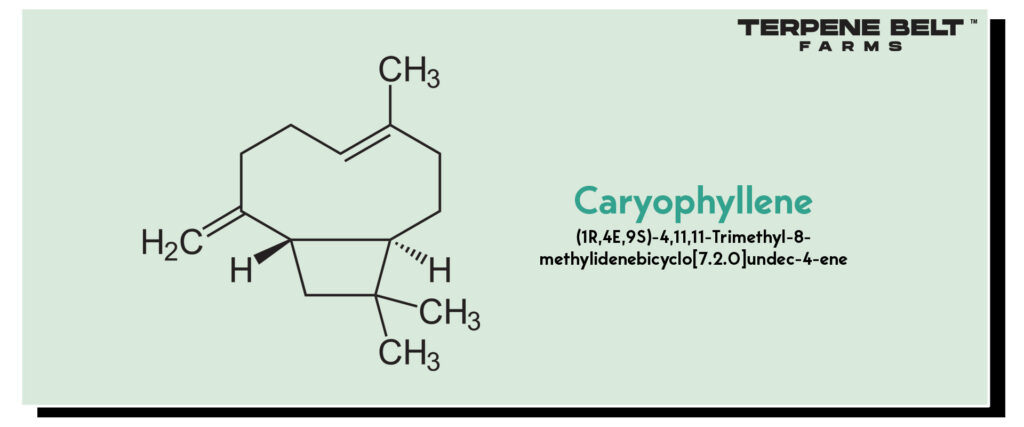
Effects of Beta-Caryophyllene
CB2 receptor activation by BCP has been shown to reduce pro-inflammatory cytokine release and modulate systemic inflammation. Research published in Biomedicines confirmed BCP’s anti-inflammatory action through a CB2R-PPARγ-mediated pathway.
Separately, research on BCP’s cardiovascular effects found that monoterpenes including caryophyllene class compounds promote vasodilation through eNOS activation, which increases nitric oxide production and smooth muscle relaxation. For intimate wellness applications, vasodilation is a direct contributor to physical arousal response in all genders. BCP also carries a favorable safety classification: it is recognized as safe by the FDA as a food additive, and its toxicological profile supports use in topical and ingestible formats.
Formulation Benefits for Manufacturers
- CB2 Receptor Engagement: The only terpene with confirmed cannabinoid receptor binding, allowing formulators to layer cannabinoid-like effects without increasing cannabinoid content
- Topical Compatibility: Sesquiterpene molecular weight supports skin penetration, making it particularly effective in lubricants, massage oils, and targeted topicals
- Anti-Inflammatory Pathway: Reduces localized discomfort that commonly acts as an SIS activator, particularly relevant for populations where physical barriers to intimacy are a factor
- No CNS Sedation: CB2 receptors are peripheral and immune-system focused, so BCP’s primary effects avoid the cognitive dulling associated with some relaxation-focused compounds
- Flavor Masking: Peppery, spicy base notes function as effective flavor anchors in product matrices that benefit from complexity rather than sweetness
Product Recommendation
2024 Dessert #116 delivers beta-caryophyllene at 11.37% alongside limonene at 23.27% and ocimene at 21.78%. The limonene-plus-caryophyllene combination in a single profile gives formulators both the cortisol-reduction mechanism and the CB2 vasodilation pathway without blending two separate products. Its lemon pound cake flavor profile also translates well to sublingual tinctures and oil-based intimate topicals where a clean, approachable scent is important.
3. Linalool
Linalool is a monoterpene alcohol found naturally in lavender, rosewood, and certain cannabis strains. It consistently comes up in discussions of relaxation terpenes, but the mechanism driving its anxiolytic effect is more specific than “it calms you down,” and that specificity matters for how and why it belongs in an arousal formulation.

Effects of Linalool
A study published in Frontiers in Behavioral Neuroscience demonstrated that linalool odor-induced anxiolytic effects operate through GABA-A receptor modulation at benzodiazepine-responsive sites, and critically, these effects were abolished in anosmic mice, confirming olfactory input as the key trigger.
This has a direct formulation implication: linalool’s anxiety-reducing effect is activated through inhalation and scent exposure, which positions it as highly relevant in aromatherapy-adjacent formats.
Additionally, research in ScienceDirect documented that linalool exerts antidepressant-like activity through 5-HT1A receptor interaction in the serotonergic pathway. Combined, these mechanisms reduce two distinct SIS drivers: situational anxiety and low baseline mood.
Formulation Benefits for Manufacturers
- Olfactory Activation: Effects are partially triggered through scent exposure, reinforcing formulation formats where the product’s aromatic delivery is part of the use experience
- Gaba-A Pathway: Distinct from opioid or sedative mechanisms, linalool’s calming effect does not impair coordination or cognitive engagement
- Mood Baseline Support: 5-HT1A agonism provides antidepressant-adjacent effects that address low-desire states rooted in mood dysregulation
- Synergy with Limonene: Complementary mechanisms (linalool on GABA/serotonin, limonene on dopamine/cortisol) create multi-node coverage when blended
- Concentration Sensitivity: Low percentages (2-5%) are often sufficient; higher concentrations can shift the effect toward sedation, so dosing precision is required
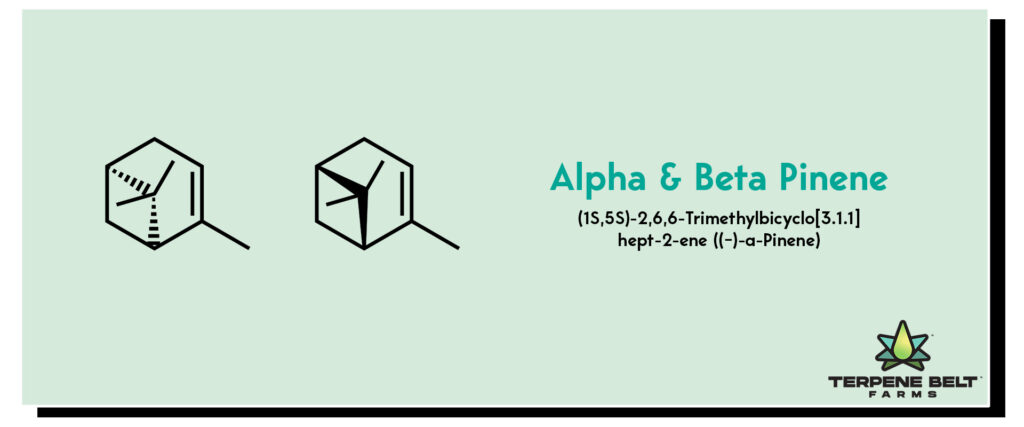
4. Alpha-Pinene
Alpha-pinene is the most common terpene in the natural world and one of the most abundant in cannabis. It’s usually discussed in the context of alertness and memory, but its relevance to arousal formulations comes from two less-covered properties: anxiolytic activity and vasodilation.
Effects of Alpha-Pinene
A review in Frontiers in Psychiatry found that alpha-pinene exhibits anxiolytic and antidepressant effects through mechanisms involving 5-HT1A receptors and increased hippocampal BDNF, similar to but distinct from linalool’s pathway.
Separately, published research on monoterpenes in vascular function confirmed that monoterpenes, including pinene class compounds, promote vasodilation through eNOS activation via Akt/PKB phosphorylation, increasing nitric oxide bioavailability in endothelial cells.
The cognitive effect is equally relevant: pinene has documented acetylcholinesterase inhibitory activity, meaning it may support mental presence and focus. In an arousal context, distraction and cognitive detachment are common SIS activation pathways, and a terpene that maintains mental engagement without stimulant-like overstimulation fills a genuine formulation gap.
Formulation Benefits for Manufacturers
- Dual Mechanism: Addresses both psychological clarity and peripheral vasodilation in one compound
- Acetylcholinesterase Inhibition: Counteracts the cognitive disconnection that high-myrcene or heavy sedative profiles can introduce into arousal formulations
- 5-Ht1a Activity: Complements linalool’s mood-support mechanism while contributing its own anxiolytic pathway
- Inhalation Efficiency: Monoterpene structure provides fast pulmonary absorption, making pinene-rich profiles highly responsive in vaporization formats
- Counter-Balancing Heavy Profiles: Useful as a blending component in high-myrcene or high-caryophyllene profiles to prevent the sedation/couch-lock risk that would neutralize arousal outcomes
Product Recommendation
2023 Sweet #16 leads with myrcene at 23.84% but carries alpha-pinene at 20.05%, making it one of the highest pinene-content profiles in TBF’s catalog. The supporting limonene at 12.12% creates a triple-mechanism profile covering mood priming, vascular support, and mental clarity. For concentrate and vape formulators building a full-body arousal-supportive profile where the relaxation floor is already covered by myrcene, this pinene content prevents the experience from tipping into sedation.
5. Terpinolene
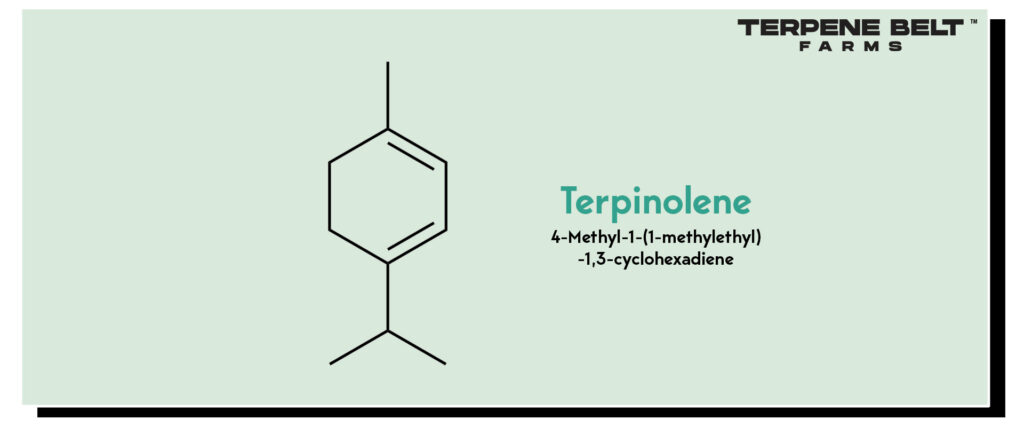
Terpinolene is a less common terpene in cannabis, but strains that carry it tend to produce distinct, energizing effects. It’s often described as uplifting, but that’s a reductive descriptor for what’s a more nuanced mechanism involving mild CNS stimulation and anxiolytic activity that operates differently from linalool or limonene.
Effects of Terpinolene
Terpinolene’s effects are less characterized in isolation compared to limonene or linalool, but it appears consistently in strains associated with functional energy: the sativa phenotypes, the Jack Herer lineage, and the Dream family.
Research into its specific receptor activity is ongoing, but its documented sedative potential at high doses and stimulating effects at lower doses suggest a dose-dependent bidirectional activity that requires careful concentration management in formulation.
From a formulation perspective, terpinolene’s principal value in arousal profiles is as a balancing agent: it introduces an energizing, alert quality that prevents the “relaxed but not engaged” outcome that over-indexed linalool or myrcene profiles can produce. For consumers whose arousal barrier is fatigue or low energy rather than anxiety, terpinolene is the more relevant primary terpene.
Formulation Benefits for Manufacturers
- Energy-Adjacent Effect at Low Doses: Addresses fatigue-related SIS activation that other calming terpenes cannot reach
- Pine-Floral-Citrus Aromatic Range: Unique scent profile that avoids direct competition with limonene’s citrus dominance or linalool’s floral character
- Sativa-Profile Alignment: Formulators building day-appropriate or spontaneous-use products benefit from terpinolene’s uplifting quality when combined with moderate caryophyllene
- Dose Sensitivity: Requires concentration control; too high pushes toward sedation; optimal range for arousal applications sits in the 10-20% of total terpene content
- Entourage Compatibility: Works synergistically with limonene and pinene to support an engaged, present mental state without stimulant-like edges
Product Recommendation
2023 Citrus #7 delivers terpinolene at an exceptional 38.15%, with supporting ocimene at 9.8%, limonene at 6.24%, and pinene at 3.04%. For formulators who want a terpinolene-forward base to blend into a broader arousal profile, this concentration allows precise dose control when combined with higher-limonene or higher-caryophyllene secondary profiles. Its citrus-forward aroma also maintains scent coherence when layering with other arousal-relevant terpenes.
How to Match Delivery Method to Arousal Intent
Terpene selection and delivery method are not independent decisions. A well-chosen terpene profile in the wrong format can produce little to no effect, or worse, the wrong effect. The onset timing, duration, and mechanism of action all shift significantly based on how the product reaches the body.
For formulators working in intimate wellness, three format categories are most relevant, each with distinct advantages for specific consumer needs.
Inhalable Formats: Fast Onset for Spontaneous Use
Inhalation delivers terpenes directly through the pulmonary system, with research on limonene specifically estimating approximately 70% pulmonary uptake in humans. This is the fastest route to systemic terpene effects, with onset typically in the 5-15 minute range and a duration of 60-90 minutes.
The practical implication for arousal applications is that inhalable formats serve a spontaneous use context where consumers aren’t planning ahead.
Terpinolene, limonene, and alpha-pinene are particularly well-suited to inhalable formats because their effects depend on fast CNS delivery.
Linalool’s olfactory-triggered GABA-A mechanism is also highly relevant here: the scent exposure itself is part of the mechanism, not just a byproduct, so the aromatic delivery of an inhalable product is doing double work. For vape product developers, check out our R&D guide on vape formulations for specific mixing ratios and hardware compatibility guidance.
Topicals: Localized Comfort and Transdermal Delivery
Topical formats shift the formulation goal. The primary use case here is removing physical barriers to arousal, particularly discomfort, inflammation, and sensitivity. Beta-caryophyllene’s CB2 activity and anti-inflammatory mechanism are most relevant in this format because they operate on peripheral tissue rather than the CNS.
Sesquiterpenes like caryophyllene have a molecular weight that supports skin penetration, and research on monoterpenes has documented lipid bilayer disruption effects that can enhance transdermal absorption of co-applied compounds.
Onset in topical formats runs 20-30 minutes with effects lasting 2-3 hours, making this format better suited for pre-planned intimate encounters where localized comfort is the primary product benefit.
Sublingual and Edible: Extended Duration for Sustained Effect
Sublingual administration bypasses first-pass liver metabolism, with absorption through the capillary bed under the tongue providing faster onset than standard edibles (generally 15-30 minutes for sublingual vs. 60-90 minutes for swallowed edibles). This format is well-suited for consumers whose arousal barriers are primarily psychological rather than physical, since the systemic delivery reaches CNS targets more completely than topicals.
Limonene, linalool, and beta-caryophyllene are the most relevant terpenes in sublingual and edible formats. Duration of effect runs 2-4 hours, making this format appropriate for longer experiences where sustained mood support matters more than fast onset.
From a formulation standpoint, concentration discipline is critical in this format: terpenes are significantly more bioavailable through sublingual absorption than topical application, so the dose that produces a clean anxiolytic effect at 2% in a tincture can become overpowering or produce unintended sedation at higher percentages.
Why Terpene Belt Farms Belongs in Your Arousal Formulation Stack
Intimate wellness is one of the fastest-growing sectors in cannabis-adjacent CPG, and it’s also one of the most formulation-sensitive. Consumers in this category have a low tolerance for inconsistency, off-notes, or products that don’t deliver on their positioning. That tolerance is even lower when the use context is as personal as intimacy. Every batch of terpenes that comes in variable, oxidized, or contaminated is a batch that can damage a brand relationship that took years to build.
Terpene Belt Farms produces cannabis-derived terpenes extracted via the Fresh Never Frozen methodology, preserving volatile compounds that conventional heat-extraction and freeze-dry processes destroy. Our California-grown source material comes with full supply chain documentation, and every profile ships with a COA validated under ISO/IEC 17025 standards. For formulators who need to stand behind their ingredient claims in a regulated wellness category, that paper trail is part of the product.
Looking into sexual arousal terpenes for your product lineup? Shop R&D sample kits at Terpene Belt Farms to see how we can help!
Frequently Asked Questions About Terpenes for Sexual Arousal
Can Terpenes Increase Libido on Their Own?
Terpenes don’t increase libido the way a pharmaceutical does. They modify conditions: reducing cortisol, supporting dopamine and serotonin activity, easing anxiety, and improving circulation. These changes can meaningfully lower the inhibitory barriers to arousal, but they don’t generate desire in the absence of it. Products positioned as “libido boosters” should be careful about structure-function claims; “comfort support” and “mood enhancement” are more defensible framings.
What Is the Best Single Terpene for Arousal?
Limonene has the most documented mechanistic evidence for mood modulation and cortisol reduction, making it the most defensible single terpene to lead an arousal formulation with. That said, a single-terpene product is unlikely to outperform a well-constructed profile. Beta-caryophyllene is the second-most relevant for its CB2 activity, particularly in topical formats where vasodilation and anti-inflammatory effects are the primary benefit.
How Much Terpene Should an Arousal Product Contain?
It depends heavily on the delivery format. Inhalable products typically perform well at 5-15% total terpene content. Topicals generally require 8-12% for effective transdermal activity. Sublingual tinctures work at 1-3% due to the high bioavailability of that administration route. Concentrations above these ranges in the wrong format can introduce irritation, sedation, or overpowering aromatics that undermine the product’s intimate use context.
Is There Research Specifically on Terpenes and Sexual Function in Humans?
Direct human trials on terpenes and sexual function are limited. Most of the mechanistic research covers components of arousal: anxiety reduction, cortisol modulation, mood enhancement, and vascular function. These pathways have strong relevance to sexual response but aren’t the same as a clinical arousal trial. Formulators and marketers should position products around these documented mechanisms, not make direct claims about sexual enhancement that aren’t backed by human clinical data.
Which Delivery Format Works Best for an Arousal Product?
There’s no universal answer because the right format depends on what barrier the consumer faces. For anxiety-driven inhibition, inhalation provides the fastest relief. For physical discomfort or sensitivity, topicals with beta-caryophyllene are most directly relevant. For sustained mood and desire support over an extended experience, sublingual formats with limonene and linalool perform best. Products that try to address all of these simultaneously usually compromise on all of them.
Sources Used for This Article
- Kinsey Institute: “The Dual Control Model of Sexual Response” – kinseyinstitute.org/research/dual-control-model.html
- ScienceDirect: “Phytochemistry and potential health benefits of myrcene” – sciencedirect.com/science/article/abs/pii/S0944711321000167
- Wiley Online Library: “d‐Limonene reduces depression‐like behaviour and enhances learning and memory through an anti‐neuroinflammatory mechanism in male rats” – onlinelibrary.wiley.com/doi/10.1111/ejn.16455
- MDPI: “Neuroprotective Potential of Limonene and Limonene Containing Natural Products” – mdpi.com/1420-3049/26/15/4535
- PMC: “β-Caryophyllene Reduces the Inflammatory Phenotype of Periodontal Cells by Targeting CB2 Receptors” – ncbi.nlm.nih.gov/pmc/articles/PMC7344807/
- PubMed: “Monoterpenes in Vascular Function: A Review of Bioactivity and Mechanisms of Action” – pubmed.ncbi.nlm.nih.gov/41009805/
- Frontiers: “The Effect of Alpha-Pinene on Anxiety-Like Behavior and Hippocampal Neural Plasticity in Mice” – frontiersin.org/journals/behavioral-neuroscience/articles/10.3389/fnbeh.2018.00241/full
- ScienceDirect: “Anxiolytic-like effect of inhalation of essential oil from Litsea guatemalensis Mez in mice” – sciencedirect.com/science/article/abs/pii/S0024320515001381
- Frontiers: “Comparative Analysis of the Anxiolytic-Like Effects of Essential Oil of Lavender and Its Main Components, Linalool and Linalyl Acetate, in Mice” – frontiersin.org/journals/psychiatry/articles/10.3389/fpsyt.2021.583211/full
- PubMed: “Monoterpenes in Vascular Function: A Review of Bioactivity and Mechanisms of Action” – pubmed.ncbi.nlm.nih.gov/41009805/
- ResearchGate: “The Acetylcholinesterase inhibitory activity of α-and β-pinene enantiomers mixtures” – researchgate.net/figure/The-Acetylcholinesterase-inhibitory-activity-of-a-and-ss-pinene-enantiomers-mixtures_fig2_304347497
- PubMed: “Anticonvulsant activity of essential oils and their constituents” – pubmed.ncbi.nlm.nih.gov/8421324/


